


Product customization has become a core part of the online buying experience to engage customers effectively. This trend has turned product configurators into serious conversion tools, especially for brands selling bespoke items. When buyers can see their choices come to life in real-time, uncertainty drops, confidence rises, and cart abandonment decreases.
But a growing concern arises: is a 2D product configurator or a 3D product configurator the right investment? The answer depends on what you sell, who you sell to, and what you want customers to feel. Today's blog will provide a detailed comparison of 2D vs. 3D product configurators, helping businesses gain a deeper understanding and make better decisions.
What Is a 2D Product Configurator?
A 2D product configurator is a visual configuration tool that allows buyers to personalize products and get real-time previews of their designs using layered images and graphics. Typically, these configurators rely on PNG layers, image overlays, and visual rules that display changes as customers customize colors, materials, graphics, text, logos, and finishes.
When Does a 2D Product Configurator Make Sense?
These configurators are a go-to solution when products don’t rely on spatial or structural complexity. In other words, if you focus on straightforward customization requirements, you can go with 2D. You can achieve speed, affordability, and operational efficiency simultaneously.
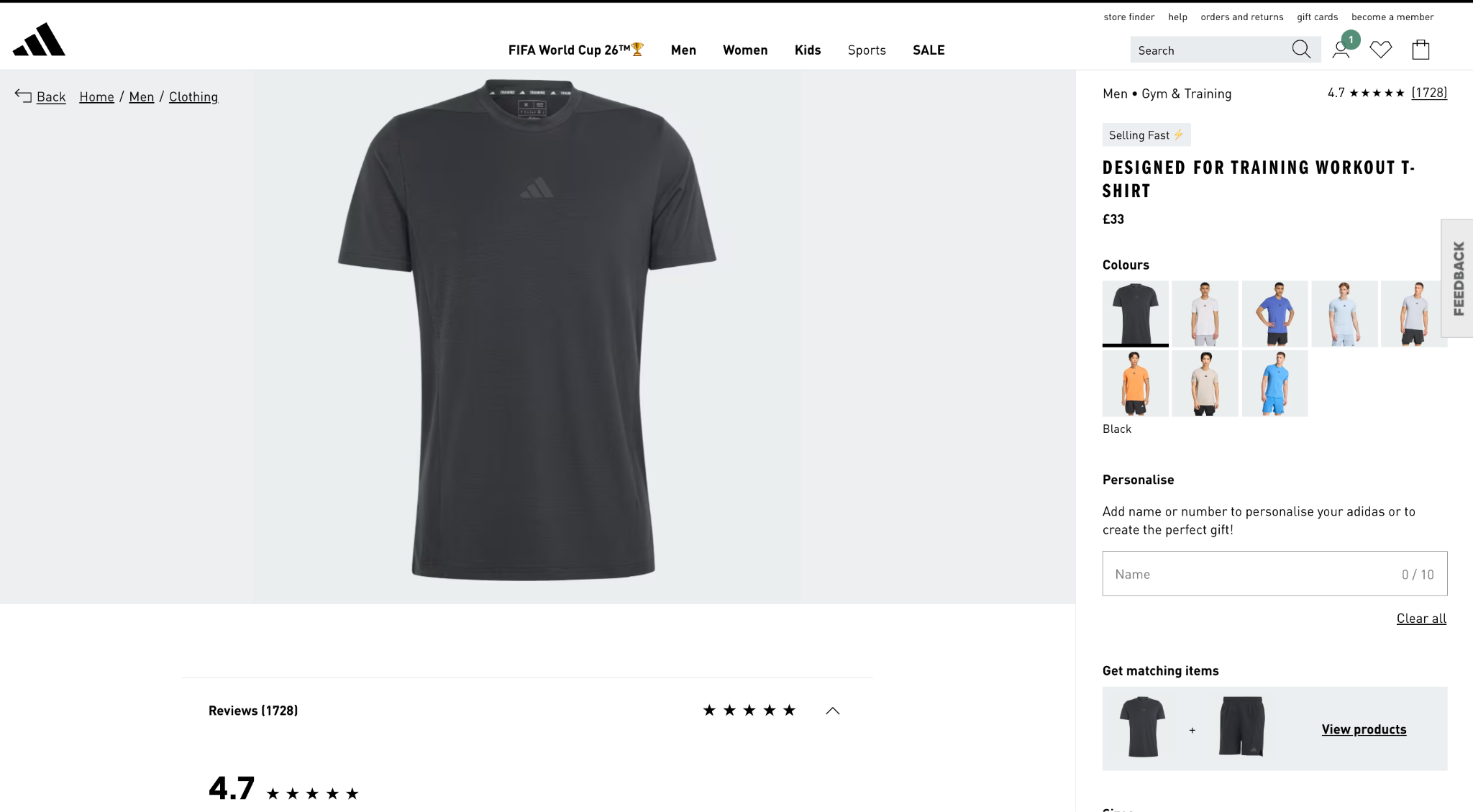
The lower implementation costs are also a benefit. 2D product configurators are generally faster to build, easier to maintain, and simpler for eCommerce integration. This enables a unified workflow, effectively transforming the customer experience and conversion rates.
Below are common cases for which you should consider using 2D configuration software:
- Simple products with low customization options
- Non-configurable and non-modular products
- Quick deployment is a priority
- Budget constraints limit investment
- Visual detail is less important than functionality
We also list industries that successfully use this software to deliver efficient experiences:
- Apparel and footwear: color and print customization
- Promotional products: branded merchandise with logos and text
- Packaging and signage: custom label and layout previews
- Simple furniture: fabric swatches, finish selections, and basic product customization
What Is a 3D Product Configurator?
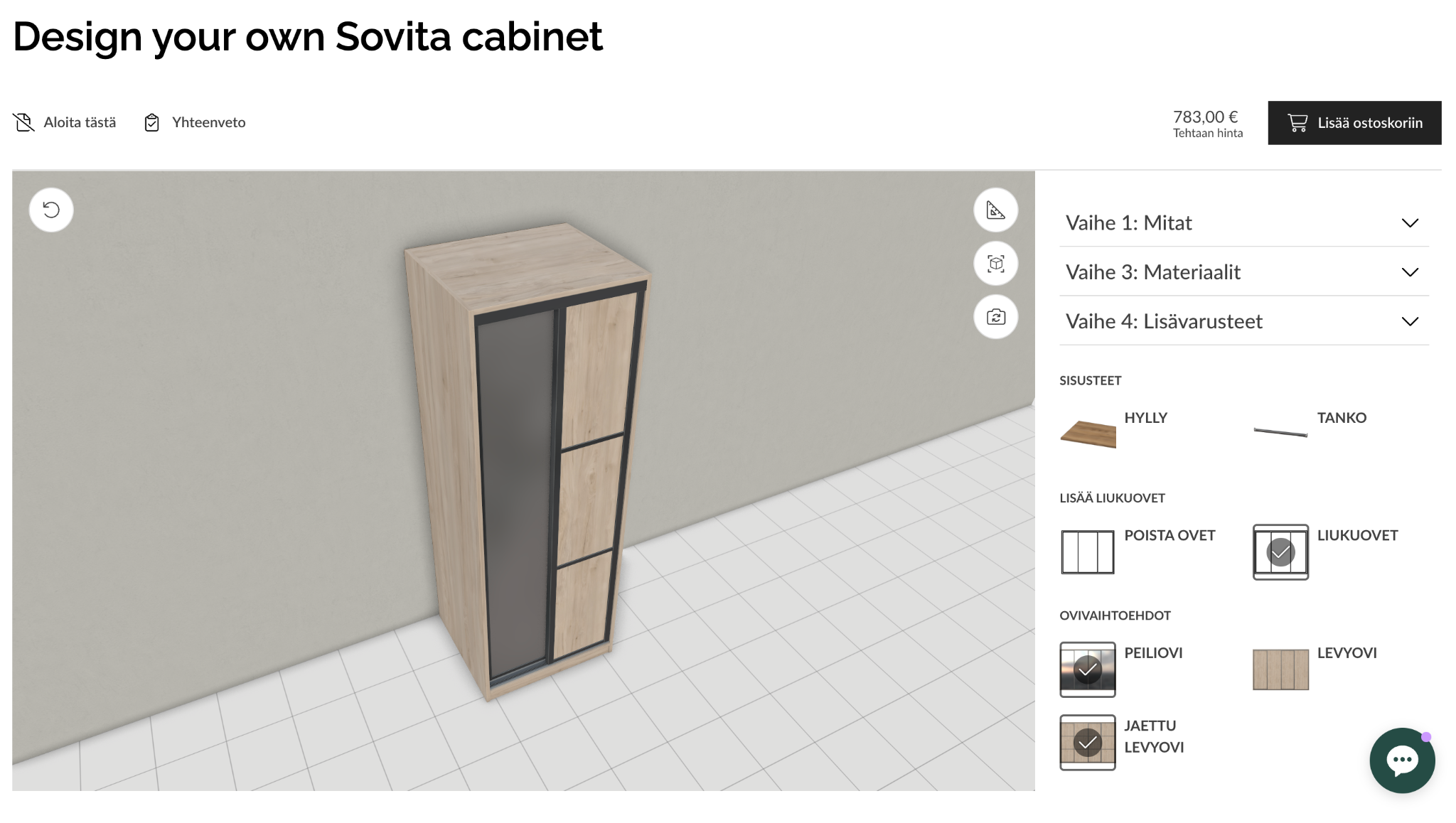
A 3D product configurator is an interactive product configurator that enables real-time product customization and 3D product visualizations to ensure a deeper understanding of the final designs of custom products. Specifically, instead of swapping static images, customers truly have a more interactive experience by directly engaging with a live 3D model, rotating, zooming, and viewing it.
At its core, the real-time rendering engine updates the visual instantly with each selection, and rule-based configuration helps minimize wrong combinations.
Notably, when these 3D sales configurators are leveled up with Visual Configure, Price, Quote (Visual CPQ), customers can configure, visualize, and get dynamic prices before moving on to checkout. This is essential to strengthening buyer confidence and reducing online product return rates.
Another striking feature often found in furniture configurators or modular configuration software is a built-in augmented reality (AR). Customers can directly visualize their products in their real-world spaces, such as homes and offices, to get a more accurate fit assessment.
Like 2D configurators, 3D configurators can integrate with your existing ecosystem, including ERPs, CRMs, and eCommerce platforms such as Shopify, WooCommerce, and Magento. This is a core feature that every product configurator should include for a smooth operation.
When Does a 3D Product Configurator Make Sense?
Not every business requires 3D configuration, but certain scenarios strongly benefit from it:
- Products have high product complexity
- Modular and highly configurable products
- Visual appearance strongly influences purchasing decisions
- Customers require a detailed understanding of the product
- Average order values are high
- Personalization is central to the buying journey
These demands are often found in the following industries for manufacturing and retailing:
- Furniture
- Kitchens
- Baths
- Home interiors
- Vehicles
- Luxury goods
- Constructions
Apparently, immersive experiences often justify higher upfront investments but are valuable for selling custom products online, especially complex, highly modular designs. Therefore, 3D product configuration software has become important for its ability to bridge the gap between customer expectations and the final products delivered via true-to-life discovery.
2D vs. 3D Product Configurators: Key Differences
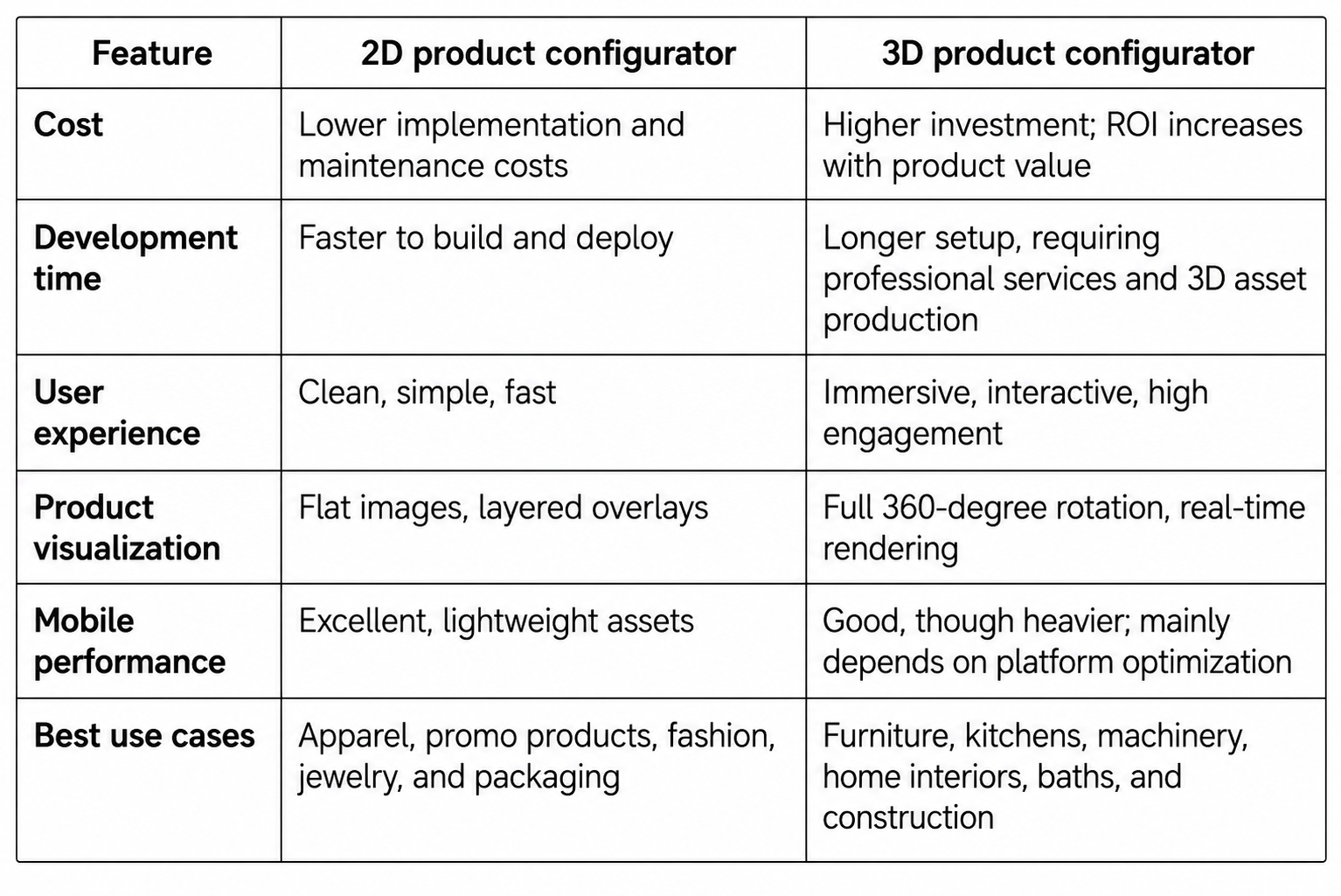
Neither a 2D nor a 3D product configurator is universally superior. The right choice comes back to what your product demands and what your buyers need to feel confident enough to buy.
How to Choose the Right Product Configurator for Your Business
If you are unsure whether to choose a 2D or 3D product configurator, ask these questions:
- How complex are your products?
If customers need to clarify spatial relationships, proportions, or structural combinations in complex product designs to make a more informed purchase decision, 3D is worth the investment. If the customization is primarily visual (color, pattern, text), 2D handles it well
On the other hand, if your sales process relies heavily on manual quoting and frequent back-and-forth communication for product designs, the key consideration is not simply 2D versus 3D. Instead, the priority should be adopting a configurator that supports real-time updates for pricing and visualization to reduce sales friction and better drive conversions.
- What are your customers’ desires?
B2C shoppers buying a £30 printed mug have different expectations from those of someone configuring a £3,000 custom sofa. That's why it’s great for manufacturers and retailers to match the experience to your customer expectations, not to what's technically impressive.
- Do you have any challenges with software maintenance?
There is no definitive winner when comparing 2D and 3D configurators, as the right choice depends on the platform and provider’s technical capabilities. Thereby, the decision should be based on long-term efficiency and operational flexibility rather than format alone.
Some businesses benefit from a staged approach: deploy a 2D configurator now to start capturing conversions, then layer in 3D for hero products where visualization has the most impact on user engagement. Ultimately, the choice should be driven by product complexity, ranging from basic to highly modular configurations, as this determines the level of interaction required, the time to process, and even your budget. Also, try to explore how to sell custom furniture pieces online and what to look for when choosing an online product configurator to get a clearer picture of the decision.
Conclusion
The 2D vs. 3D product configurator has its distinctive advantages and disadvantages. Ultimately, the right choice always depends on your products, your customers, and your business goals. You can start with what your customers actually need to make a confident purchase decision and build from there to ensure the best results for efficiency and sales.
Ready to explore which approach fits your products? If you are earlier in your configuration journey and new to your own niche, discover the right interactive configurators for SMBs.
Table of Content
-3.avif)
Streamline your process today!


.png)
