
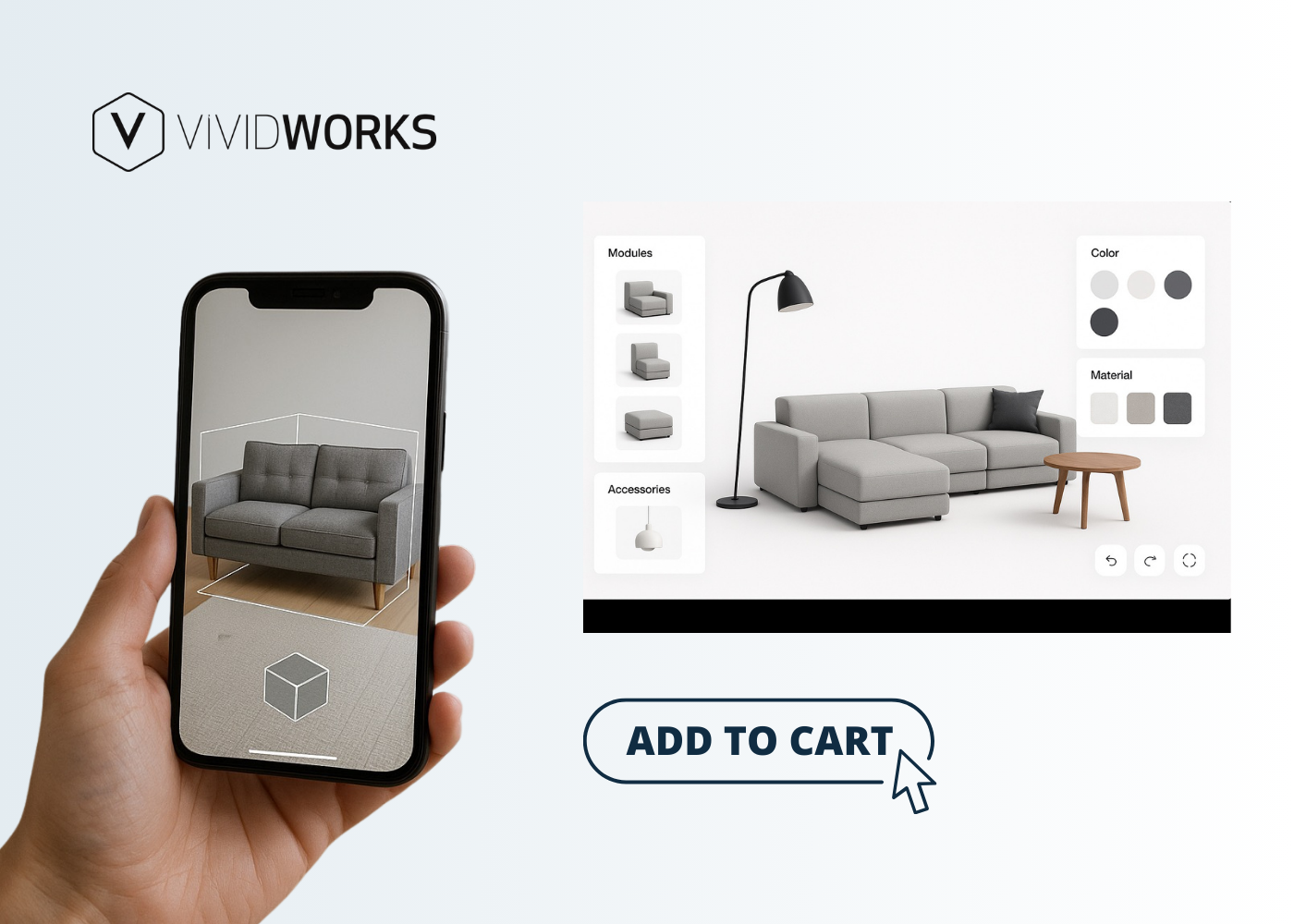

The world of commerce is entering a new phase, one where static product images and generic descriptions are no longer enough to convince customers. Customers expect to explore, personalize, and clarify products as much as possible before making a decision. This is where 3D commerce becomes a strategic advantage rather than an experimental technology. Its applications can help businesses reduce customer confusion, enhance personalized experiences, and further improve user engagement during online shopping.
This blog will clarify the definition of 3D commerce and how to build a future-ready strategy with it, from foundational setup to enterprise-level deployment. Let’s discover!
What Is 3D Commerce?
3D commerce is the use of real-time 3D visualization, product configuration, and augmented reality eCommerce to enable customers to explore, customize, and validate products digitally before purchase. In other words, instead of relying on static images, customers can rotate, zoom, customize, and place products in real-world environments.
The rising demand for 3D commerce in most niches, especially 3D furniture commerce, where we typically find a broad range of bespoke, complex, and highly modular designs, is a result of the visual economy. Customers tend to process visual information more quickly than text and expect interactive experiences. Social commerce, video-first platform, 3D content, and animations have reshaped how customers evaluate products. Once you enable a visual interaction, you can drive an engaging, confidence-building experience rather than a guessing game; as a result, you can improve conversion rates.
The Significance of 3D Commerce
Stay ahead of the competition
As more brands adopt immersive experiences today, early adopters of 3D commerce are essential for gaining a long-term competitive edge, especially for small businesses. Rather than allocating excessive budgets to short-term promotional campaigns, invest in 3D technologies to allow customers to explore products in depth and build confidence. This makes your brand memorable in customers’ minds and encourages them to return.
Improve product interactivity and customer satisfaction
While 3D product configuration and AR enable a higher level of customization, 3D product visualization focuses on whether product visuals are clear enough to close deals. Thus, when all of these features are combined into a single software, customers can configure and explore details in 3D, thereby increasing visual interaction and satisfaction.
Transform sales for your products and minimize return rates
Once you reduce buyer hesitation and keep them engaged with your products through 3D eCommerce trends, you can effectively increase conversion rates and revenues. However, you need to understand how to visualize products in 3D for eCommerce, whether it’s on the website, app, or even in-store, to ensure that everything is displayed with maximum clarity and accuracy. Otherwise, you might waste lots of effort and money.
At the same time, 3D representations minimize expectation gaps, helping businesses lower return rates for online purchases and improve customer satisfaction effectively.
3D Commerce Strategy for Businesses: from Basic to Advanced
1. Get started: set up 3D foundations and choose the 3D commerce platform for long-term
You can’t start any 3D commerce strategy without having a solid understanding of the basics of 3D. Core elements, such as 3D model formats, geometry, materials, and performance optimization for web and app, should be evaluated before implementation.
If you want to develop a 3D solution on your own, you also need to learn how to create 3D models for eCommerce, as it typically requires specific technical standards that must be accurate, lightweight, and reusable. Otherwise, you can work with renowned 3D commerce platforms (e.g., VividWorks, Zakeke), built by industry professionals, ensuring scalability, reliability, and innovation without the need to develop anything from scratch.

However, platform selection should align with your specific goals and the complexity of your product. For example, VividWorks is a go-to choice for brands with made-to-order, complex designs, such as kitchens, retail displays, and furniture, as well as those looking to implement an all-in-one software for both basic and advanced 3D eCommerce needs.
Also, you can learn more about using three-dimensional modeling for furniture products from experts with our blog on how to get started with 3D models for your product range
2. Power up your product page with 3D visualization
Once your 3D foundation is in place, you can enhance product pages with interactive visualization. It’s also the step where you can see instant improvements in engagement.
- 3D product viewing
Customers visualize a product from every angle, with the ability to rotate, zoom in, and inspect details in real-time. Instead of using 2D visuals, this visualization software offers 3D product visuals that more closely resemble an in-store shopping experience.
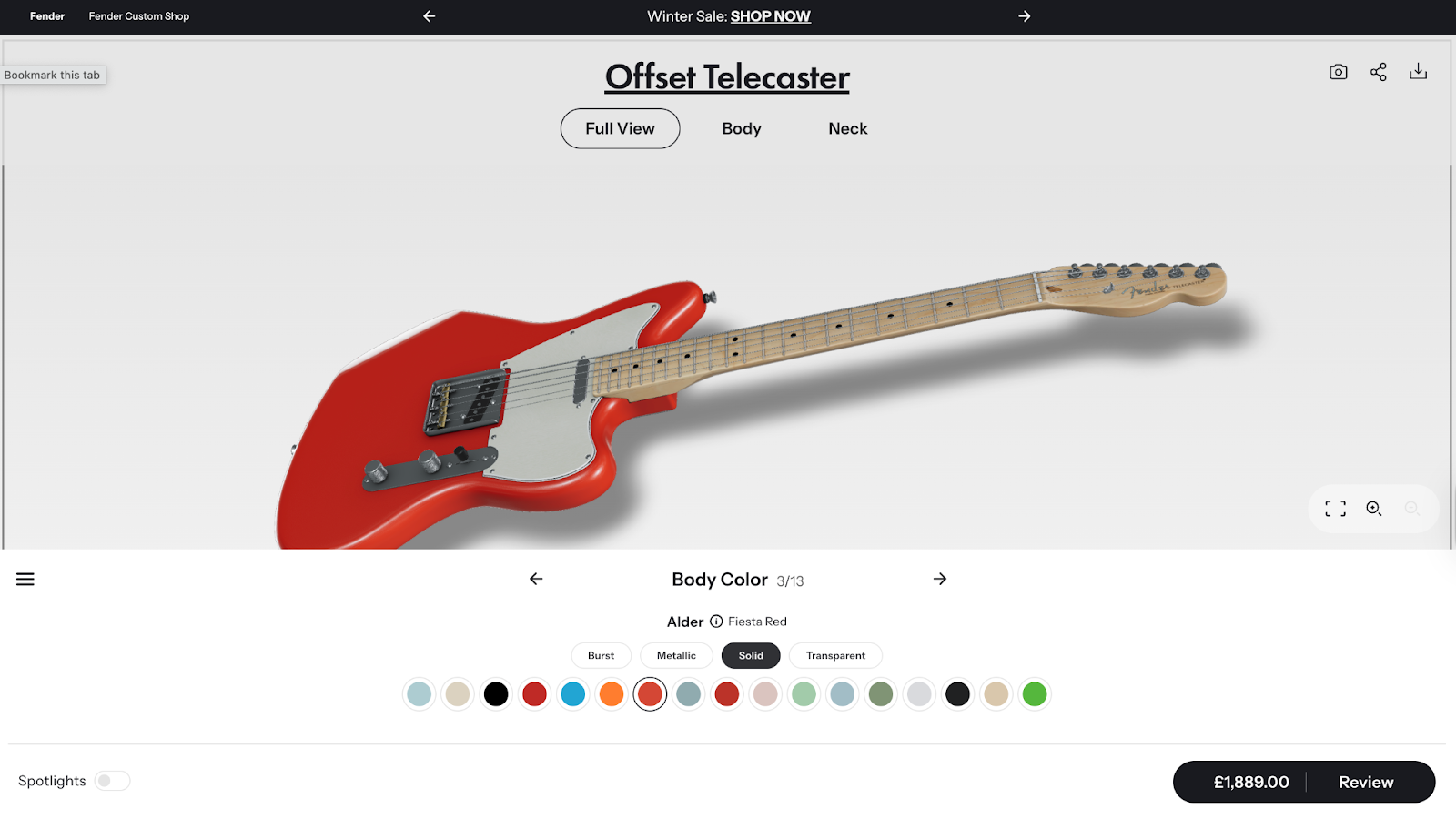
- Basic 3D configuration
The next level is to offer basic customization features (surface-level options), including colors, finishes, or fabrics, and shoppers can instantly view how different variations affect the product’s display. Although it seems like a minor upgrade, this experience enhances engagement, facilitates faster decision-making, and helps customers feel more satisfied.
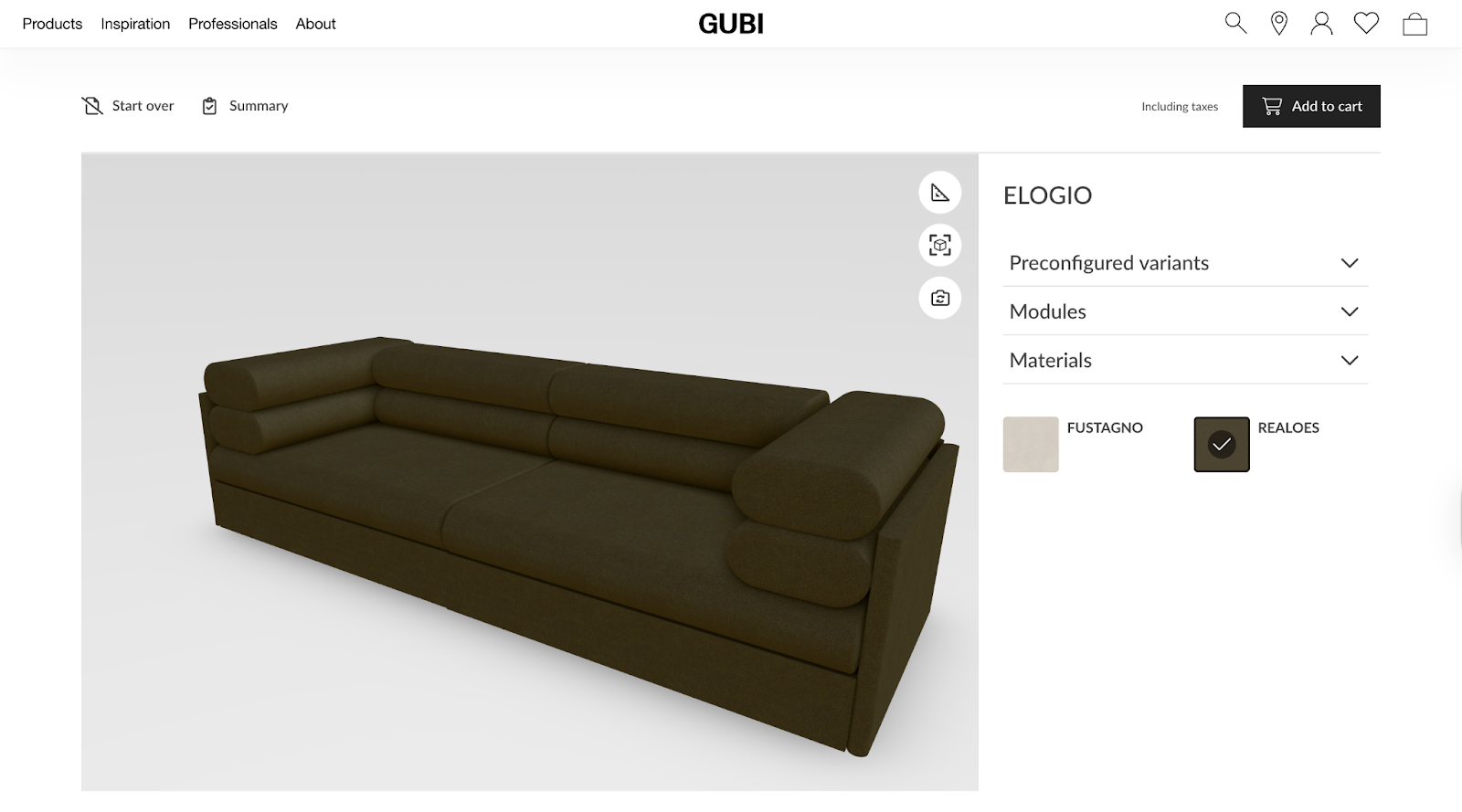
- 3d product configurator for complex products
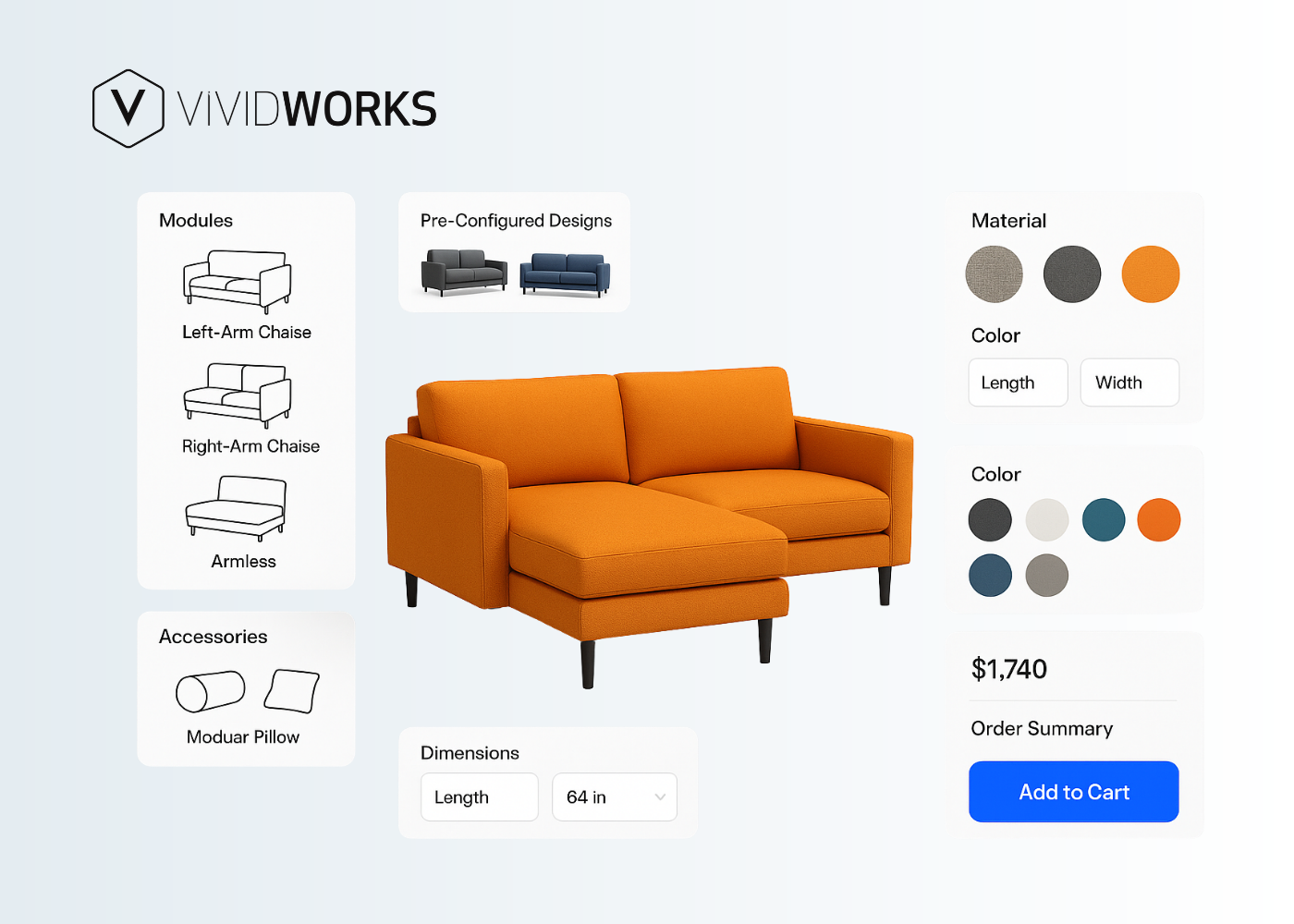
For complex, highly customizable products, using 3D configurators with extensive options, such as changing dimensions, modifying designs, and adding/removing add-ons, can engage customers better. It is apparent that customers will have more options when they customize their desired products, rather than the two options available previously.
Many 3D commerce platforms also integrate pre-built product logics to ensure that every combination is valid, manufacturable, and accurately visualized online. This helps reduce technical mistakes, streamlines sales workflows, and improves overall efficiency.
A strong example is New Works, a Copenhagen-based design house that has partnered with VividWorks to introduce a 3D furniture configurator for bespoke shelving systems. This solution enables customers to personalize their furniture by adding modules, adjusting proportions, and selecting materials and finishes to suit their preferences. “The most crucial part is being able to visualize the shelving and place it as a 3D model in a room to see how it fits” - Oliver, Head of Digital Development at New Works.
- 3D configurator packed with sales enablement features
Once they are satisfied with their design, they can click “Request a Quote,” “Calculate Price,” or a similar button to submit their product to the sales team online. This ensures accurate specifications, reduces back-and-forth exchange, and accelerates sales cycles.
- 3D room planning
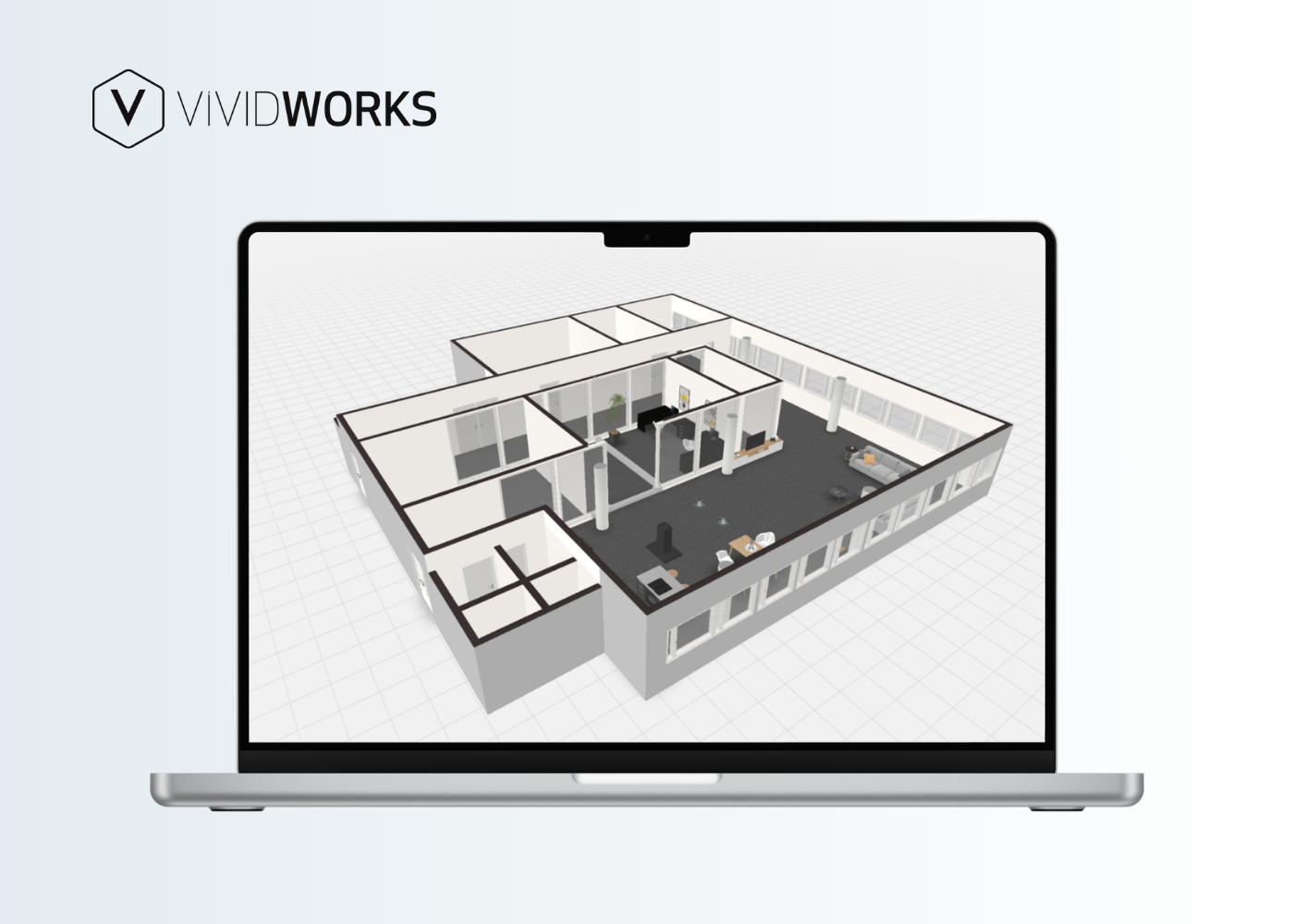
3D room planning enables the design of detailed floor plans and interiors with accurate dimensions. You place furniture or other products inside and visualize them in 360 degrees to determine whether they fit the space. Notably, this tool is widely used by customers, designers, and salespeople, particularly for construction/ building projects.
3. Seamless buying experience with visual CPQ: from personalized visuals to dynamic pricing in seconds
Visual Configure, Price, Quote (Visual CPQ) offers a seamless buying experience by allowing users to configure and view prices and quotes in real-time. Unlike a standard 3D configurator, Visual CPQ is fully integrated with pricing structures, inventory systems, and business rules, ensuring every configuration is accurate and immediately actionable. That’s why it is known as one of the most advanced 3D commerce strategies to consider.
Furthermore, when integrated with CRM, ERP, and eCommerce platforms like Shopify, WooCommerce, and Magento, Visual CPQ supports sales automation, reduces manual product inputs, and creates a more efficient workflow from configuration to conversion.
4. Employ AR technology for an immersive shopping experience
Augmented reality (AR) is another advanced 3D technology to leverage user experience to the next level. You can effortlessly visualize products in real-life contexts through your mobile camera, such as offices, living rooms, kitchens, and retail stores, to better assess size, fit, and style before making a purchase. As a result, AR can reduce shopper uncertainty, especially for high-consideration items, such as furniture and home decor.
5. Marketing Content creation: using 3d configuration and AR for realistic visuals
3D configuration and AR are not limited to product pages; they also transform the creation of marketing content. A single 3D visualization can generate consistent, high-quality visuals for product images, videos, social media, and advertising campaigns. This approach ensures visual accuracy across channels while reducing the time and cost associated with traditional photoshoots. For brands investing in 3D commerce, reusable 3D content can create long-term marketing efficiency and stronger brand consistency.
6. Enterprise-Level 3D Commerce
The final 3D commerce strategy today involves how enterprises ultilize 3D technologies to win in the market. Here are what leading enterprises are doing that you can consider:
- Support 3D experiences across large and complex product catalogs
- Optimize performance and maintain consistency at scale
- Ensure centralized control of product data, 3D assets, and configuration logic
- Have strong governance for versioning, permissions, and approvals
- Consider global rollouts, like system integration and infrastructure readiness.
Challenges of Implementing 3D Commerce
Despite lots of benefits, 3D commerce implementation comes with challenges, including:
- Misconceptions about cost and complexity
- Internal skill gaps
- Data management and integration hurdles
- Change management across teams
- Communication problems between in-house teams and 3D platform providers
However, if you have a proper phased rollout, a clear partner, and a clear goal from the start, you can effectively control these challenges. Keep in mind that 3D commerce is a long-term capability rather than a one-off project; thus, consider everything carefully.
Book a demo with our experts today to see how VividWorks helps enable 3D solutions!
Table of Content
-3.avif)
Streamline your process today!


.png)
