

The manufacturing industry is becoming more immersive and interactive than ever before. Brands no longer rely only on static images; they start using 3D modeling VR to design, prototype, and sell products in fully immersive virtual environments for in-depth clarity.
In this blog, we explain what 3D modelling in VR is, why it is in high demand, key use cases, the best software for VR models, and how to choose between in-house creation and a 3D modelling service based on your specific needs. Right now, keep scrolling to discover more!
What Does 3d Modelling In VR Mean?
3D modelling VR is the process of creating, editing, and interacting with 3D models within a virtual reality environment. Instead of working on a flat monitor with a mouse and keyboard, designers wear a VR headset and use motion controllers or hand tracking to manipulate geometry directly in three-dimensional space. Specifically, VR modelling allows users to:
- View 3D objects at true, 1:1 scale from any angle
- Walk around models to evaluate proportions and spatial relationships
- Sculpt and shape geometry using natural hand movements
- Draw, extrude, and modify surfaces in mid-air
- Collaborate with other users inside shared virtual workspaces
Why Is 3d Modelling In VR for Manufacturing In High Demand Now?
Nowadays, when customers do shopping, especially for high-value complex products, B2B and B2C customers are more likely to care about scale, comfort, proportions, and environmental fit. Apparently, static renders often fail to communicate these details. That’s why many manufacturing brands turn to virtual reality 3D modeling to engage customers!
In fact, implementing 3D modelling VR can offer a broad range of advantages, such as:
1. Offer a completely immersive, real experience
VR allows users to experience items as if they were already in front of them. For example:
- See how the products, like equipment, storage, or a sofa, really look inside the real space
- Simulate interaction to fully grasp the experience of using products
- Better views of material textures and finishes up close
- Assess lighting reflections and shadow behavior
- View products from any angle in a realistic setting
This higher level of interaction significantly increases customers' emotional engagement. They will feel more confident in their purchasing decisions because they explore and clarify products in a way similar to real-life visits to physical stores. Moreover, manufacturers can reduce buyer uncertainty, especially when selling high-value, high-customization products.
2. Clarify complex product designs from the early stage
The next benefit of leveraging 3D modelling VR is providing a clear understanding of the final product designs. Many products are made from modular systems, diversified add-ons, or even adjustable mechanisms. These features are truly challenging to illustrate only through static 2D images. As a result, misunderstanding can occur, and return rates increase because shoppers do not fully grasp how the item functions, fits, or assembles in real space.
By using a software for virtual reality, manufacturing brands can present product 3D models with greater accuracy in design, dimensions, fit, and more. This early-stage clarity reduces design revisions and eliminates back-and-forth communication between buyers and sellers.
In fact, using 3D modelling for product design and sales has proven effective in improving product understanding and accelerating decision-making. When enhanced with immersive VR environments, the performance becomes even stronger. VR helps you improve sales efficiency, lowers return rates, and strengthens customer confidence in the final product.
Integrate human factors in your 3D models
With traditional software, most users are more likely to estimate comfort, reach, posture, and movement. In VR, they can easily evaluate them in a life-sized environment on their own.
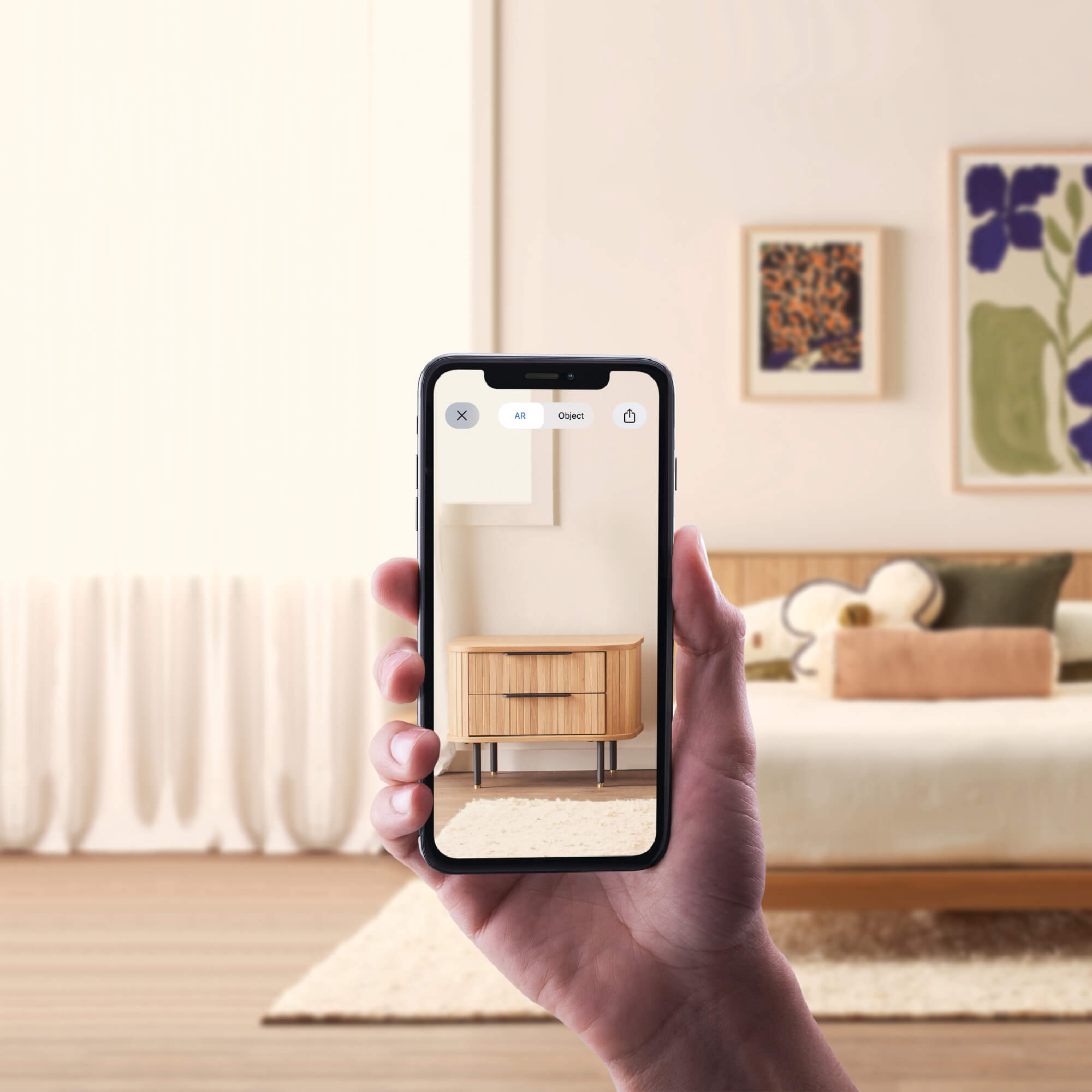
Additionally, we want to mention some advanced software for furniture augmented reality. You can use them to visualize furniture designs in real-world spaces, such as living rooms, kitchens, or offices, by scanning a QR code with mobile devices (e.g., smartphones/ tablets). Similarly, the 3D models appear within the spaces, helping users evaluate size and layout compatibility without complex tools (e.g., VR headsets), thereby saving upfront investment.
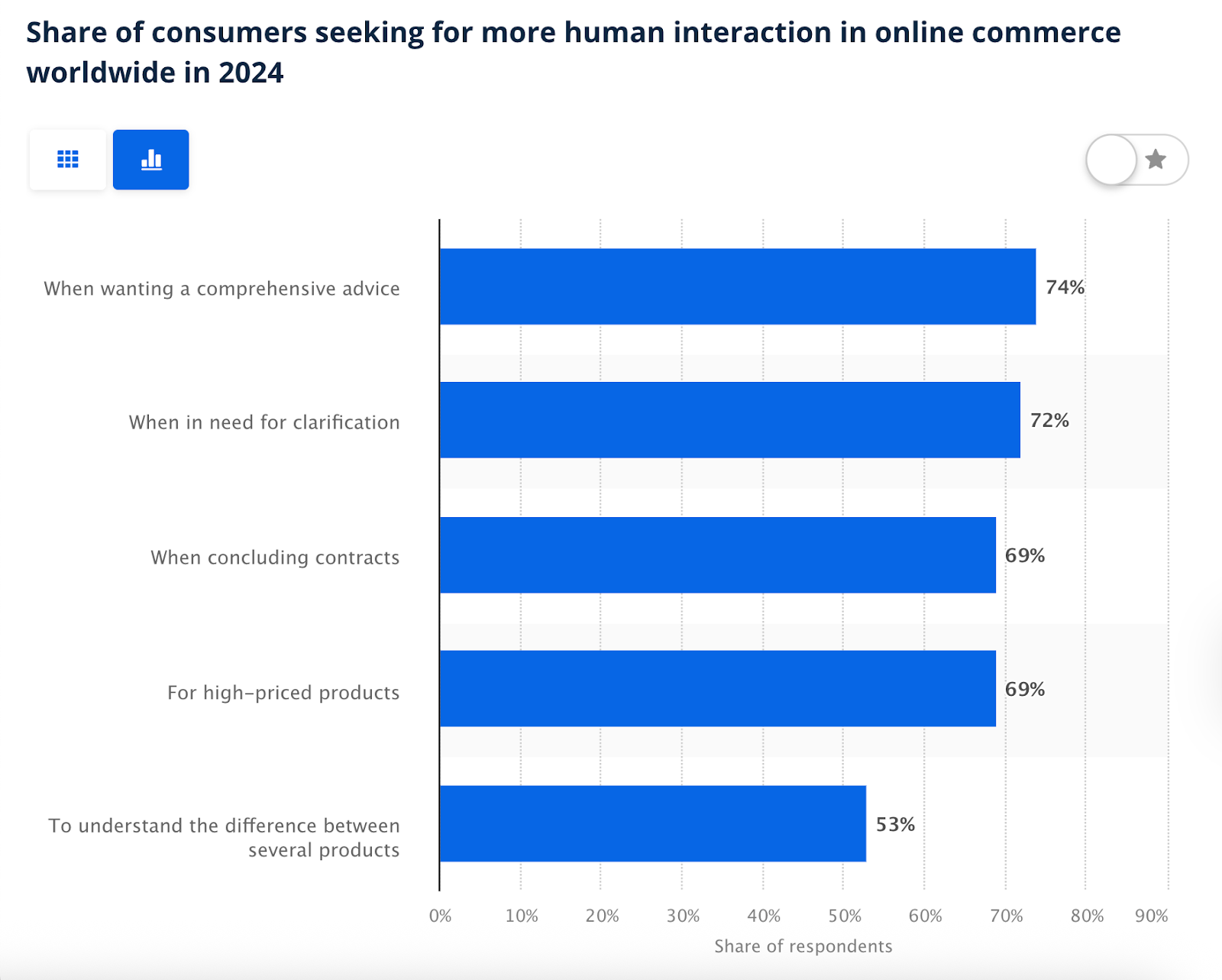
Together, VR and AR technologies ensure that products are not only visually appealing but also practical and comfortable in real-life use. Another striking point from a 2024 Statista report is that, when seeking clarification, 72% of consumers prefer more human interaction, and 69% for high-priced products, indicating this perspective is essential to closing deals.
Make your business competitive
The final reason VR 3D modeling is in high demand is its ability to strengthen competitive positioning. For example, many 3D furniture modelling services can help deliver virtual showrooms, real-scale previews, and interactive visuals that differentiate your services. Furthermore, from a business perspective, VR modelling enhances competitiveness by:
- Shortening product development cycles
- Reducing physical prototype costs
- Improving communication between design, sales, and production teams
- Increasing buyer confidence through immersive visualization
- Lowering product return rates.
What Are The Best Use Cases Of 3d Modelling In VR?
The adoption of 3D modelling in VR is driven by practical applications that extend far beyond traditional design visualization. Below are the most impactful use cases to consider:
#1. Virtual rooms
The most common application of VR is the creation of fully immersive virtual room spaces. Instead of showing products separately, brands can present complete interior layouts that let buyers walk through, explore, and interact with 3D product models. Specifically, you can:
- See how pieces interact with one another
- Assess scale and proportion at full size
- Test materials and finishes in realistic lighting
- Evaluate how products sit within a room layout
It is apparent that these virtual rooms outperform static product galleries by replicating the real-world experience, enabling buyers to make more informed decisions. Also, integrating the best online sales tools, such as 3D room planners, further strengthens this case by enabling personalized experiences. These planners enable users to design a space with accurate dimensions and visualize selected products within it to better evaluate fit levels.
#2. VR studio
A VR studio is a shared virtual workspace where designers, engineers, and customers can meet inside the digital model. This case is particularly valuable for complex design projects. Below are the benefits that you can get, mainly for collaborative design and product review:
- Real-time collaboration
- Instant design reviews and markups
- Reduced miscommunication between distributed teams
- Faster iterations and decision-making
#3. Virtual exhibition
Instead of selecting a limited set of physical samples to ship to trade shows—it can be associated with travel and logistics costs—businesses can easily present entire collections in an immersive, clear way with this use case of 3D modelling in VR. Key benefits include:
- Unlimited inventory on display without shipping costs
- Immersive experiences that impress buyers and partners
- Interactive product exploration with real-scale 3D models
- Greater accessibility for international audiences
#4. Smart designs
Last but not least, VR enables realistic simulation and interaction with products that incorporate mechanical or electronic elements. This includes adjustable desks, modular systems, convertible sofas, and smart-integrated components designed to optimize space.
Because these products rely on movement, transformation, or embedded technology, static visuals are insufficient to communicate their value. Buyers may not clarify how a mechanism works, how components retract, or how space-saving features function in real environments. As a result, 3D modeling VR can help demonstrate these dynamic features interactively.
What Should You Look For When Choosing A 3d Modeling Service in VR, Or Do It By Yourself?
Deciding whether to outsource or manage 3D modelling in VR internally depends on your budget, timeline, and technical capacity. Both approaches can work well; however, you need to evaluate expertise, scalability, and long-term goals to choose the most suitable approach.
If you decide to go with a third-party service, you should prioritize ones with proven experience in your niche. A specialized partner will better understand your product requirements, optimize models for VR performance, and ensure high-quality visual results. Don’t forget to consider some of the best software for virtual reality modeling, including Unreal Engine for immersive experiences and Blender for asset creation and refinement.
On the other hand, building an internal team can offer greater control over your assets and workflows, especially if your business relies heavily on continuous 3D content production. Yet, this requires significant investment in software, skilled experts, and ongoing training.
Book a demo to see how VividWorks 3D software can help boost your sales performance.
Table of Content
-3.avif)
Streamline your process today!


.png)
