
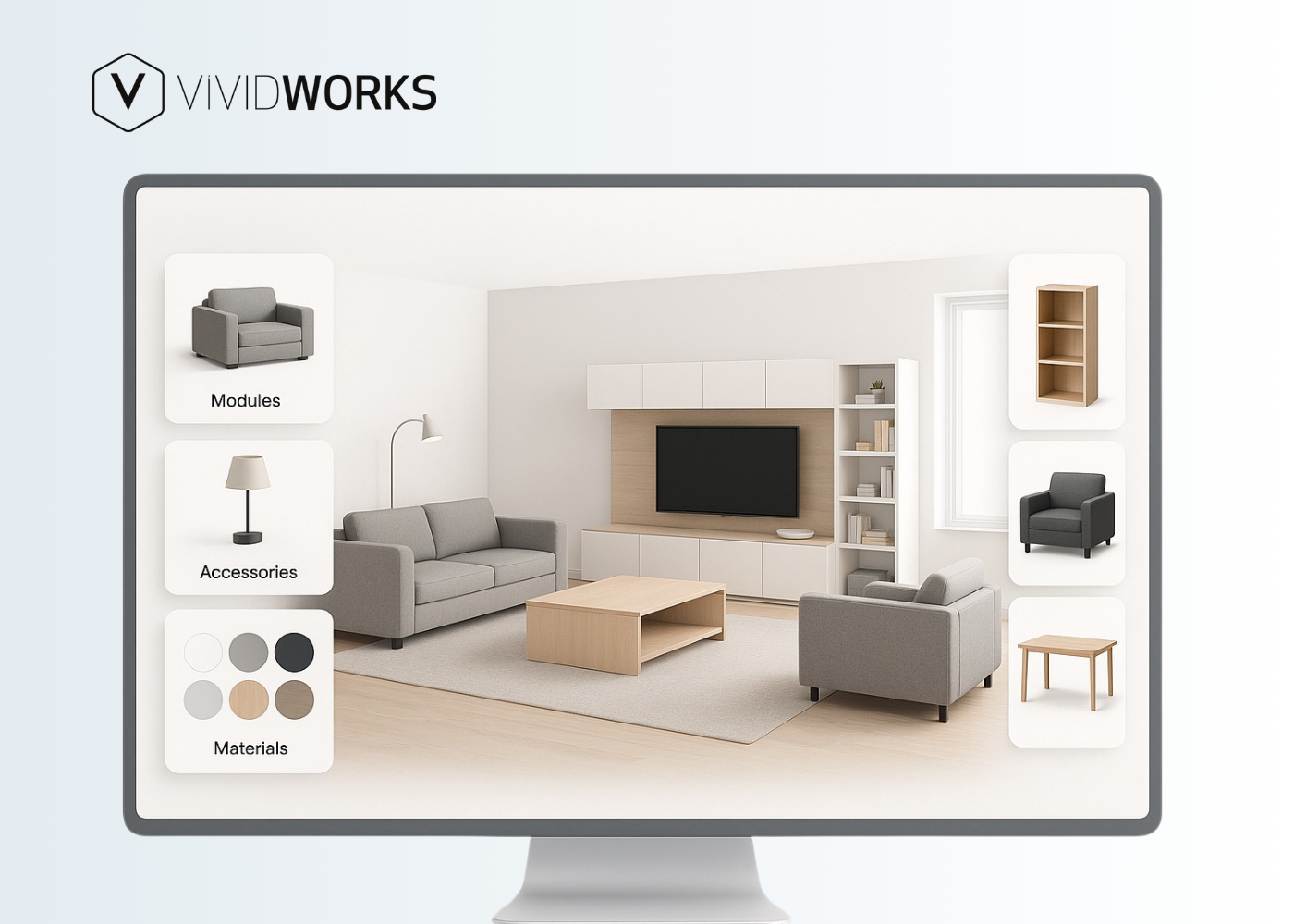

Furniture purchases are high-consideration decisions. Customers spend a significant amount of time evaluating factors such as price, brand, durability, style, delivery time, and warranty value. This often leads to stalled decisions and back-and-forth conversations.
That’s also why many salespeople try to learn proven furniture sales closing techniques. By providing clear information, reinforcing reassurance, and leveraging technology to build confidence, they can guide customers to informed decisions. When executed effectively, these techniques help reduce uncertainty and foster a stronger sense of trust.
Now, let’s dive into six closing techniques for furniture sales to find the best solution!
What Is Sales Closing?
Whether you're operating a showroom or selling custom furniture online, effective closing techniques help turn interest into completed purchases. This is not a single moment, but rather the culmination of efforts to persuade customers, as well as the outcome of trust-building, apparent communication, and effective timing. In other words, effective furniture sales closing techniques should combine perspectives:
- Confidence without pressure
- Clear visualization of outcomes and displays
- Ressurance around risk, pricing, and logistics
- Alignment with the customer’s priorities
Why Closing Is Critical In Furniture Sales?
It is apparent that most furniture sales involve higher average order values (AOV) and longer decision cycles, particularly for made-to-order designs. Customers are not only buying a product to use for themselves, but also investing in how that piece will look and function in their real-life context, such as their home or workspace, for years to come.
Consequently, hesitation is common. Without well-defined sales closing techniques, potential customers may take time to decide or delay their purchase of your furniture. However, if your techniques are weak or inconsistent, your sales teams also deal with:
- Endless follow-ups with no clear decision
- Price furniture pieces driven by unclear or poor communications
- Lost sales caused by uncertainty and even fear of making the wrong choice.
In other words, implementing proper techniques bridges the gap between interest and action. Customers will feel confident and move forward to turn consideration into sales.
Top 6 Furniture Sales Closing Techniques That Work With Every Customer
#1. The Clarity Close (with 3D and AR)
As mentioned above, many buyers struggle to visualize how a piece will fit in their space. That’s why the Clarity Close becomes more crucial. It is a powerful sales technique that prioritizes clarity over pressure, helping customers fully understand the size, design, options, and real-world fit of the finalized furniture design before making a commitment.
This process often begins with simple discovery questions. Sales teams might “ask them about the style of house they have or even questions about the room they are going to put the furniture in. It's a decent way to close that first 20%”, says InternalBleading. These questions were once great for establishing context, but they are now rarely sufficient. Customers need more, and you need to adapt your services to stand out in the market.
Your sales teams can try to use the following tools to transform customer experiences:
- 3D product configurators enable users to configure desired items and explore them from every angle, gaining a deeper understanding of the finalized design.
- AR for furniture supports customers in placing furniture directly into their real rooms using a mobile device (e.g., smartphones or tablets) and a QR code.
- 3D room planner helps project accurate dimensions and layouts for the space, and then allows users to visualize furniture pieces inside to test the fitting level.
When furniture discovery is paired with 3D and AR visualization and customized journeys, customers no longer feel confused about your products, making them close deals faster.
#2. The Transparency Close with Visual CPQ
Pricing is a significant barrier to selling furniture, especially when customization is involved, and total costs are not clear for traditional methods, like email conversations. The following sales closing technique, the Transparency Close, highlights the role of Visual Configure, Price, Quote (Visual CPQ), where buyers can configure furniture and check the prices and quotes in real-time for the highest level of checkout transparency.
As a result, your sales cycle for bespoke furniture will benefit the following aspects:
- Eliminate hidden costs and surprises
- Reduce friction and mistakes caused by manual quoting
- Removes back-and-forth communication between sales, design, and operations.
#3. The Assumptive Close
The following furniture sales closing technique is the Assumptive Close. It is a timeless tactic that salespeople can use for every product, not only for furniture. Instead of asking whether the customer wants to buy, the salesperson will move the conversation forward:
- Shall we schedule delivery for this weekend?
- Would you prefer the oak or walnut finish?
Why is it effective? You can guide customers to the next step without putting pressure on them. This means that customers move past indecision while still feeling fully in control.
#4. The Summary Value Close
The buyers need reassurance that their decision aligns with their priorities. Therefore, the “Summary Value Close” furniture sales technique can reinforce this by clearly restating:
- Product quality
- Custom options they selected
- Warranty and after-sales support
- Delivery and installation services
It’s essential to summarize these value points in the language that customers prefer, as it helps them easily validate their decision. In this way, the close feels like a confirmation of the right choice, not a sales push, and even makes them feel more satisfied and trusted.
#5. The Social Proof Close
In every sales deal, trust should be built from real-world experiences or case studies. That’s also why Social Proof Close is a must-have in our list of furniture sales closing techniques today. Shoppers want reassurance that others have made the same decision.
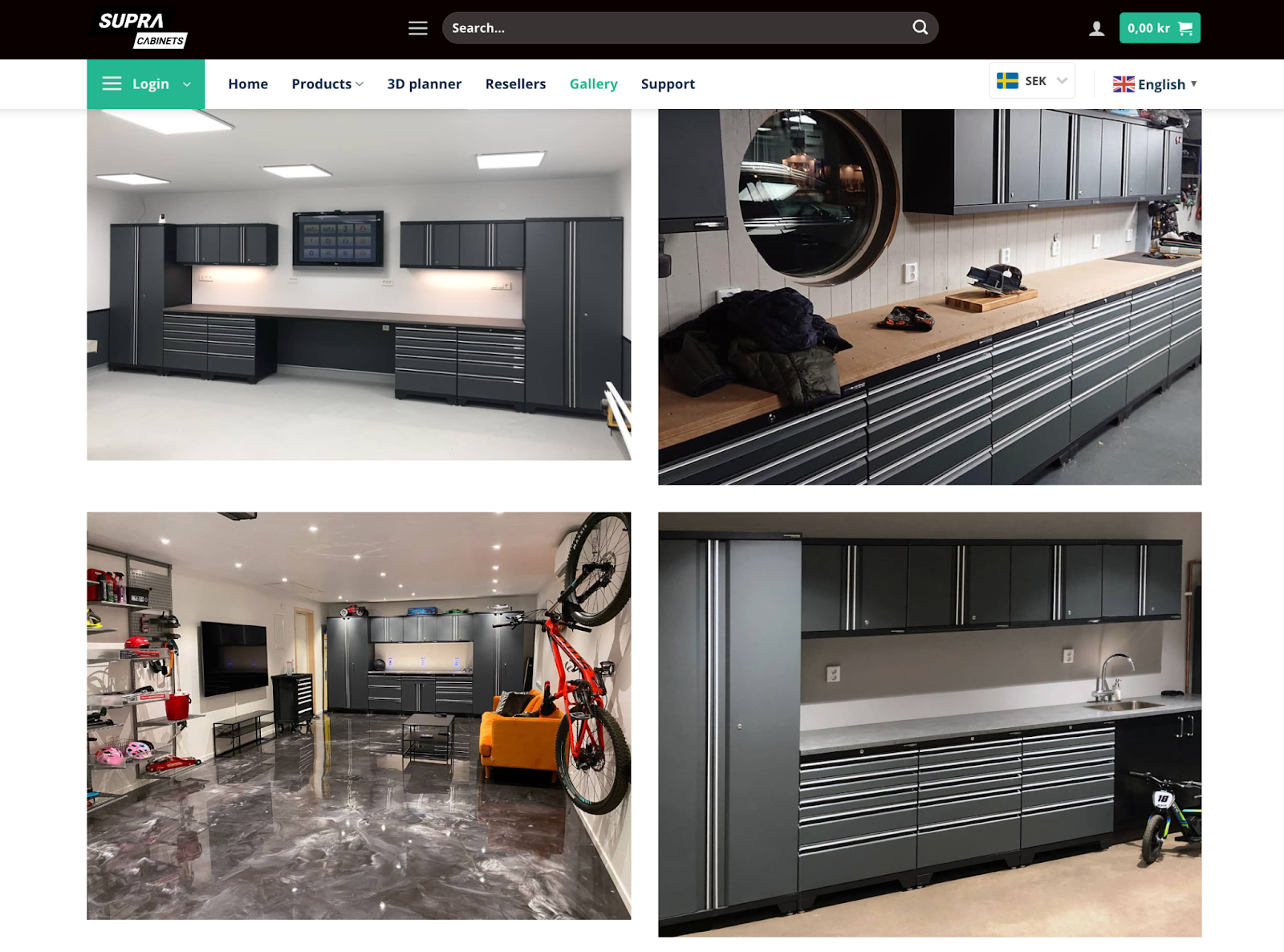
Caption: Supra Cabinets has a distinct gallery of customer stories on its website to assist salespeople with the social proof close technique
By sharing customer success stories, testimonials, and examples of homes and offices using similar furniture designs from your brand, sales teams can reduce perceived risk. Social proof addresses the problem buyers face: “Has this worked for someone like me?” Apparently, when buyers see that others have had positive experiences, their hesitation reduces, and the decision to move forward feels more confirmed rather than risky.
#6. The Guaranteed Close
“If they feel the need to shop around, ask them what kind of deal they need or what options you didn’t present to them, and try to find other alternatives”, says Ecoboom, a sales expert who has been working in the mattress and furniture industry as well for many years.
Therefore, we need a sales closing technique that can reinforce customers’ confidence at the final decision stage. Instead of competing solely on price and personalized values, sales teams should emphasize assurances that protect their investment, such as flexible return policies, 24/7 customer support, two-day delivery, and even extended warranties. Ultimately, buyers feel more supported, enabling them to make decisions more quickly.
How to Leverage Technology to Close More Deals
Below are some of the most effective technologies for boosting close rates to consider:
- 3D configuration and Augmented Reality (AR)
These 3D eCommerce trends are especially crucial for complex, high-modular designs, such as custom-made furniture. Customers often struggle to visualize all possible combinations and how the final piece will appear. That’s why a 3D configuration that allows for both customization and 360-degree previews persuades them better.
Moreover, the combination with AR for visualizing furniture pieces directly in real-world environments helps customers evaluate whether their previous selection is a good fit.
VividWorks is one of the leading providers of these technologies, with a proven track record of customer success stories, like Monata, Lundia, Blå Station, and others. These businesses utilize 3D furniture configurators powered by VividWorks, with rule-based configuration, AR, 3D visualizations, dynamic pricing, and quoting to drive more revenue.
- Email tracking
Sales reps see when buyers open proposal emails, review attachments, or click key links. This enables teams to follow up with greater relevance, instead of relying on guesswork. Even an AI innovative feature can identify when a buyer is most active for refinement.
- SMS
You should have furniture sales closing techniques with SMSs. Buyers often have lots of questions about high-investment items, such as furniture. Therefore, if possible, have this conversation via text, since it is faster than email, a meeting, or an in-person interaction.
- Sales collaboration tools
Complex deals often require input from multiple stakeholders. That’s why you need sales collaboration tools to streamline internal communication and ensure everyone is aligned. As a result, sales reps can respond to buyer questions more quickly and accurately.
- Meeting software
Meeting and video conferencing tools remain essential for closing high-value or consultative deals. They enable sales teams to walk customers through final proposals, address objections in real-time, and build trust face-to-face—regardless of location. Zoom and Google Meet are excellent for sellers, including those in the furniture industry.
Book a demo with VividWorks today to see how our technologies support your needs!
Table of Content
-3.avif)
Streamline your process today!




.png)
