
A high-performing furniture website is the first impression that shapes your customer's trust, purchase confidence, and long-term brand value. That’s why the most successful furniture brands invest heavily in eCommerce website design best practices, advanced visualization for complex furniture selections, and website user experience optimization.
In this article, we will explore some of the best furniture website examples and break down what makes them convert, from layout to navigation to innovative technologies.
Right now, keep scrolling to discover more!
The Significance of A Dedicated Furniture Website Design
Enhance Customer Experiences When Shopping At An Online Store
Customer experience is one of the most crucial factors in determining the success of a furniture website. You need to ensure that shoppers can explore home goods and furnishings on your online store naturally and effortlessly, as they would in-store or when talking with salespeople.
Key elements that evaluate the online shopping experience on a website, including:
- Clear navigation by room, category, or collection
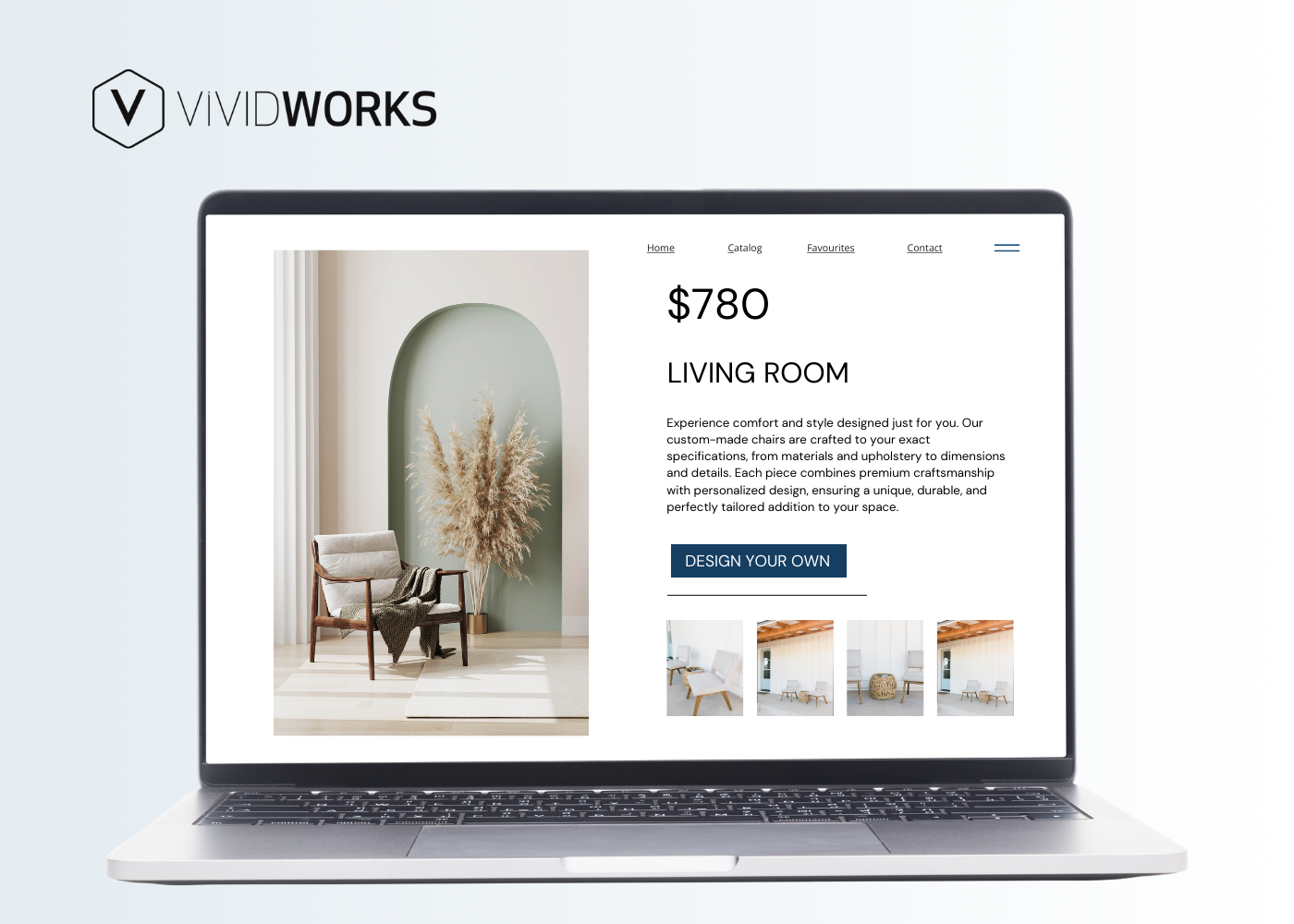
- High-quality product visuals, including lifestyle imagery and close-up details
- Accurate dimensions, materials, and configuration options
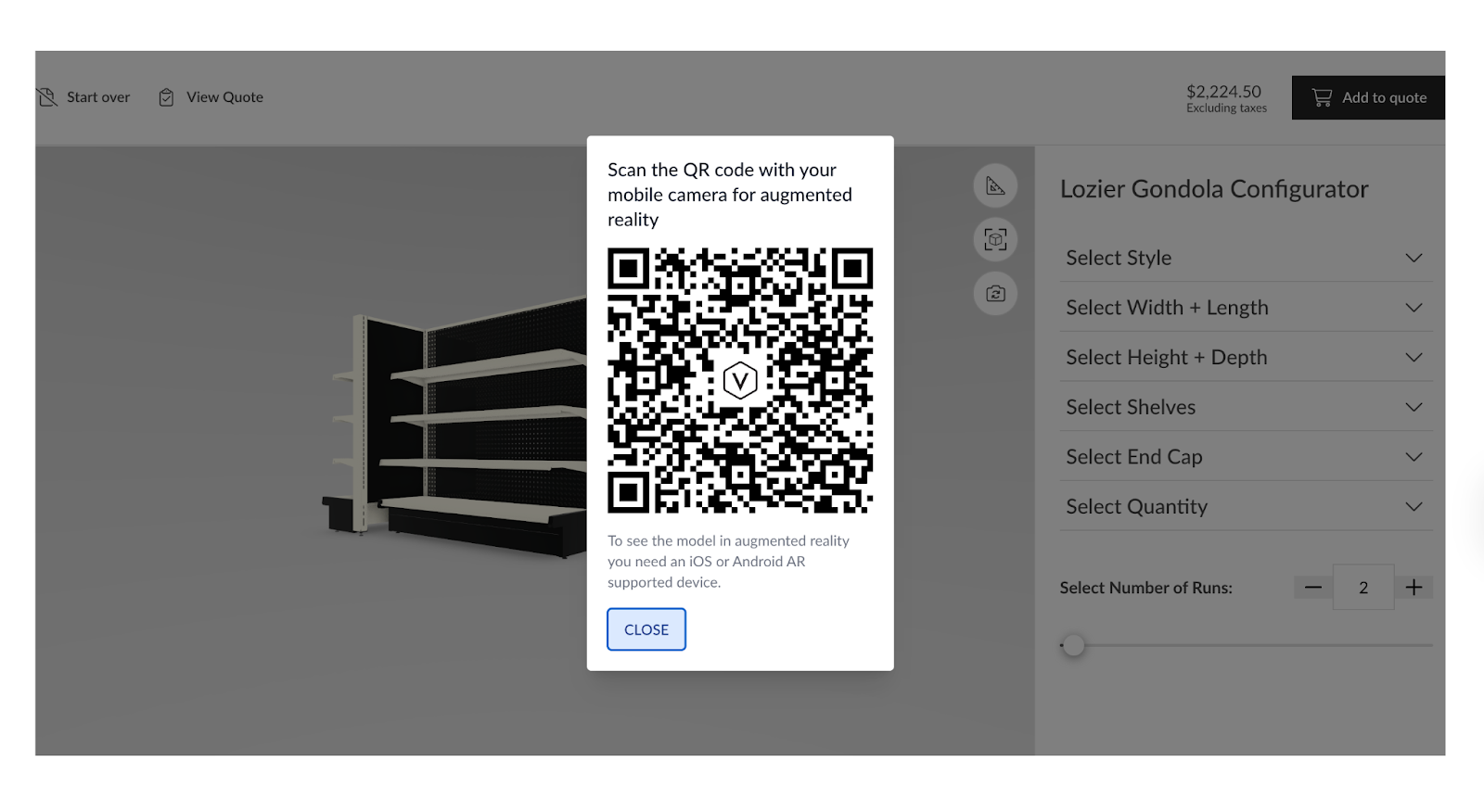
- Interactive tools such as 3D configurators and augmented reality for eCommerce.
When customers can visualize how a product displays in 3D and fits in their space, uncertainty is reduced. This creates a smoother journey from a discovery to a decision.
Boost Conversion Rates and Sale Growth
Well-structured furniture websites can help furniture and home decor brands boost conversion rates by:
- Presenting transparent pricing, including real-time updates for customized items.
- Reducing friction in the add-to-cart and checkout process
- Offering comparison-friendly layouts for similar products or configurations
- Building trust through detailed product information and professional design.
When these elements work together, customers are more likely to complete complex purchases, such as love seats, dining tables, modular sets, and sofa designs, confidently rather than abandon their carts. It is apparent that understanding how to create a furniture website is not only about the ability to design storefronts on furniture eCommerce platforms, but also about finding ways to minimize friction and unlock sales.
Increase Your Competitive Edge and Brand Identity
While many brands rely on marketplaces or standardized templates to save on launch time, a purpose-built website allows furniture businesses to differentiate themselves. For example, from typography and color palettes to imagery and page layouts, every design choice can contribute to how customers perceive the brand. This consistency builds recognition and reinforces trust, which are essential in high-value furniture purchases.
Additionally, the rising implementation of features, such as product previewers, 3D room planners, and furniture configurators on product pages positions the brands as innovative and customer-centric. Even many brands ultilize animations powered by these tools as content marketing to promote them, run ads across channels, and kickstart campaigns.
Most Common Online Places To Sell Furniture
Furniture brands today have multiple digital channels available to reach customers. Depending on your business size, target market, and growth strategy, the selection will be considered carefully. Below are the best online places to sell your furniture pieces:
- Business website
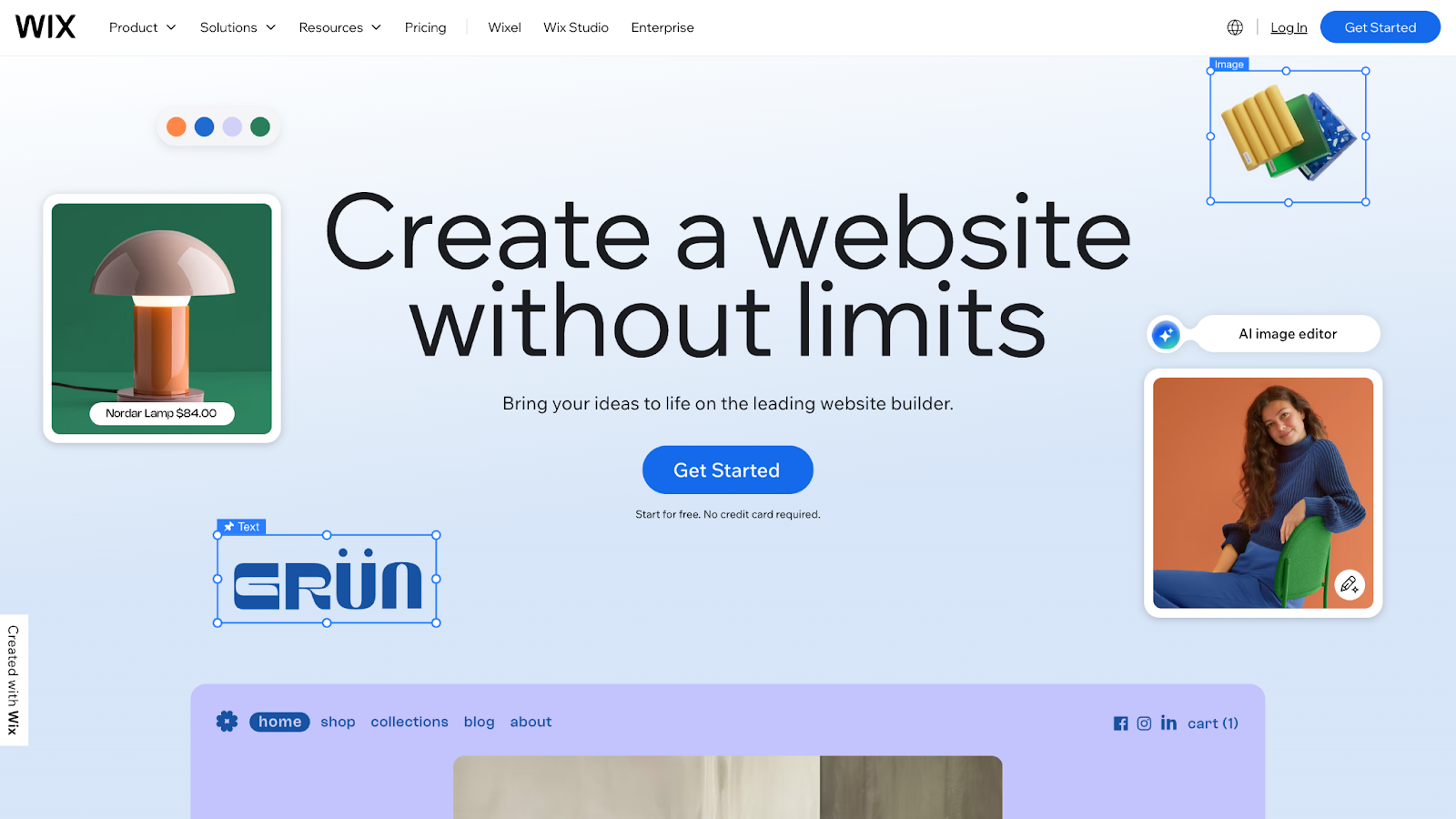
A business website is often the starting point for furniture brands establishing an online presence. These furniture websites focus on brand storytelling, product showcases, and lead generation, rather than direct transactions. Wix is an ideal page builder to consider for this target because it is top-rated for ease of use and offers a free-forever platform. If you wish to upgrade to advanced sales features, you can opt for a paid Wix pricing plan.
- Website with eCommerce features
This type enables brands to sell directly to customers online. Best eCommerce website builders, such as Shopify, BigCommerce, or Magento, are all recommended for furniture businesses because they offer scalability, security, and extensive customization options.
With the proper setup, you can manage product catalogs, pricing, inventory, payments, and shipping while integrating advanced tools to offer customers immersive experiences. This provides full control over branding and sales, making it ideal for long-term growth.
- Marketplaces
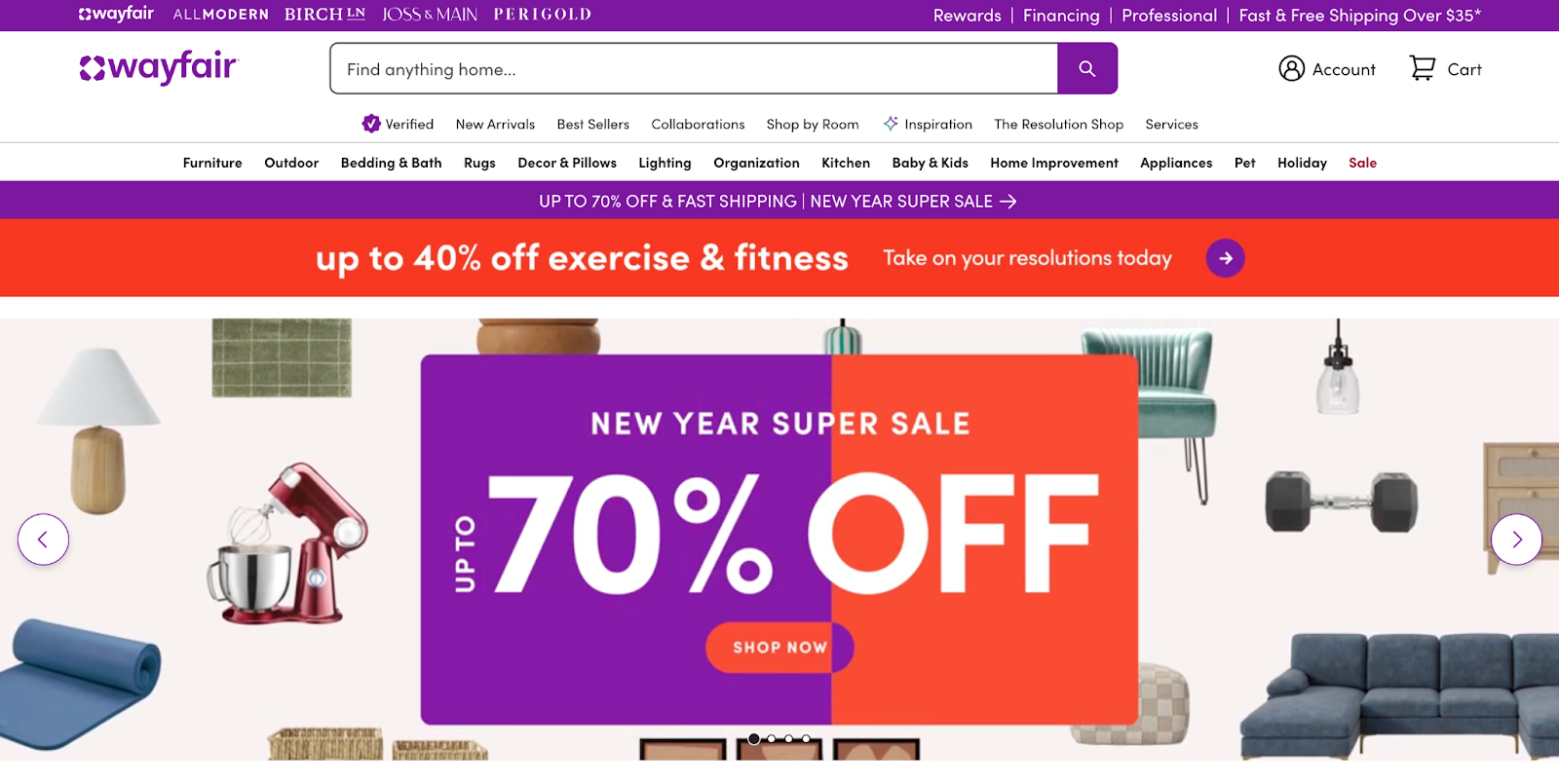
Platforms such as eBay, Etsy, and Wayfair function as large-scale eCommerce retailers. While they can help furniture brands and solo sellers reach new customers quickly, fees, strict platform rules, and limited customization often restrict long-term brand building. Thus, if you aim to build a strong brand identity, these retailers will not be a go-to choice.
- Apps (web app and mobile app)
Some furniture brands invest in dedicated web apps or mobile apps to deliver highly personalized experiences. However, they typically require furniture businesses to incur higher development and maintenance costs compared to normal eCommerce websites.
- Social online store
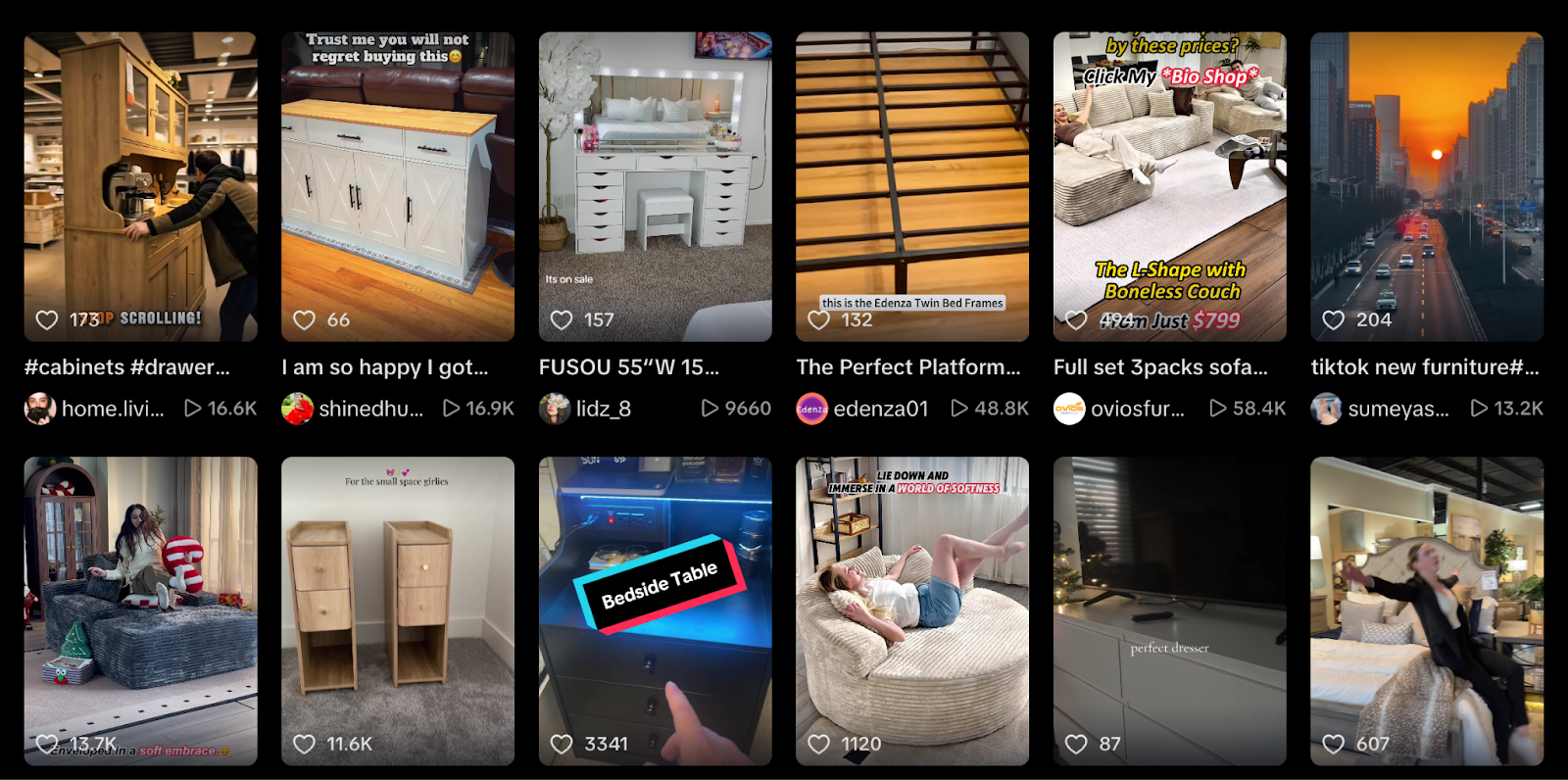
Social commerce continues to grow as a complementary sales channel, forecasted to surpass one trillion U.S dollars by 2028, especially for discovery and impulse purchases. Additionally, 25% of global buyers reported that Facebook is their preferred social commerce platform, followed by Instagram, which is also owned by Meta, with 20%. These numbers are found in a 2025 report by Statista on social commerce statistics.
However, TikTok Shop has emerged, accounting for a certain share of furniture sales by enabling direct sales through short-form video content and influencer-driven campaigns. Therefore, you need to learn how to balance promotion activities across social channels.
The furniture website examples featured in this blog focus specifically on standalone brand websites. These sites showcase how leading furniture businesses utilize design, optimization, and innovation to differentiate themselves, establish strong brand identities, and compete effectively in the global market. You can learn how to structure the customer journey, design web page sections, and incorporate innovative technologies.
Top 5 Website Examples For Furniture Businesses To Inspire
#1. Montana
Montana, a famous B2C company, specializes in custom cabinets in Northern Europe. This brand stands out with a modern, solid-coloured furniture website, featuring a clean layout for the Private (for sales) and Professional (for extensive documents) sections. One of the most notable aspects of Montana's online store design is its effective organization and display of high-quality images across various pages, including homepages, landing pages, and product pages. Notably, the brand has implemented a Visual Configure, Price, and Quote (Visual CPQ) solution to transform its sales processes for bespoke cabinets.
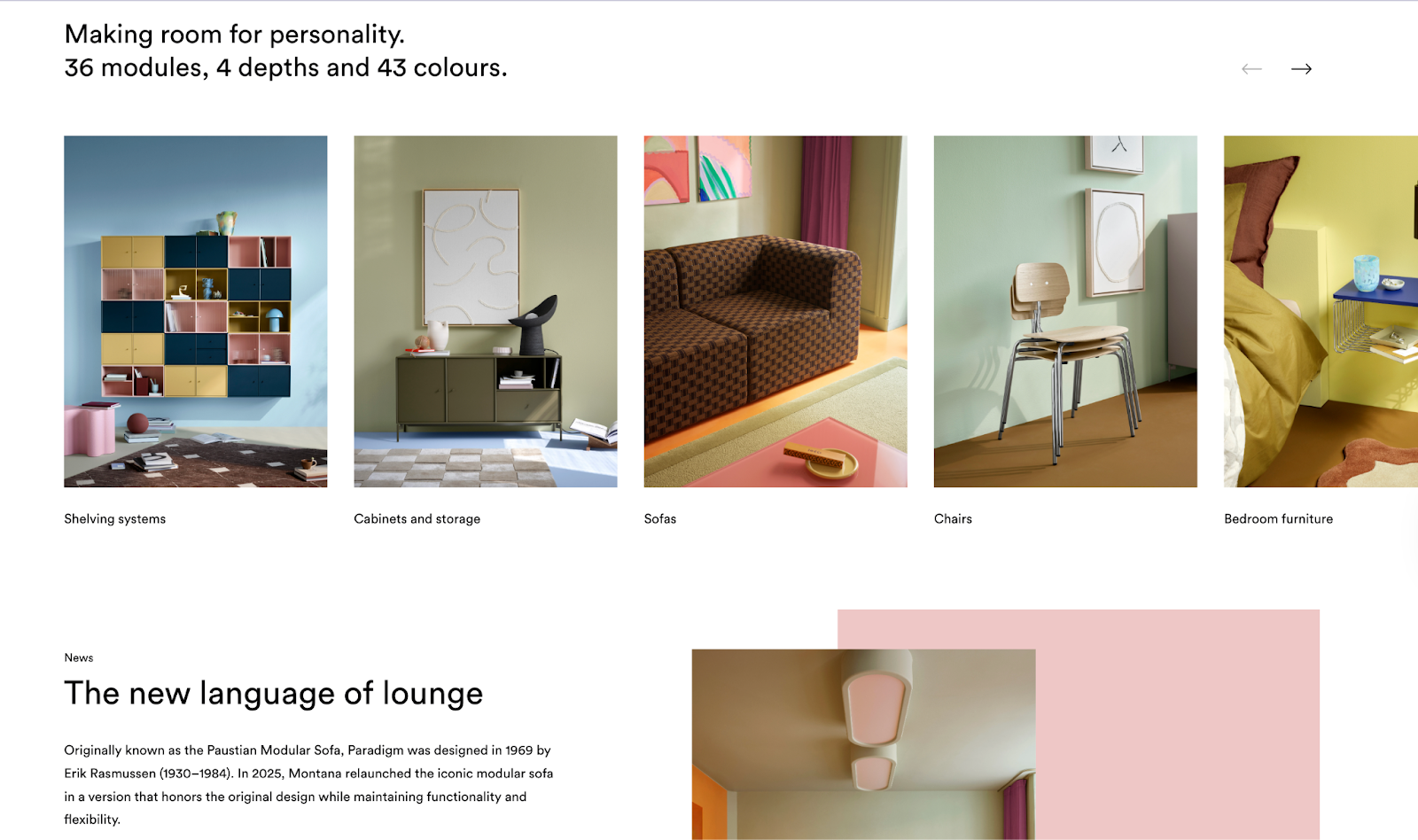
In short, Visual CPQ enables users to configure their desired furniture and view prices and quotes simultaneously. This ensures the highest level of understanding of what you are customizing and minimizes the surprises during your online shopping experiences.
Design Pro #12 Walk-around designs
What we love most about its design:
- Visual CPQ on the product page to customize cabinets and see real-time prices
- Minimalist layout that keeps the focus on the product and its benefits
- An engaging hero section with a clear CTA, headline, and introduction video
- A dedicated storytelling section to impress customers with its iconic products
- 3D previews from the highlight section for made-to-order accessories
- High-quality 2D and 3D visuals to keep the site professional and trustworthy.
#2. IKEA
IKEA is one of the world’s most recognized furniture brands, known for combining affordability, functionality, and Scandinavian design. Its furniture website features a highly structured layout that supports millions of products and users, but ensures fast loading. In short, IKEA is rated for usability, performance, and accessibility, making it easy for buyers to explore products by room, style, and need, while maintaining an intuitive UX.
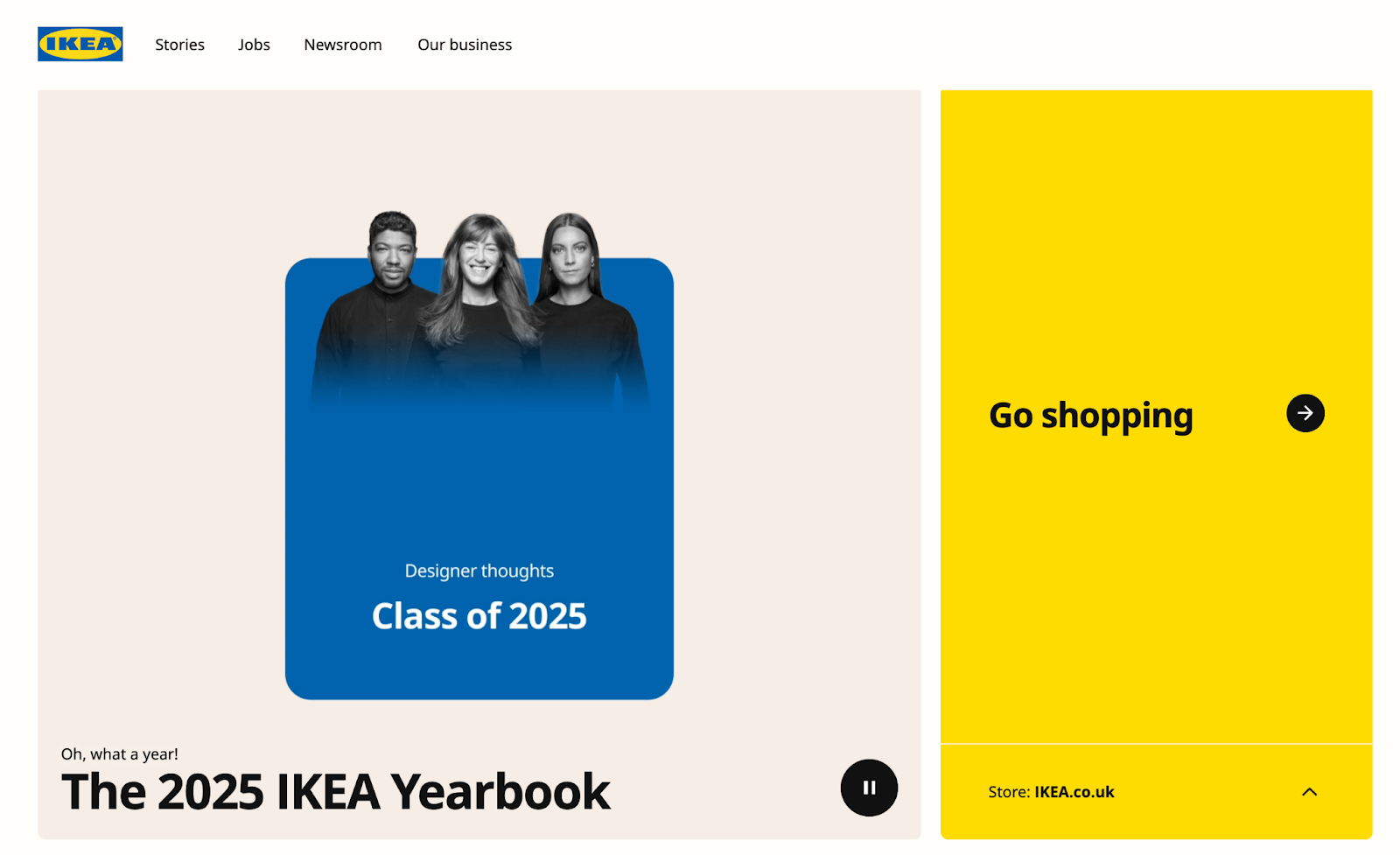
More importantly, IKEA websites have the best room planner, allowing customers to project a similar space, such as their home or office, to visualize furniture accurately. Even IKEA divides its offerings into PAX Planner, Kitchen Planner, and Storage Planner to satisfy a range of shopper needs. Otherwise, choose “Design any space in your home.”
What we love most about its design:
- Clear navigation organized by room and product category
- Powerful filtering and search capabilities
- Fast-loading pages optimized for both desktop and mobile
- Large product imagery with dimensions, materials, and lifestyle scenes
- Advanced 3D room planner tools and AR for furniture in the real-world spaces
- Collection pages are designed to guide customers through purchase journeys.
#3. New Works
What makes a good eCommerce website design is that New Works presents a refined, editorial-style furniture website that blurs the line between eCommerce and a digital design journal. The homepage instantly establishes a calm, curated atmosphere through the use of muted tones, generous white space, and carefully staged photography. Also, the navigation menu is straightforward, with sections for Lighting, Furniture, and Objects, allowing buyers to quickly select, configure, and proceed through the checkout process.
Moreover, New Works offers an intuitive 3D shelving system configurator on its product page, allowing customers to create their desired designs effortlessly. They can choose configurations, wall bars, colors, and shelves, and immediately see the price and quote. Ultimately, they can visualize their designs in the living room or home office through AR to assess the fit level in a real-world context.

What we love most about its design:
- A gallery-led layout that treats products as design pieces for a premium identity
- Intuitive navigation that balances “Shop” with inspiration, stories, and collections
- Clean product listing pages with consistent spacing and clear price previews
- Editorial content and brand storytelling directly integrated into the user journey
- 3D configurator with AR for precise configuration and enhanced experiences.
#4. Lundia
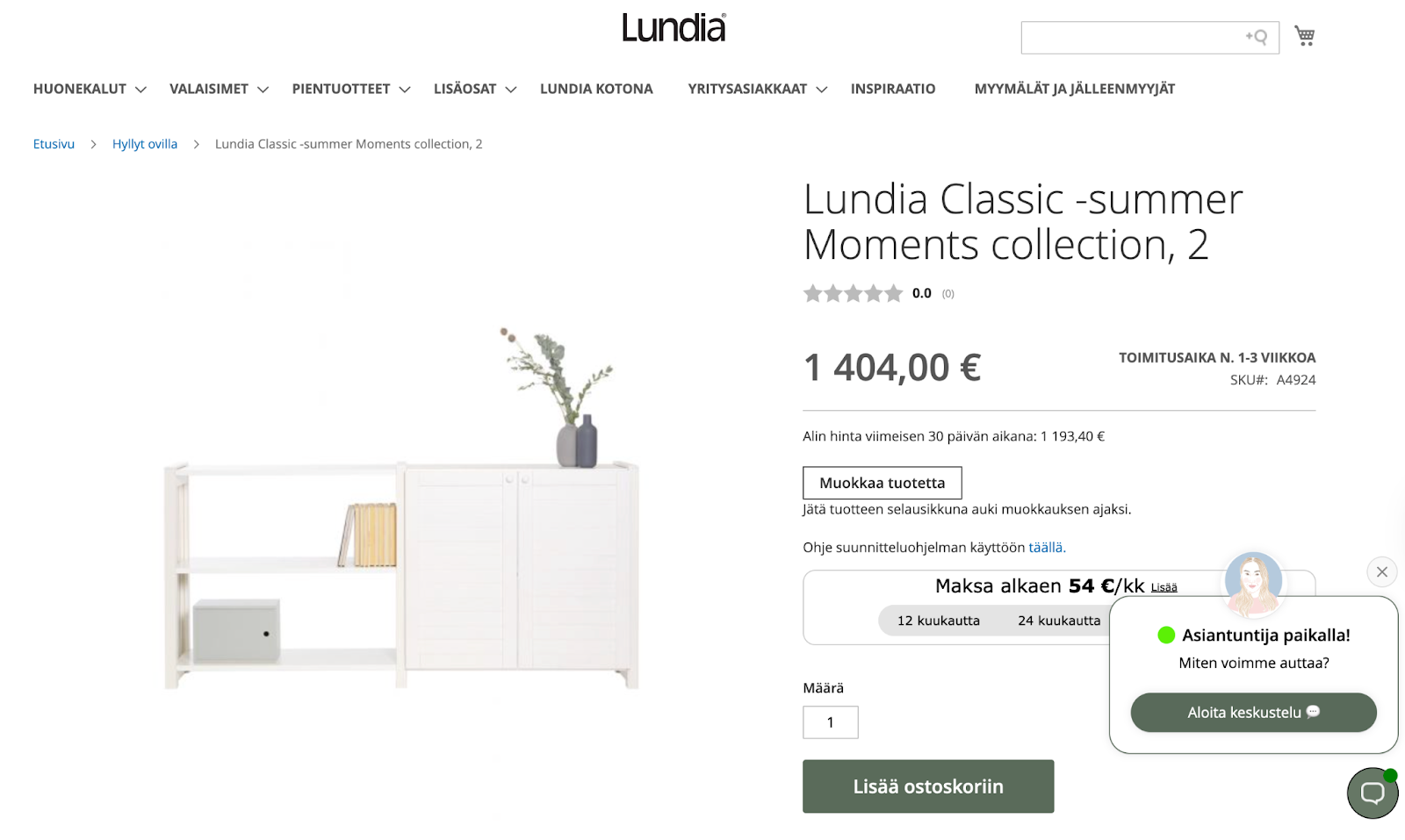
This furniture website example is from Lundia, a renowned furniture manufacturer and retailer since 1948. The business stands out with its flagship product, the Lundia Shelving System, offering custom choices to match Finnish homes. Besides a well-performing store with clear information and a seamless checkout flow, Lundia engages customers with a 3D product configurator powered by VividWorks. “A designer can use the program to present different options, allowing the customer to see the adaptability of our product,” Iris Hollo, Development Manager, says about the role of this configurator during in-store consultations and home visits, which delivers shoppers personalized design experiences.
What we love most about its design:
- 3D visualization and configuration online tool to transform the sales of Lundia’s complex shelves
- A “Sort By” for “Position”, “Name”, and “Price” for easy scanning and selecting
- Intuitive categorization and clear prices on product carousels
- Visual thumbnails for each product category for better product identification
- A minimalist Nordic aesthetic that uses white space and lifestyle imagery
#5. Tylko
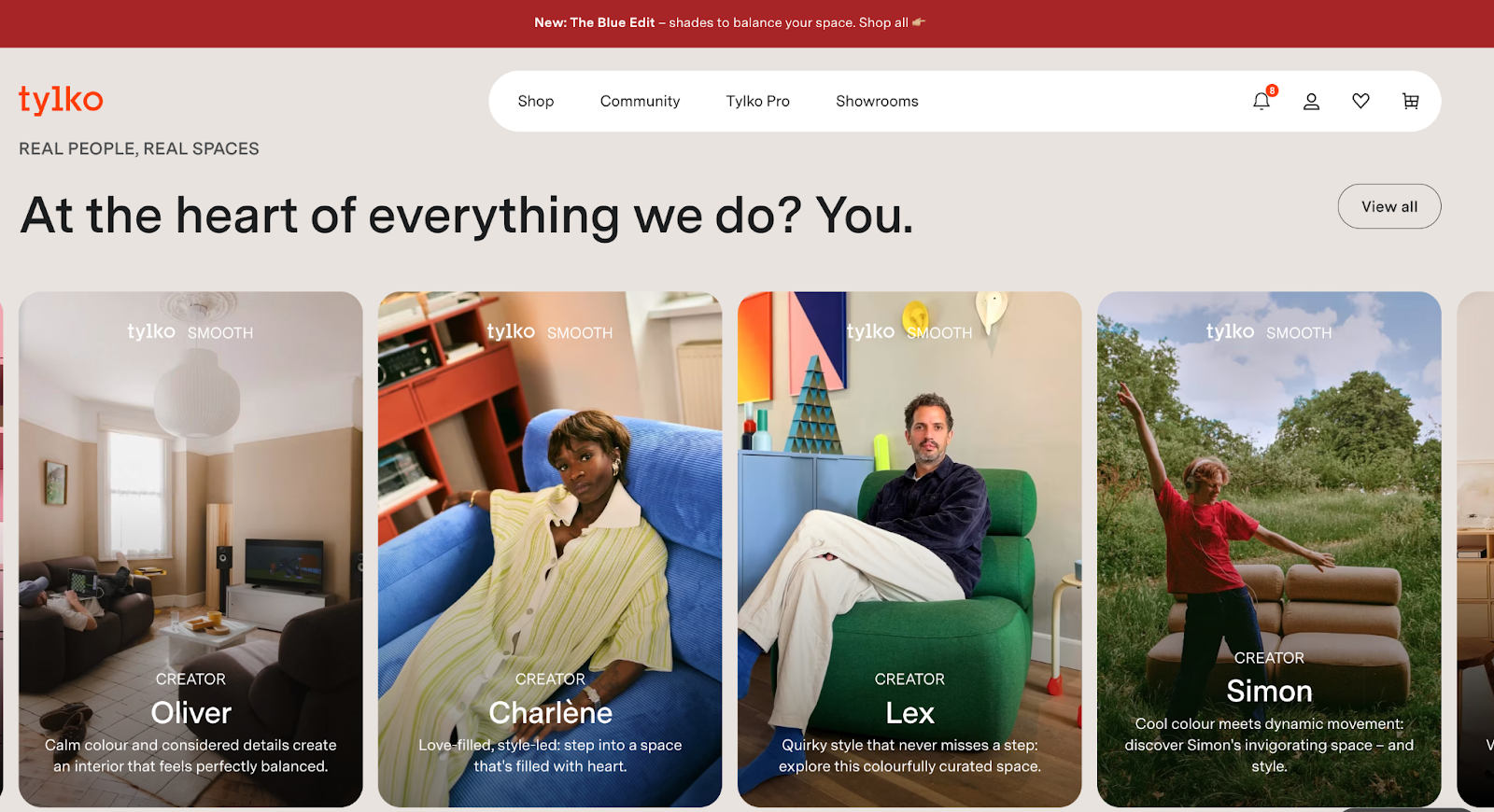
Tylko is a modern furniture brand that redefines the shopping experience through a "tech-first" and “so smooth navigation” approach. Their platform centers on CustomFit technology, enabling users to design furniture tailored to their needs through 4 phases.
In other words, Tylko tries to encourage customers to become "creators," ensuring every piece, from wardrobes to sideboards. Its furniture website is also highly evaluated for its functionality and vibrant colors, one of the aspects that made it viral on TikTok recently.
What we love most about its design:
- Vibrant color swatching so that users can instantly visualize different finishes
- The “You design it” interface that uses proprietary tech to eliminate guesswork
- A community section to showcase real customers and their curated interiors
- Large, rounded “bubble” buttons for product categories for playful feelings
- High-contrast top banners and distinct badges to ensure promotions are visible.
eCommerce Website Design Best Practices
When building eCommerce websites, successful furniture websites follow these tips:
- Utilize a reliable eCommerce website builder for scalability and flexibility
- Ensure mobile responsiveness and fast loading speed
- Incorporate innovative visualization technologies such as 3D and AR
- Offer high-quality product visuals from multiple angles
- Enable full eCommerce functionality, including checkout and payments
- Optimize your furniture website for SEO to drive long-term organic traffic.
Contact us to discover how VividWorks powers up your eCommerce stores with 3D solutions, including 3D configurators, AR previews, Visual CPQ, and 3D room planners.
Table of Content
-3.avif)
Streamline your process today!