

As more homeowners and contractors choose to research and purchase doors online, delivering a seamless digital purchasing experience has become essential. Improving door eCommerce conversion rates goes beyond attracting traffic; it requires helping shoppers actively customize and confidently evaluate the design so they can order the right product.
That is where a door configurator with realistic product visualization has become one of the most effective practices for satisfying expectations and streamlining the checkout process. In addition, proper optimization on other UX or UI perspectives can help drive better results.
Right now, keep scrolling to discover more!
What is a Good Conversion Rate for door eCommerce?
There is no universal benchmark for door eCommerce conversion rates, as performance depends on factors such as product complexity, traffic quality, pricing, and customer trust. In fact, average eCommerce conversion rates across industries hover around 1% to 4%, but custom furniture pieces like doors typically land on the lower end, between 0.5% and 2.0%,
Let’s see how door eCommerce compares to adjacent categories with our highlights below:
- General eCommerce: 1.5% - 4.0%
- Furniture and home decor: 0.5% - 2.0%
- Custom/Configurable products: 0.5% - 1.5%
- Door eComerce: 0.5% - 2%
- Door eCommerce with configurator: 2% - 5%
Keep in mind that investing in building a high-converting eCommerce website sets the right foundation, and the same principles that lift furniture eCommerce conversion rates apply directly to your online stores. Also, with these complex designs, stores that pair product visualization with a smooth shopping journey consistently outperform those that do not.
6 Proven Ways to Increase Door Ecommerce Conversion Rates
1. Use a Door Configurator
Implementing effective door configuration software can help transform online door sales. Instead of scrolling through static product pages, shoppers can actively build their ideal door, adjusting colors, layouts, glass style, material, dimensions, and hardware in real time.
This immersive experience can turn customers from passive browsers to active shoppers. Truly, when someone has spent time configuring their perfect door, they are far more invested in making the order. Compared with 2D configurators, 3D configurators enable deeper personalization, allowing customers to visualize options from every angle instantly.
As a result, they can see exactly what they are buying before checkout, reducing the abandonment cart rate and driving higher door eCommerce conversion rates. In other words, using these manufacturing product configurators for bespoke doors helps improve order accuracy and eliminate costly rework due to mistakes or mismatched expectations.
More importantly, a well-built door configuration tool is not just a customized visual feature; it is an eCommerce conversion optimization engine integrated directly into your store. In fact, most online door configurators can work well with popular eCommerce platforms such as Shopify, WooCommerce, and Magento, as well as CRMs and ERPs. This enables a unified workflow from offering custom doors with eCommerce to delivering buyers accurate orders.
2. Show Real-time Pricing
Pricing uncertainty makes it more difficult for businesses to increase door sales online. That’s why we mention real-time pricing, which can solve this by surfacing base price and upgrade costs based on selections, even when using a 3D configurator or basic custom sections.
Nowadays, tools like CPQ for furniture automate pricing calculation, and the same logic applies to made-to-order doors: every option change will instantly reflect an updated price. Visual Configure, Price, Quote (Visual CPQ) is another compelling solution to consider, where users can configure and preview the door on their own and see the price in real time. Ultimately, when customers know the total cost before committing, they may convert faster.
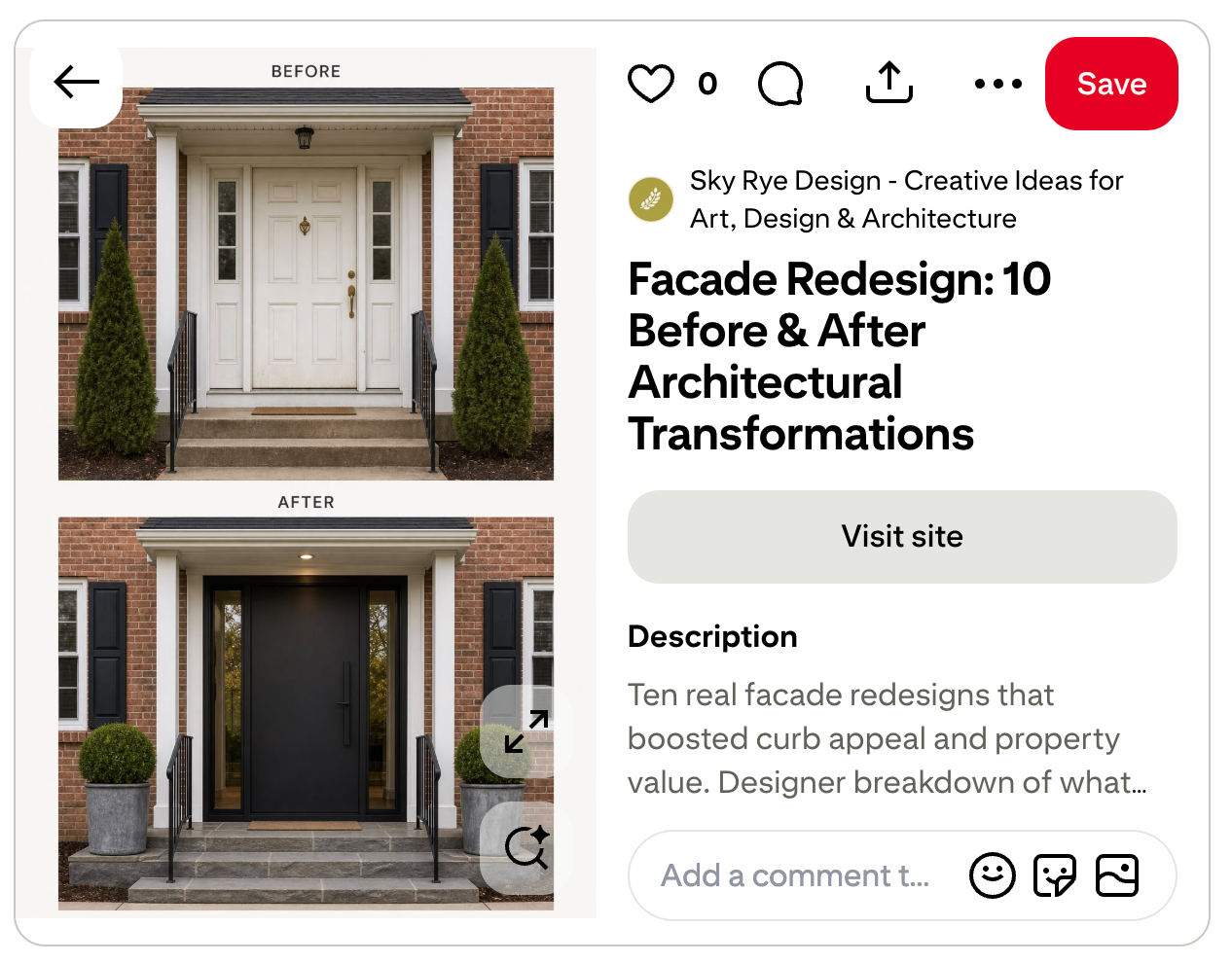
3. Add Before-and-After Photos
This type of social proof helps buyers answer the question they are really asking: “Will this make a difference for my space?” A gallery of installed doors in kitchens, living rooms, entryways, and bedrooms does more to build purchasing confidence than any spec sheet.
You can consider using different architectural styles, color schemes, and lighting conditions to give visitors the visual context they need to make a more informed decision. Additionally, if you are selling unique custom products, you can pair these images with a dedicated custom door design tool—it can create a shopping experience that feels personal and trustworthy. You can completely utilize these photos across platforms, from websites to social media.
4. Offer AR and VR Visualization
Both augmented reality (AR) and virtual reality (VR) are technologies that can elevate customer experiences with your business and effectively transform sales. However, with a typical sector like doors, AR visualization has become more powerful thanks to its features. Customers can preview selected or custom doors in their real-world home environment on a smartphone to evaluate them more thoroughly, especially when buying high-cost designs.
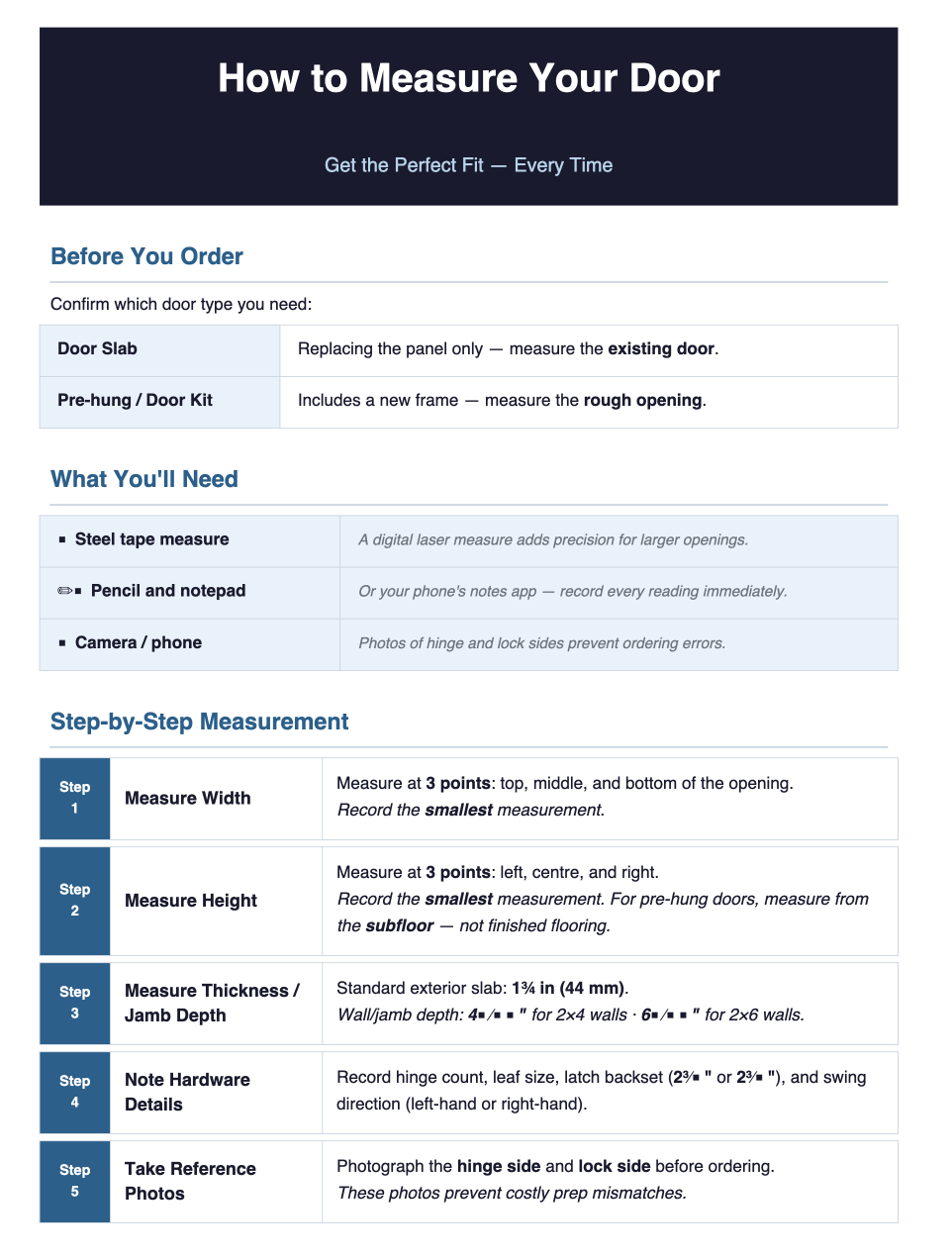
5. Provide Detailed Measurement Guides
Doors are unforgiving when it comes to sizing. This is why measurement guidance is not just a nice-to-have; it is a core driver of improving your door eCommerce conversion rate. Therefore, it’s recommended to provide customers with step-by-step video tutorials and a downloadable PDF guide. When they feel fully equipped to get sizing right, they are more likely to place the order rather than wait until they can visit a showroom for real testing.
6. Use High-Quality Product Images
Buyers cannot touch or feel a door online, so your images have to do the heavy lifting. That means going beyond a single front-facing photo. You should provide them with views from multiple angles: front, side, open position, and interior close-ups that can offer greater clarity.
A 3D product viewer takes this further, letting customers rotate and zoom into every surface on demand. You can also find a similar immersive experience when interacting with 3D product configuration software, where real-time 3D visualization is a core functionality.
CRO Metrics Every Door eCommerce Business Should Track
eCommerce conversion rate optimization is not a one-time project; it is an ongoing discipline. To know whether your improvements are working, track these KPIs consistently:

Common Mistakes That Hurt Door eCommerce Conversion Rates
Even well-designed eCommerce door stores leave revenue on the table by making avoidable mistakes. Here are common ones that are indicated by leading manufacturers:
- Hidden Shipping Costs
Revealing large delivery fees at checkout is the fastest way to lose a sale. Therefore, it is great to display shipping estimates early, ideally on product pages or during configuration.
- Poor Product Visualization
Low-resolution images, limited angles, and no interactive preview make it impossible for customers to feel confident. Investing in visualization is non-negotiable for high-value items.
- Slow Page Speed
Every second of load time costs door eCommerce conversion rates. Heavy image files and unoptimized configurators are common culprits. Thus, audit your Core Web Vitals regularly.
- Missing Reviews
Social proof is a trust signal that every store needs to include, and eCommerce door brands are not an exception. Customers are more likely to want to see that others have purchased successfully and been satisfied. That’s also why displaying reviews prominently is important.
- Complicated Checkout
Multi-step checkouts with forced account creation drive abandonment. In fact, checkout optimization should have fewer fields, guest checkout options, and clear progress indicators.
Conclusion
Optimizing door eCommerce conversion rates comes down to giving customers the confidence and clarity they need to say yes. Offering unique, immersive experiences with 3D door configurators, real-time product visualization, AR previews, dynamic pricing, and more is essential for turning potential visitors into real buyers and establishing a strong identity.
Book a demo with VividWorks 3D configurators to better understand how these tools work!
Table of Content
-3.avif)
Streamline your process today!




.png)
