


Modern customers no longer want to pick from a catalog; they prefer shaping what they purchase. Selling custom products has become easier thanks to new technology, but also more competitive, since most businesses now offer some form of product personalization.
This article covers the latest statistics, the trends shaping custom products 2026 and the future, and practical tactics to help compete effectively. Let’s keep scrolling to explore more!
The State of Custom Products in 2026: Key Statistics
These product customization statistics show where demand and investment are heading.
Market size and growth
- Product configurator software is valued at roughly USD 1.28 billion in 2026, growing at a 7.8% CAGR through 2035 (Business Research Insights).
- The ecommerce personalization software market is projected to grow from USD 263.2 million in 2023 to USD 2,412.3 million by 2033, a 24.8% CAGR (Market Us).
- The market for personalized products such as gifts was USD 29.83 billion in 2024 and should reach USD 57.19 billion by 2033, a 7.5% CAGR (SkyQuest).
- Print on demand was worth USD 10.8 billion in 2025 and is forecast to reach USD 57.5 billion by 2033; North America held a 36.0% share (Grand View Research).
What it means: Rising Investment is flowing into tools like 3D product configurators that make mass customization practical and accurate, not only into the products themselves.
Consumer demand and willingness to pay
- 76% of consumers said personalized communications influenced their consideration of a brand, while 78% said they were more likely to repurchase when receiving personalized communications (McKinsey & Company)
- 84% of shoppers are interested in personalized products, and many would not hesitate to pay more to get them (Accenture Report)
What it means: Buyers may accept additional production time when customization offers meaningful value. Clear delivery estimates and a compelling experience remain essential.
Business impact and personalization challenges
- Faster-growing companies derive 40% more of their revenue from personalization than slower-growing counterparts (McKinsey & Company)
- Effective personalization can increase revenue by 5–15% and marketing ROI by up to 30%. These are potential impacts, not guaranteed results (McKinsey & Company)
- 53% of customers experienced negative outcomes from personalized marketing. Notably, these customers were 44% less likely to buy again (Gartner)
What it means: More personalization doesn’t automatically produce better results. Relevant recommendations and clear choices matter more than overwhelming buyers with options.
7 Custom Product Trends Shaping 2026
1. 3D Configuration and Real-Time Visualisation Become the Default
Static photos can not communicate every combination of components, finishes, dimensions, and more in a complex product range. A 3D product configurator is designed to enable the ability to customize the product and instantly visualize the results from all angles. That’s why a 3D configurator for product customization is becoming standard for configurable products.
Read more: What is 3D product configuration? Benefits & Examples
2. Augmented Reality (AR) Becomes a Practical Purchase Tool
Augmented reality (AR) extends digital configuration into the buyer's physical environment. You can preview custom items in your room to better understand their size and appearance.
When integrated into a furniture configurator, AR complements 3D visualization by showing how a highly modular, complex piece such as a sofa fits your real-world space. Combined with accurate dimensions, it helps customers make more confident purchasing decisions.
3. Generative AI Enhances Product Discovery and Guided Selling
Generative AI helps with marketing content and shopping assistants, but it doesn't replace accurate configuration. Selling custom products still needs to meet actual dimensions, product rules, and manufacturing requirements. Thus, the strongest approach to lead this trend is to combine AI-assisted guidance with a reliable 3D product configuration engine.
Read more: AI visual configurator vs 3D Configurator: Why Custom Brands Still Need 3D
4. Visual CPQ Connects Product Configuration with Pricing and Quoting
Visual CPQ (configure, price, quote) brings product selection, pricing, and quotation into one connected process. Instead of manually calculating every variation, you can configure a product and see real-time prices. This reduces repetitive quoting work and makes complex purchases easier to understand, enabling effective sales automation for custom products.
5. B2B Buyers Expect B2C-Style Self-Service Experiences
Dealers, distributors, architects, and trade customers increasingly benefit from online tools that let them explore options independently. In fact, for B2B custom products, self-service does not eliminate sales support. Instead, it helps customers clarify specifications, compare configurations, and request quotes before speaking with a representative. Sales teams can then focus more on complex requirements rather than repeatedly creating basic designs.
Read more: Choosing The Best Software To Manage B2B Sales Pipelines
6. Made-to-Order Manufacturing Supports More Sustainable Production
Made-to-order production enables businesses to manufacture products according to confirmed customer requirements instead of relying entirely on preassembled stock. However, sustainability benefits depend on production methods, material efficiency, transport, and demand planning; made-to-order does not automatically eliminate waste.
7. Automated Configuration Connects Sales Directly to Production
As customization expands, manually transferring specifications between sales and manufacturing becomes increasingly complex. Automated workflows can generate bills of materials (BOMs), component lists, and order specifications directly from validated configurations. Integrating these outputs with eCommerce, CRM, and ERP systems helps ensure consistency throughout the process, from initial product selection to production.
How to Sell Custom Products: 5 Updated Tactics for 2026
This part guides you on how to sell custom products with fewer errors and more confidence. Each tactic helps you sell customizable products online without overloading your teams.
- Start with an Interactive 3D Configurator
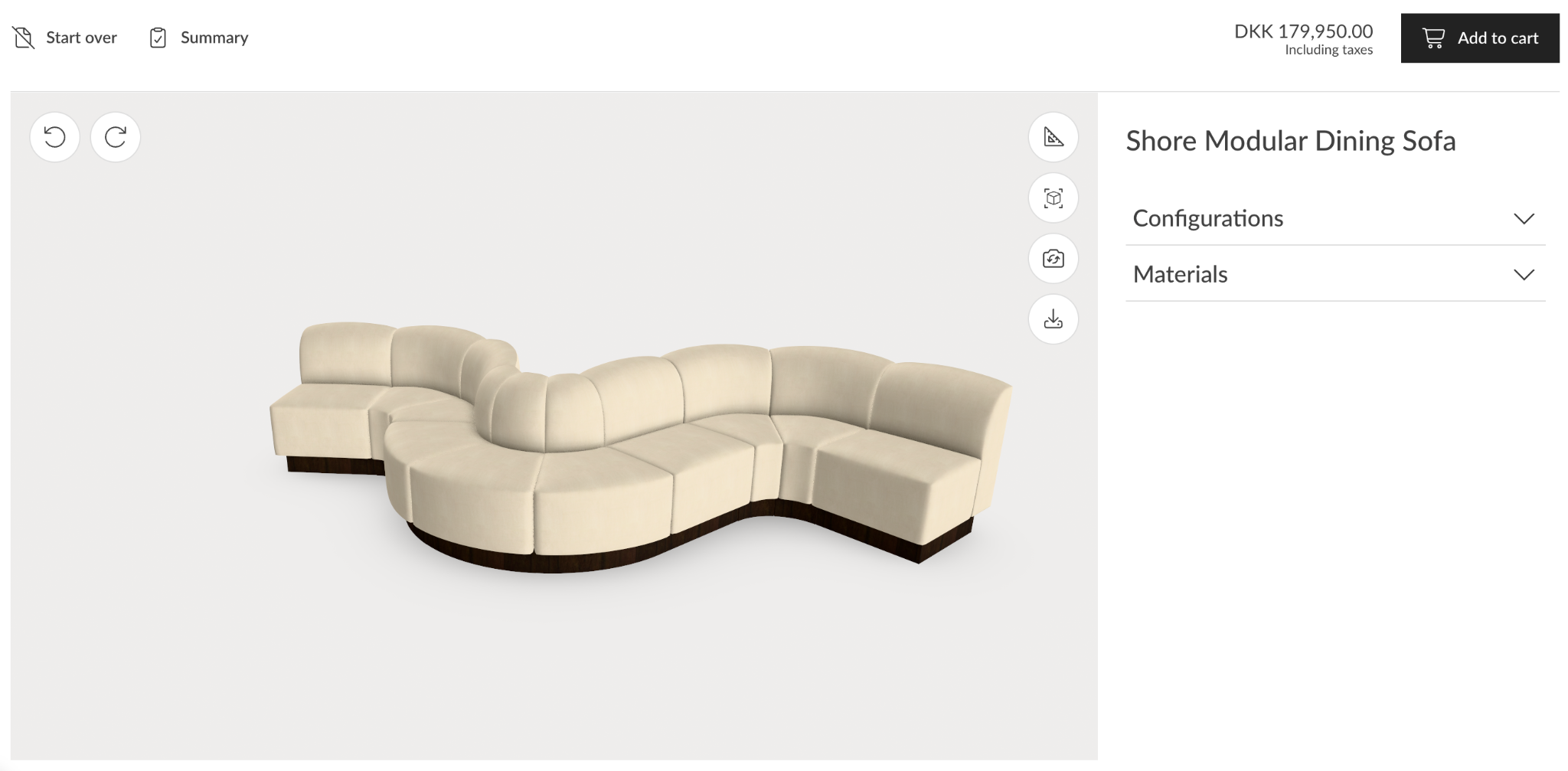
An online product configurator allows customers to change modules, colours, and dimensions while seeing their selections update instantly. Displaying real-time pricing alongside the visual changes also helps customers understand how each choice affects the cost. This works well in B2C or eCommerce, avoiding unexpected expenses at checkout.
- Use Configuration Rules to Prevent Invalid Combinations
More choice creates more opportunities for incompatible selections. A configuration engine should enforce product rules, preventing product combinations that can’t be manufactured.
In this way, choosing the right configurator for modular products becomes more important, as they often come with lots of complex components and dependencies. Understand that VividWorks, one of the top-rated 3D configuration providers, offers rule-based configuration to handle complex product rules and modular building logic. This helps ensure that customers can explore different designs while keeping configurations valid and orderable.
- Add AR to Help Customers Visualise Products in Their Space
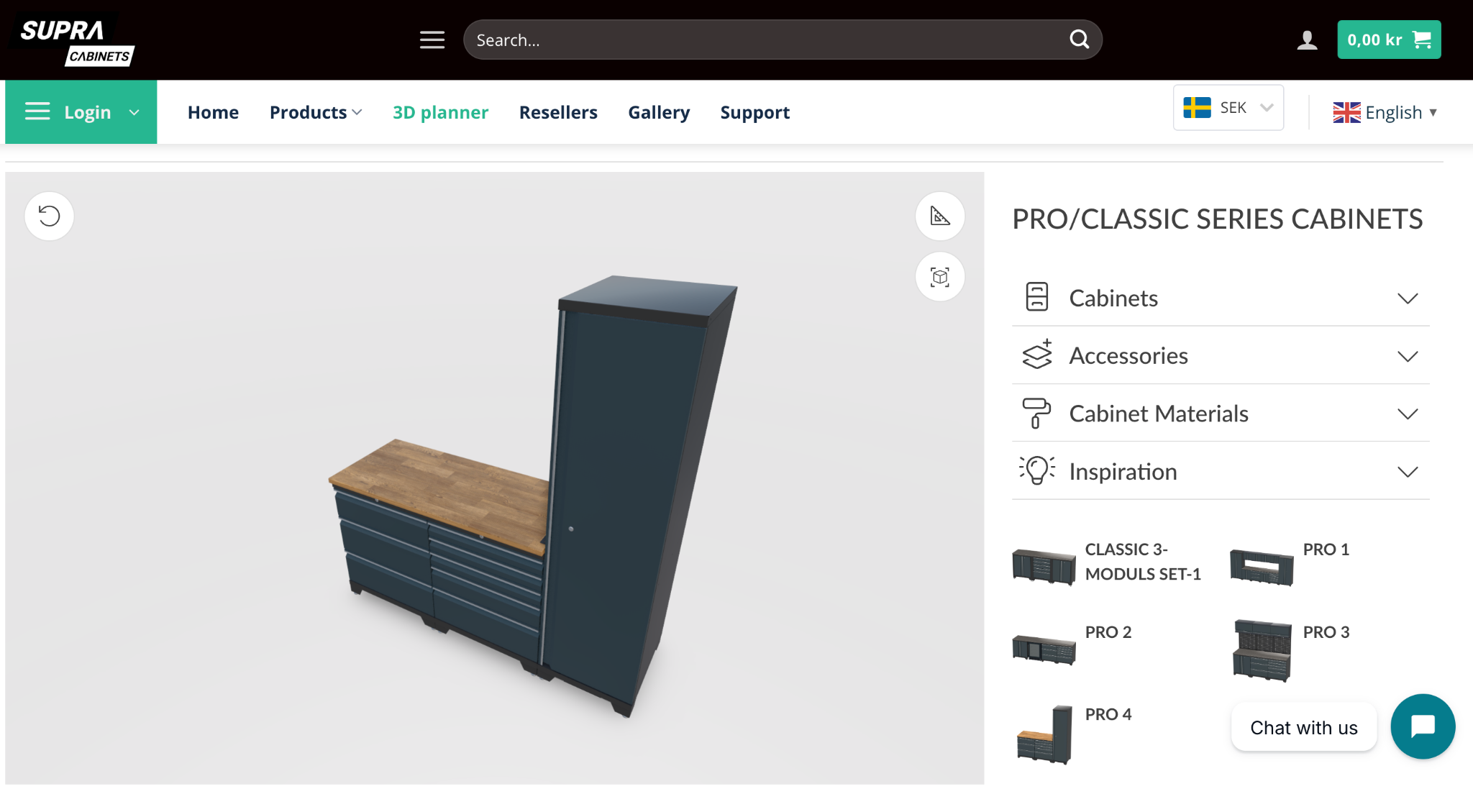
If you sell highly modular furniture, using AR can offer strong product visualization to build the confidence that turns browsing into buying. For example, someone configuring garage storage could preview the design against their available wall space before placing an order.
One practical way to enable this experience is through a QR code that customers scan with a smartphone or tablet to preview the configured product in their real-world environment. However, AR should complement, not replace, dimension checks and compatibility rules.
- Simplify Decisions with Smart Defaults and Bestseller Configurations
Too many choices can slow down the buying process. Thus, it’s key to have recommended configurations, popular presets, and sensible defaults to give customers a starting point. They can start with a suitable arrangement and customize components when necessary.
- Connect Product Configuration to eCommerce, CRM and ERP Systems
A configurator delivers greater operational value when the final design connects to the rest of your business systems. In eCommerce, a shopper could configure a shelving system, receive real-time pricing, add the design to their cart, and complete checkout. For larger B2B orders, the same configuration could generate a quote and a production-ready BOM.
Integration keeps product specs consistent across sales, ordering, and manufacturing. It also reduces repetitive data entry and supports a smoother process as order volumes increase.
2 Real-World Examples To Inspire
1. Bunker: Turning modular storage into a self-service experience
BUNKER Storage, part of Draper Tools, offered modular products that customers often perceived as fixed 14-or-25-piece kits. So, creating bespoke layouts manually could take internal teams nearly a week when several designs were being handled simultaneously.
Partnering with VividWorks, BUNKER introduced an online 3D configurator with room-planning capabilities. Customers can combine storage components, visualize the designs in their own spaces, save specifications, and request quotes. This streamlines the process from initial ideas to usable, ready specifications while improving buyer self-service.
2. New Works: Making complex shelves easy to visualize and buy
Danish design brand New Works faced a similar challenge with selling custom products. Architects and customers previously spent up to 30 minutes working shelving configurations manually, with missing components and incorrect dimensions creating additional risks.
Building configurator software with VividWorks helps the company effectively introduce real-time 3D visualization, pricing, and automated order summaries. Customers can build and customize the design, check dimensions, and explore how shelving will look in a room.
As a result, design sessions dropped from 30 minutes to 5 minutes, reducing design work by approximately 80%. On the configurator's first day, a customer also placed an $8,000 order.
Conclusion
Demand for selling custom products continues to create opportunities in both B2C and B2B markets. However, offering more variations is not enough to stand out. You need to make every configuration easy to visualize, price, validate, and order. By combining interactive 3D, reliable rules, and connected business systems, you can deliver a better buying experience.
Book a demo to explore how 3D configuration can support your products and sales process.
Table of Content

Streamline your process today!


