
With high-value products like furniture, converting visitors into buyers remains challenging. Large product sizes, high prices, and the need for customization and visualization mean shoppers spend more time considering their purchase. That’s also why optimizing furniture eCommerce conversion rate is essential to ensure sustainable growth for your business.
This blog clarifies the fundamentals of conversion rate optimization (CRO), benchmarks industry performance, and lists the 5 CRO best practices that can work well in this aspect. Now, let’s dive in to become one of the leading brands in furniture eCommerce optimization.
What is Conversion Rate Optimization (CRO)?
Conversion rate optimization (CRO) is the practice of improving the website experience to increase the percentage of visitors who complete a desired action. A conversion can be:
- Macro conversions to generate sales through completing a purchase
- Micro conversions to indicate buying intent, such as adding products to the cart, creating an account, subscribing to emails, and saving product customization options.
What is considered a good conversion rate for an online furniture business?
Understanding industry benchmarks helps furniture brands evaluate whether their website performance is competitive. The 2025 average eCommerce conversion rate for furniture and home ranges from 1.2% to 1.6%. However, conversion rates (CVR) from paid channels tend to be higher. The values for Google Ads and Facebook Ads are 2.73% and 3.77%, respectively. These higher rates may result from many furniture businesses strategically investing in targeted advertising to reach more relevant shoppers and capture stronger purchase intent.
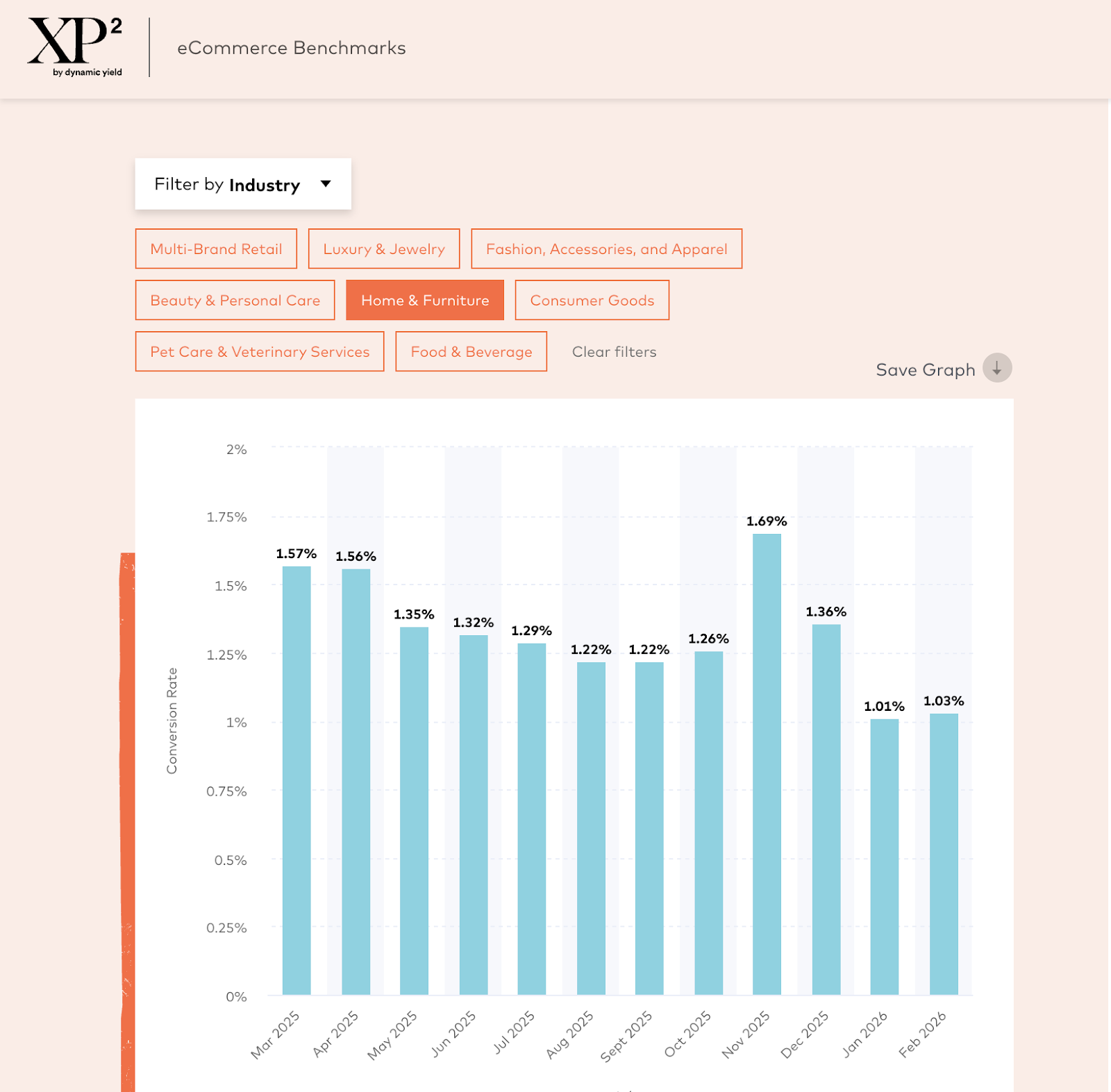
Therefore, if a furniture website achieves a CVR above the industry average, especially close to or exceeding 2%, it is generally considered strong performance. Don’t worry about why this value is poor compared to the market; just due to the characteristics of your industry.
What makes furniture conversion rate different from other ecommerce businesses?
Now that we have clarified that the furniture eCommerce conversion rate is often lower than many other retail categories, as furniture purchases involve more complex decision-making. Unlike fast-moving consumer goods, purchasing furniture requires careful consideration of aesthetics, functionality, logistics, and budget. Several factors make this industry unique.
- Long sales cycle
Buyers need to spend days or even weeks researching different styles, comparing prices, checking measurements, and reading reviews before making a decision. Because furniture is a long-term investment, they want to ensure they choose the right items for their homes. This extended process naturally slows down your CVR and results in higher bounce rates.
Especially when you enable product customization for eCommerce to satisfy customers’ personalized demands, the sales cycle is more complicated and lengthy. It traditionally requires back-and-forth consultations with sales teams to confirm the final furniture designs.
- High average order value (AOV)
Customers often purchase multiple furniture pieces together to complete a specific space, such as a dining table with chairs, a sofa with a coffee table, or a full bedroom set. Because these purchases require a larger financial commitment, buyers tend to spend more time researching options to ensure the best-fitting levels, making it harder to drive conversions.
- Limited product visualization
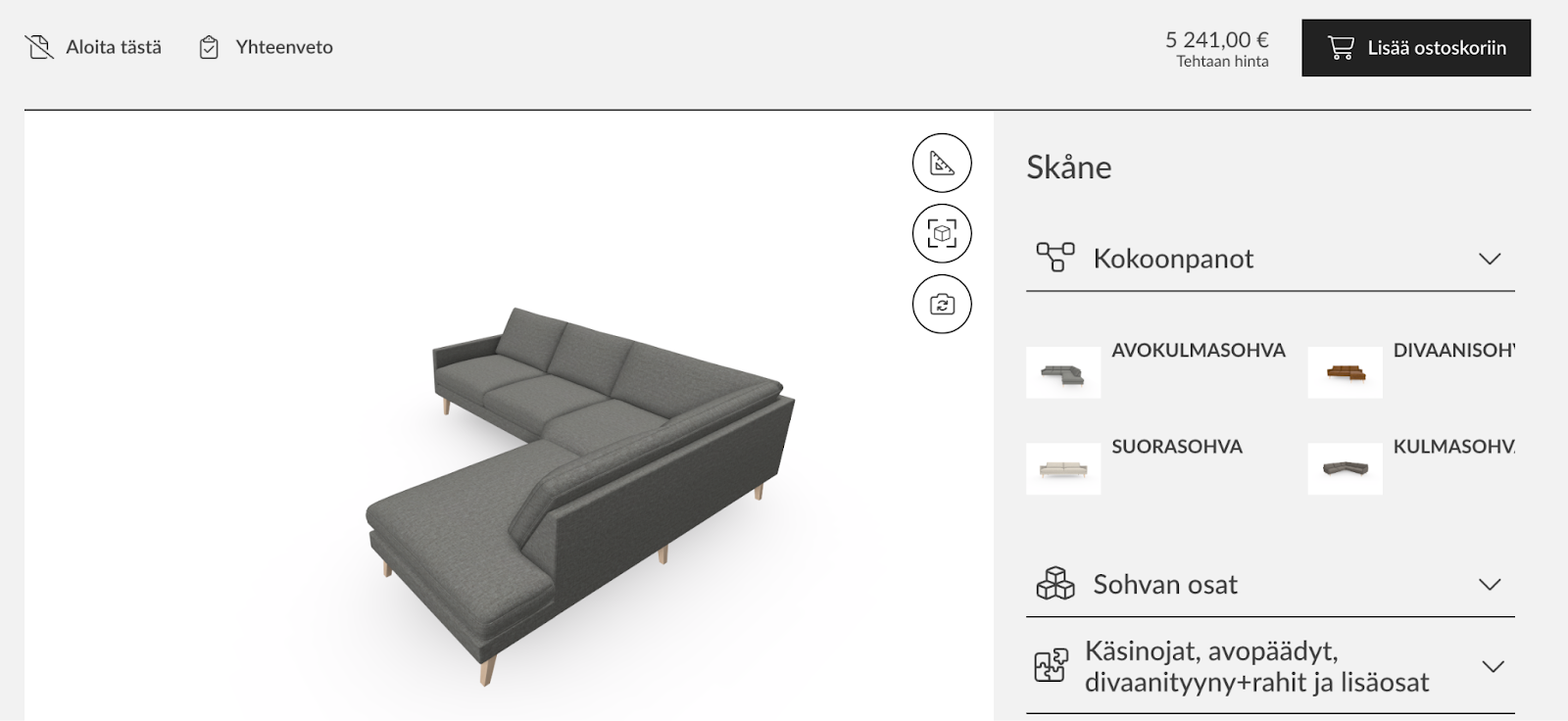
When selling custom furniture online, many businesses struggle to clearly display all available product options. Apparently, with only 2D images, customers often find it difficult to visualize how their customized furniture will look in reality and how it will fit in their spaces.
Questions about display design, size compatibility, color accuracy, and room layout can create uncertainty, negatively impacting the furniture eCommerce conversion rate. Recently, brands have turned to innovative product visualization tools, 3D product viewers, and furniture augmented reality to help buyers better clarify products and close deals faster.
- Shipping cost
Unlike small consumer products, furniture is often bulky, heavy, and expensive to deliver. Shipping fees can significantly increase the final purchase price, potentially discouraging online buyers. Additionally, delivery logistics often depend on regional warehouses or local partners. Because of this complexity, many customers still prefer purchasing from nearby physical stores, where they can arrange delivery more easily and avoid high shipping costs.
How to improve furniture website conversion rate optimization in 2026: best practices
#1. Enhance personalized experiences for furniture shopping
Focusing on personalization has become one of the most effective CRO recommendations. 89% of business leaders find that personalized experiences are invaluable to their success.
On high-converting furniture websites, personalization helps guide buyers through complex purchasing decisions by showing products that match their tastes and browsing history. These experiences make the shopping journey more relevant and engaging, helping reduce decision fatigue and increasing customer confidence as they move into the checkout phase.
#2. Leverage the role of technology and robust software
Technology plays a critical role in most perspectives of the online landscape, and boosting furniture eCommerce conversion rates is no exception. Modern online sales tools enable customization, real-time pricing, immersive visualization, and greater clarity about products.
- 3D visualization
Interactive product views enable customers to rotate, zoom, and explore furniture from every angle, creating a more immersive shopping experience than static visuals. From that, customers better understand product details, making more informed purchase decisions.
- 3D configuration and customization
While 3D customizers allow users to design furniture by selecting basic options, such as colors, sizes, and finishes, 3D configurators enable furniture building almost from scratch by adding modules, components, and accessories, and by changing layouts, materials, and more. This makes customers feel more engaged because they can design everything on their own, while the final product designs are error-free thanks to robust pre-built product logic. More importantly, you can see all selected options displayed in real-time with 3D previews.
- 3D room planning
With this 3D room planner, users can design a space (e.g., a living room, an office, a garden) with accurate dimensions, then visualize furniture to test spacing and layout compatibility. As a result, they understand how furniture pieces will fit and function in their planned space.
- Augmented reality
Top augmented reality eCommerce examples for the furniture industry focus on using mobile devices to virtually place 3D furniture visuals in customers’ real homes or offices. Compared to placing furniture in a virtual layout, AR can offer a more life-like experience. Thereby, customers can evaluate scale, style compatibility, and placement more accurately.
- Visual CPQ
Visual Configure, Price, Quote (Visual CPQ) enables configuring and visualizing furniture in 3D and viewing prices and quotes simultaneously. This reduces confusion during the buying process, streamlines workflows, reduces mistakes, and offers a smoother shopping journey.
Top-rated technology providers for the furniture industry, like VividWorks, can help furniture businesses launch an all-in-one platform that combines these innovative technologies. Thus, you don’t need to spend time integrating multiple tools or managing complex setups.
#3. Focus more on user-generated content (UGC) to build trust
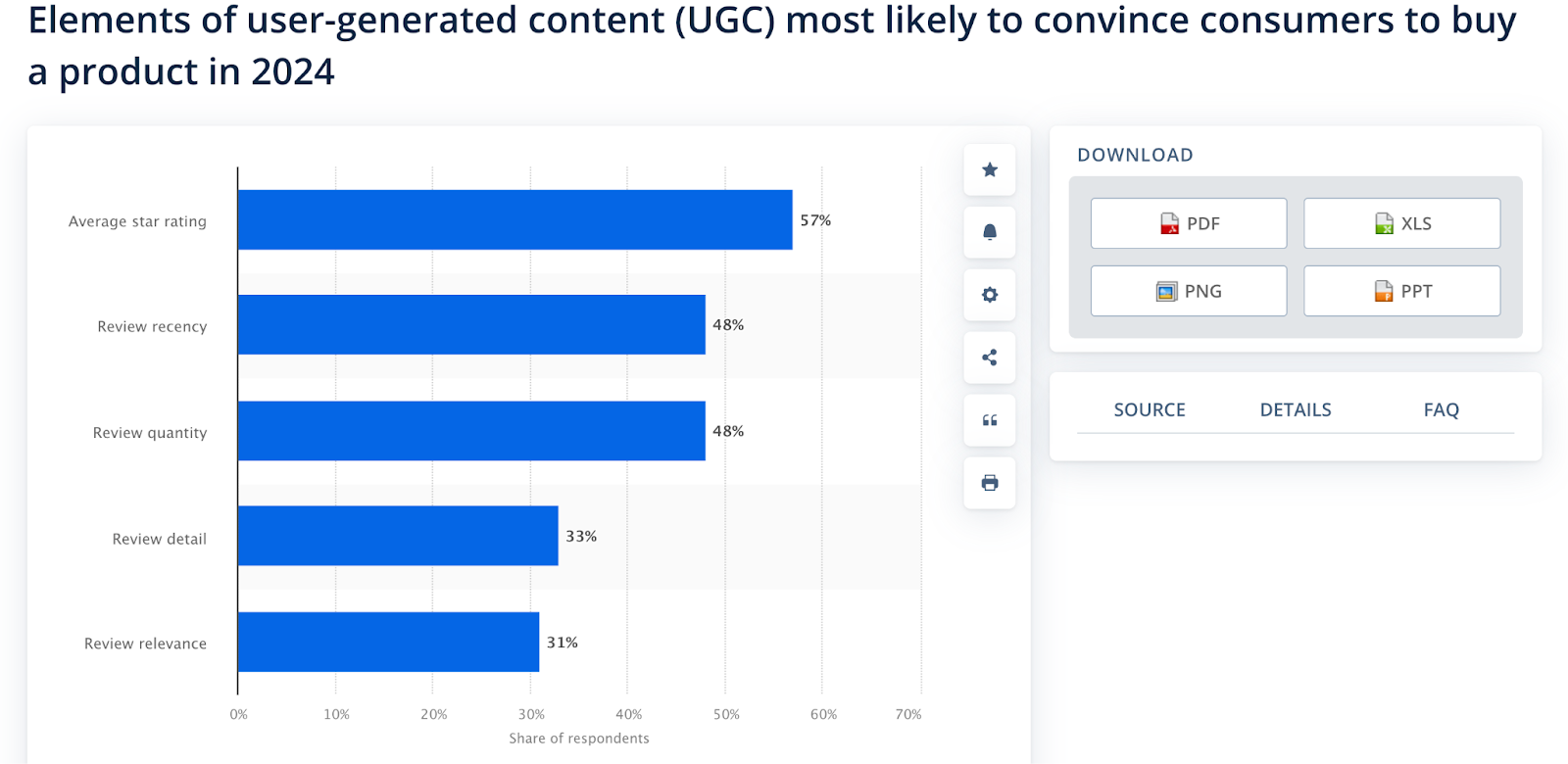
UCG is a powerful trust-building tool in eCommerce, not only in the furniture industry. The average star rating is the most critical part of UCG's ability to convince consumers to buy items, at 57%. The rest is review recency, review quantity, review detail, and review relevance. Thus, focusing your efforts on strengthening these aspects is key to succeeding with this tip.
Many furniture retailers encourage customers to share photos and videos of their interiors featuring items they purchased. When displayed on product pages or social media, this real-life content builds credibility, reduces purchase hesitation, and attracts new customers
#4. Improve UX & Technical performance of your website
Strong website usability is essential for successful furniture eCommerce optimization. Because furniture shoppers often browse across multiple devices, your store must be fully responsive and user-friendly on desktops, tablets, and mobile phones. While fast load times are also core, intuitive navigation helps visitors quickly find categories, collections, or styles.
Additionally, clear and informative product pages should include detailed specifications, dimensions, materials, and shipping information. When your store is technically optimized, customers can explore products more efficiently, boosting the overall shopping experience.
#5. Optimize CTAs & Reduce Friction in the Buying Journey
Furniture websites should guide customers with clear CTAs such as “Add to Cart,” “Customize Your Product,” or “View in Your Room.” At the same time, reducing friction throughout the purchase journey is essential. Transparent pricing, clear shipping details, simple checkout steps, and flexible payment options help remove barriers that cause customers to abandon their carts. A streamlined experience encourages visitors to complete their purchases faster.
Conclusion
The previous section addressed the question: What are the best practices in cro today? From personalization and UCG to advanced visualization tools and well-structured stores, many strategies can help businesses improve their furniture eCommerce conversion rates.
Book a demo with us today to witness the benefits of visual configuration for CPQ process, as well as other 3D solutions to transform online shopping journeys and stay competitive.
Table of Content
-3.avif)
Streamline your process today!