Static images are no longer powerful enough to impress your brand and stand out. Buyers expect to interact with products before purchase, rotating them in 3D, placing them in their space with AR, or customizing features in real time. That’s exactly what visual commerce enables: one of the eCommerce technology trends that has reshaped the online shopping experience faster than ever before. It’s time to unlock it to transform customer engagement.
What Is Visual Commerce?
Visual commerce is the practice of using high-impact, interactive visuals to help customers better understand and more strongly connect with products. Unlike traditional ecommerce, which relies on a handful of flat photographs and text descriptions, this approach aims to put the product in context and in the customer's hands. It’s also recommended to work with the best plugins for visual commerce, from UCG to 3D customization, to enable the best results.
Why Visual Commerce Is Growing Rapidly in 2026
While the final goal of using visual commerce is to boost sales, it has more advantages:
- Rising customer expectations
Shoppers are becoming accustomed to social media platforms such as Instagram, Pinterest, and TikTok, expecting visually rich content everywhere. Traditional product galleries with static images can feel outdated when competing storefronts offer interactive product displays, 360-degree views, realistic videos, and augmented reality shopping experiences.
- Mobile-first shopping
Nearly 80% of eCommerce sales now come from smartphones. Mobile users are highly visual, as they are likely to scroll more quickly and respond more to imagery than to text. Brands that optimize for mobile visuals gain a measurable edge in customer engagement.
- Growth of social commerce
Shoppable posts, livestream shopping events, and video-first product discovery have reduced the gap between browsing and purchasing. Consumers can now move from discovering a product to completing a transaction within the same platform, creating a seamless journey. Visual content is at the heart, making products easier to discover, evaluate, and purchase.
- Higher demand for eCommerce personalization
Consumers increasingly want products that feel relevant to their preferences and needs. Visual commerce technologies enable AI-powered recommendations, virtual try-ons, and personalized product displays, delivering tailored experiences that boost buyer satisfaction.
- Increased competition among online retailers
As ecommerce markets mature, brand differentiation is harder to achieve on price alone. That’s many sellers go with these eCommerce technology trends as a key competitive edge. Enhanced product visualization or interactive product content helps stand out, establish customer trust, create immersive shopping experiences, and increase conversion rates.
5 Common Types of Visual Commerce
1. Visual Configurators
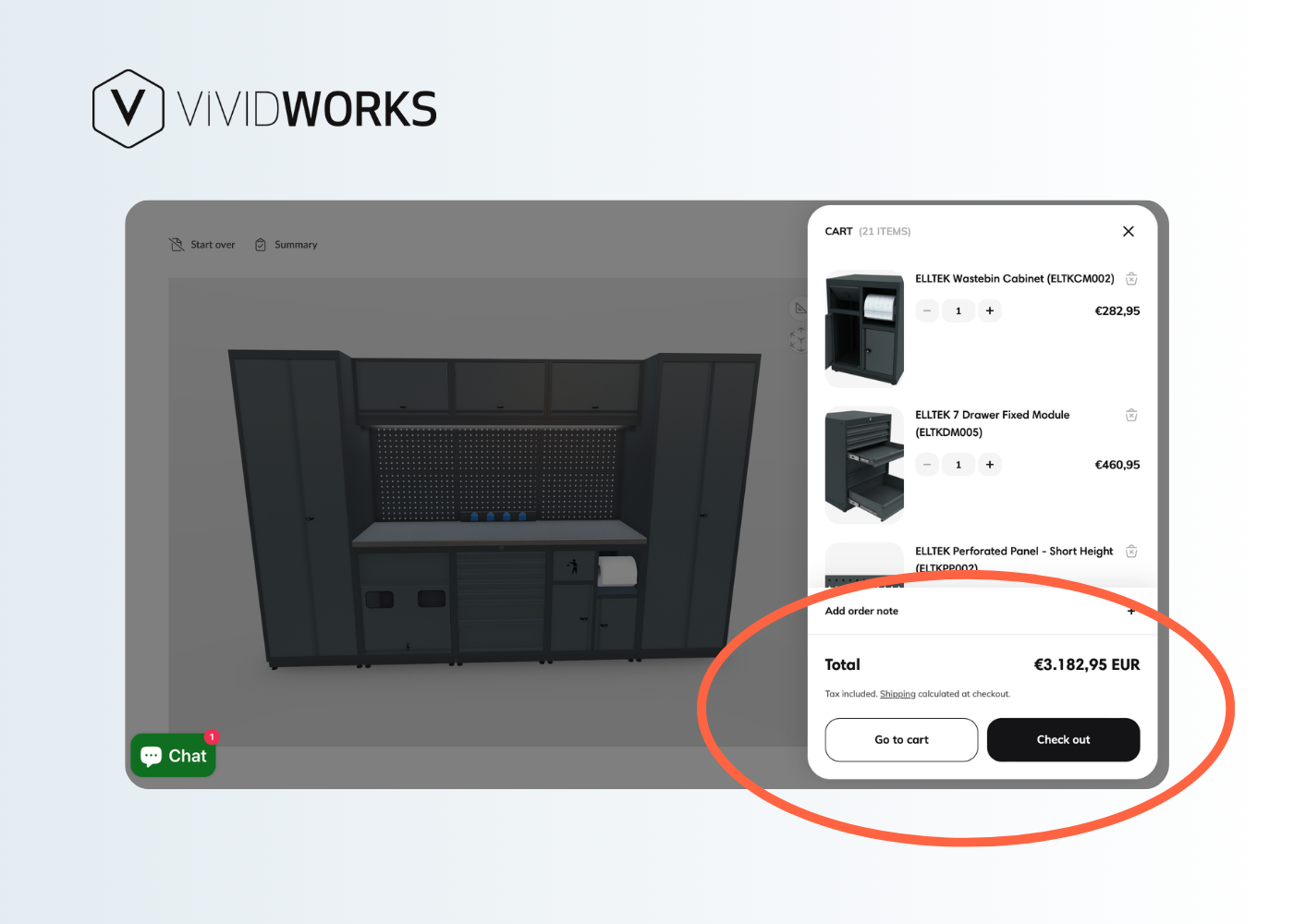
A 3D product configurator is one of the most widely used applications for this type of visual commerce. It allows users to build and customize products on their own, including selecting colors, dimensions, add-ons, modules, or layouts, and preview every choice from all angles. This goes far beyond a standard dropdown menu, strengthening customer confidence by providing greater clarity into the final designs. Visual configurators can also display pricing updates in real time as customers make selections, eliminating their surprises at checkout.
That’s why 3D configurators are considered powerful sales tools. Let’s take a closer look:
- Real-time 3D configuration and visualization that delivers immersive experiences
- Rule-based configuration that automatically validates customer selections and prevents incompatible product combinations, effectively reducing costly rework.
- Integration with eCommerce, ERPs, and CRMs to create an efficient sales workflow
- Dynamic pricing and quote generation that accelerates the sales process
- Advanced capabilities such as augmented reality (AR) and Visual CPQ to further enhance product visualization, configuration accuracy, and customer engagement.
2. Augmented reality for eCommerce
This 3D eCommerce trend enables placing a desired product version in its real context using a smartphone/tablet camera. For furniture, home decor, and complex-designed purchases, this is a game-changer: buyers can check whether the design fits their living/working space.
If you want to see what this looks like in practice, let’s take a closer look at real-world augmented reality eCommerce examples from leading manufacturers across industries.
3. Visual photographs (2D & 3D)
High-quality or lifelike photography remains the foundation of visual commerce. Many businesses have been complementing traditional visuals with AI-generated product images, which can be produced at scale without the cost of a physical shoot. In fact, 3D visuals can show every color variant, every angle, and every context scene far more efficiently than a traditional studio, making product customization options easier to present to stakeholders.
4. Visual Search
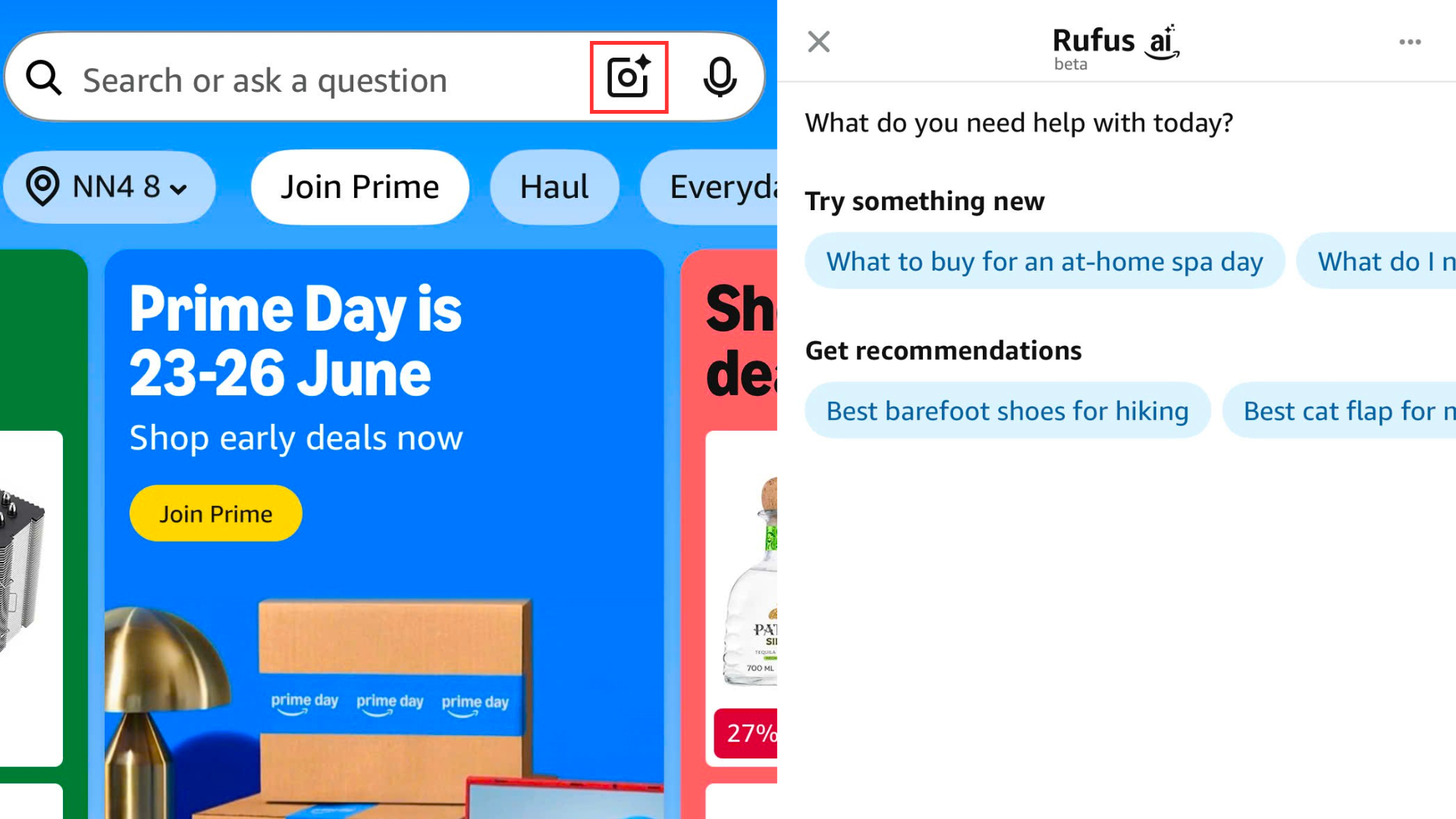
This technology lets shoppers upload a photo from their camera roll or social feed and find matching products instantly. At its core, the role of AI commerce tools is central: machine learning models analyze image content, identify attributes, and surface relevant results in milliseconds, making discovery more engaging and the online shopping journey smoother.
5. Lookbooks and digital catalogs
Brands can ultilize these materials to bring editorial storytelling into the product discovery journey. Rather than listing products in a grid, you can curate lifestyle contexts that inspire and guide customers. In this way, interactive versions let viewers click through from a lookbook spread to a product page, connecting inspiration with purchase in a single step.
The Future of Visual Commerce: 4 Trends to Watch
1. Shoppable videos
Short-form and livestream videos with embedded product links are among the fastest-growing formats for offering immersive shopping experiences. Providers such as Pathclip, Fireworks, and Videowise make it easier to add clickable product tags to video content, enabling potential visitors to move from product discovery to checkout in seconds.

2. Real-time 3D visualization
Real-time 3D ecommerce experiences are becoming more accessible and more expected. Brands no longer see a complex configuration use case as a benefit; even a simple, interactive product viewer adds enormous value to the online shopping experience. If you do not need a full product customization tool, a 3D product viewer is an excellent way to give customers a deeper understanding of a product. VividWorks is a reliable provider in this space, offering flexible plans for SMBs and enterprises for eCommerce, furniture, and more.
4. Virtual Reality (VR)
Besides AR, VR has seen rising adoption in eCommerce, particularly in high-involvement categories such as furniture, real estate, and automotive. Shoppers can step inside a fully rendered room or showroom without leaving home. For brands exploring the full range of spatial commerce options, a broader look at AR & VR solutions for retail can help clarify where each technology delivers the most value. Another area seeing rapid growth is 3D virtual try-on tours, which give customers an immersive walkthrough of spaces or products.
5. User-generated content (UGC)
Authentic imagery from real customers, including photos, videos, and visual reviews, is one of the most persuasive forms of visual commerce. UGC feeds social proof directly into the product page, increasing customer engagement by showing products in real homes and real lives. Tools like Bazaarvoice and Yotpo help collect, curate, and display UGC at scale.
Conclusion
Visual commerce has been reshaping how customers expect to shop online, featuring technologies such as AR & VR shopping, 3D visual configuration, visual search, and more. Once you adopt these trends properly, you can create more engaging shopping journeys, build greater customer confidence, and see measurable improvements in conversion rates.
FAQs
- How does AI improve visual commerce?
AI commerce tools improve this approach by generating photorealistic product images at scale, powering visual search (e.g., Wayfair and Amazon), and enabling eCommerce personalization. So, brands can create richer visual experiences faster and at lower cost.
- What is 3D ecommerce?
It is the use of three-dimensional product models or 360-degree previewing in online sales. This includes interactive product visualization on product pages, 3D configurators that let users build their ideal product, and AR experiences that let them test in real-world contexts.
- Does visual commerce increase conversion rates?
Definitely yes. Adopting a rising trend should be for boosting conversion rates and sales. This is similar when you ultilize visual commerce to offer AR shopping, virtual try-on, shoppable videos, and real-time visualization, ensuring customers fully visualize a product. This is essential to increase customer purchasing confidence and reduce cart abandonment.
- What industries benefit most from visual commerce?
Furniture, home décor, fashion, jewelry, automotive, and consumer electronics are among the sectors seeing the greatest returns from visual commerce. Moreover, when you sell made-to-order or complex designs, offering immersive experiences is especially critical.
Table of Content
-3.avif)
Streamline your process today!