
For manufacturers selling configurable products, producing fast and accurate quotes is often one of the biggest challenges. Sales teams need to process complex product rules, client-specific pricing, engineering constraints, and manufacturing requirements effectively.
Although Salesforce CPQ has long been one of the leading manufacturing CPQ software in the market, it isn’t the ideal solution for every business. Licensing costs, implementation complexity, Salesforce dependency, and limited visual configuration capabilities have prompted many businesses to evaluate Salesforce CPQ alternatives. This guide compares 5 solutions and explains when a custom-built CPQ platform delivers greater long-term value.
Right now, keep scrolling to discover more!
What Is Manufacturing CPQ Software?
CPQ stands for Configure, Price, Quote, which are the three steps every manufacturer has to get right before a deal can move forward. Manufacturing CPQ software is purpose-built to handle the added complexity that comes with physical, engineered products: thousands of possible variants, dependencies between components, and pricing that shifts with features.
Specifically, the best CPQ software can significantly boost sales efficiency by helping teams:
- Configure complex, highly-variable products
- Automate pricing based on rules, materials, and volume
- Generate accurate, professional quotes in minutes
- Reduce manual errors between sales, engineering, and production
- Shorten sales cycles and speed up order-to-manufacture handoffs
Unlike traditional tools, modern CPQ solutions integrate with ERP, CRM, and eCommerce systems, generating a connected workflow from product selection to order fulfillment.
Why Some Manufacturers Look Beyond Salesforce CPQ
Salesforce reached end-of-sale on its legacy CPQ product in 2025, and while existing customers can keep renewing under current terms, new feature investment has shifted to Revenue Cloud Advanced. That shift alone is prompting many manufacturers to evaluate alternatives to Salesforce CPQ rather than wait out a migration on Salesforce's timeline.
Beyond the product transition, recurring pain points show up in manufacturer feedback, like:
- High licensing and maintenance costs
- Complex implementations with long deployment timelines
- Heavy reliance on the broader Salesforce ecosystem
- No built-in 3D visualization for complex furniture inside the quoting workflow
- Limited flexibility for highly configurable products
- Friction integrating with legacy ERP and shop-floor systems.
None of this makes Salesforce CPQ a bad choice outright for organizations already deep in the Salesforce ecosystem with relatively standard configuration needs; it can still work well. But for manufacturers with visually complex, highly modular, or engineer-to-order products and especially with a low budget to kickstart, the gaps above are worth weighing carefully.
What to look for as the alternatives to Salesforce CPQ
When evaluating the best alternatives to Salesforce CPQ, manufacturers should focus on capabilities that improve both sales efficiency and operational accuracy rather than simply comparing feature lists. Below are the core perspectives that the right solution should have:
- Advanced product configuration for complex product variants
- Real-time 2D or 3D visualization to offer greater clarity on the final designs
- Dynamic pricing based on customer selections and quantity
- Rule-based configuration and validation to eliminate incompatible combinations
- Automated quote and BOM generation
- Approval workflows for pricing exceptions
- ERP integration for production and inventory synchronization
- CRM integration to streamline sales activities
- Multi-language support for global teams
- Multi-currency pricing for internal sales
- Analytics and reporting for sales performance and quoting accuracy.
Best Salesforce CPQ Alternatives
1. VividWorks Visual CPQ
- Best for: Complex, highly-modular product designs
- Ideal company size: Startups, SMBs, and Enterprises
- Website: https://www.vividworks.com/
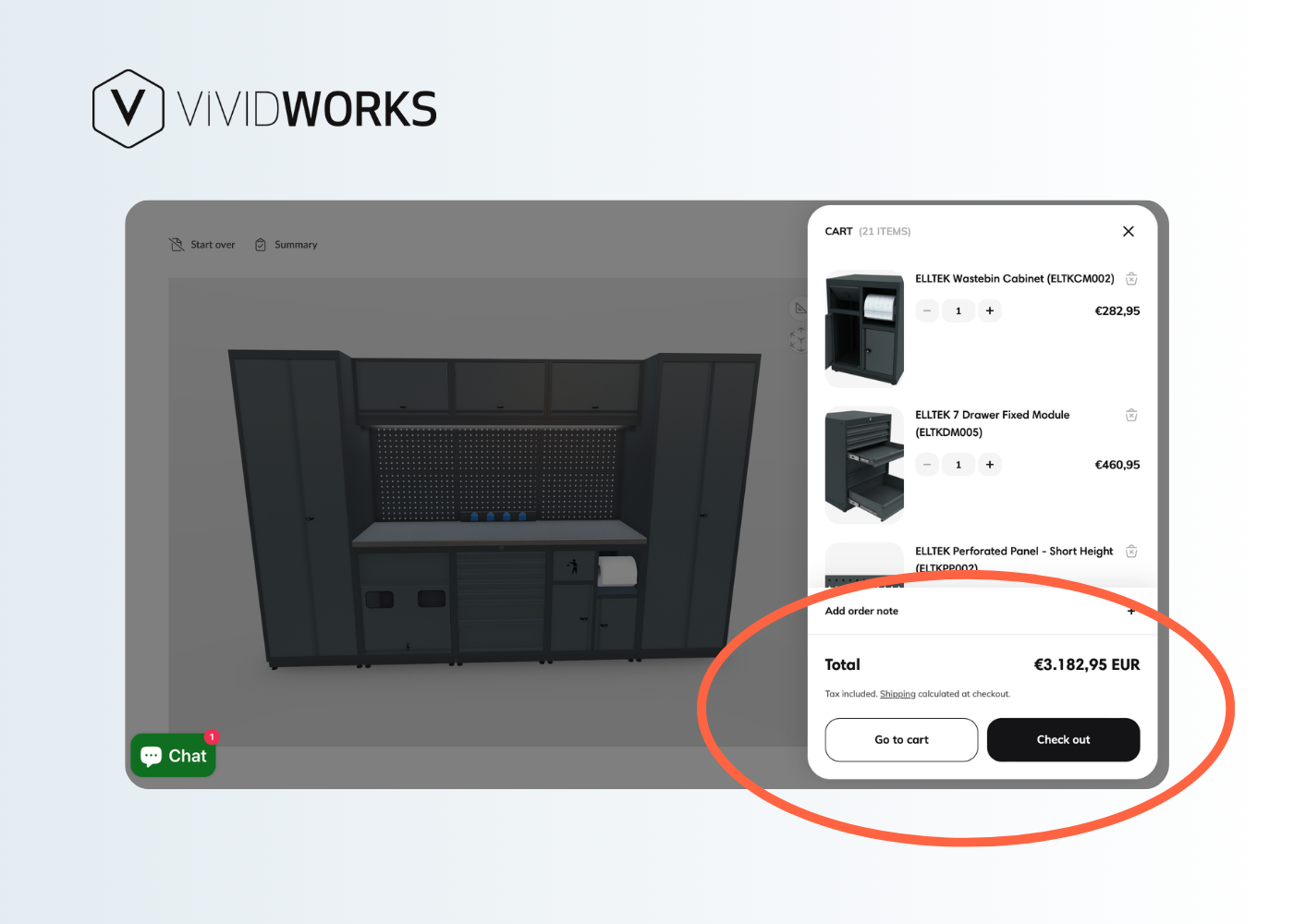
VividWorks Visual CPQ combines Visual Configure, Price, Quote (Visual CPQ) with interactive 3D product visualization, making it well suited for manufacturers selling highly configurable or bespoke products. Instead of relying on static product catalogs or lengthy back-and-forth communication, customers and sales reps can build products, view real-time 3D changes, and generate accurate pricing and quotes within a single workflow. This helps you reduce mistakes, accelerate decision-making, and offer a more engaging purchasing experience. That’s why many brands have increasingly recognized the importance of Visual CPQ in sales.
Book a demo to get helpful advice and have a custom CPQ well-designed for your goals.
Key strengths:
- Real-time 3D product configuration, customization, and visualization
- Dynamic pricing and quote generation
- 3D room planning and space visualization
- Augmented reality (AR) to offer true-to-life experiences and boost UX
- Rule-based configuration to support modular and highly customizable products with thousands of variants
- Seamless integration with eCommerce platforms, CRM systems, and ERP solutions
- Proven expertise across the furniture, construction, manufacturing, kitchen, and eCommerce industries, serving brands in the US, UK, Australia, Japan, Europe, etc.
- Flexible pricing plans tailored to businesses of all sizes
Customers: BoConcept, Montana, HAY, BlåStation, GUBI, New Works, Grand + Benedicts, and more
2. KBmax (Epicor CPQ)
- Best for: Engineer-to-order and industrial manufacturing with CAD automation
- Ideal company size: Mid-sized businesses and large enterprises
- Website: https://kbmax.com/
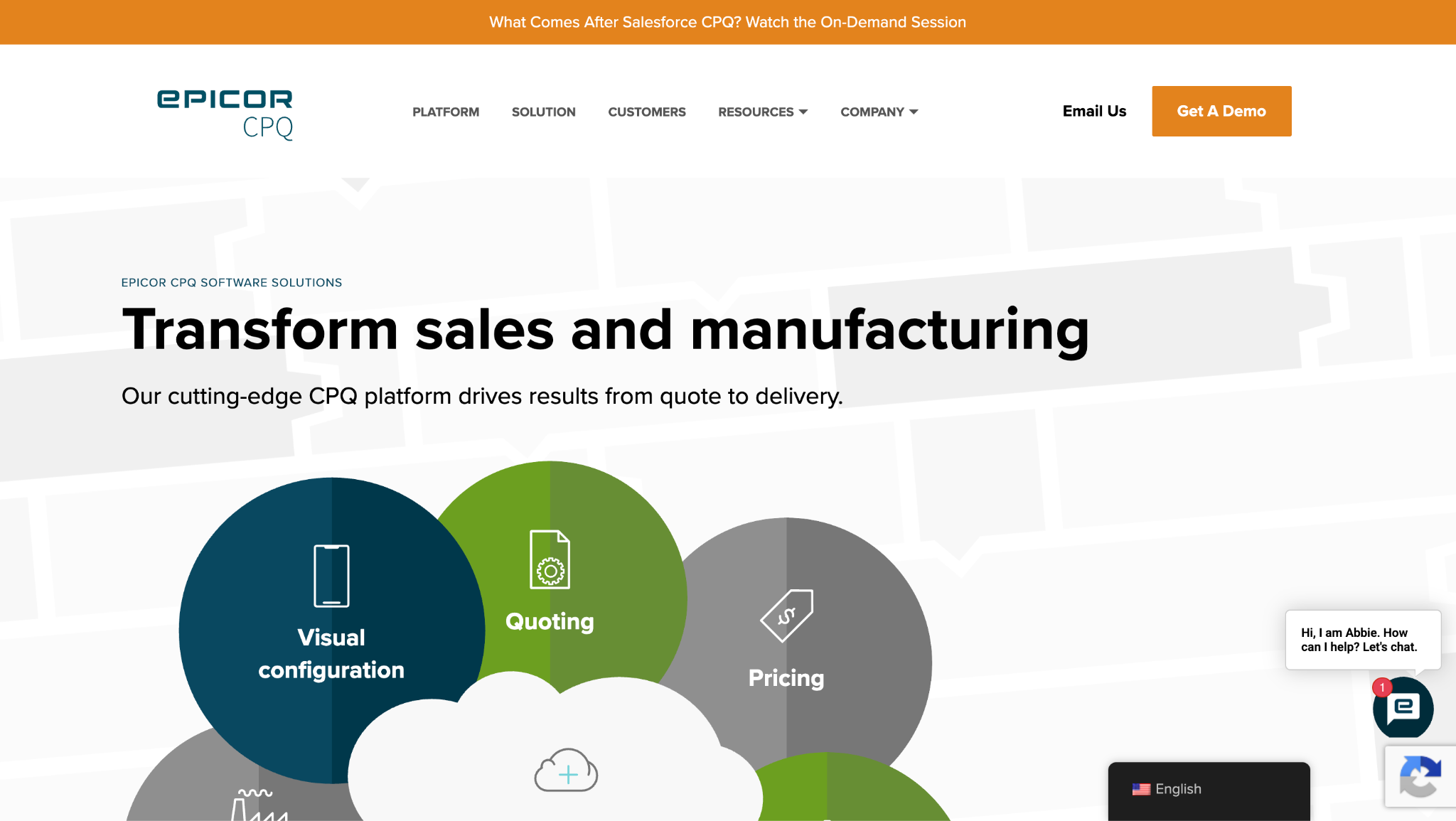
Originally KBmax, this platform was acquired by Epicor in 2021 and rebranded as Epicor CPQ. This Salesforce CPQ alternative sits at the intersection of sales, engineering, and manufacturing, with 2D, 3D, and augmented-reality configuration to boost buyer discovery.
Key strengths:
- CAD automation tied directly to configured products
- Visual, rules-based configuration with guided selling
- Strong ties into Epicor's ERP ecosystem, including Kinetic
- AI-driven upsell and cross-sell suggestions during configuration
Customers: Caterpillar, Oldcastle, Infrastructure, and MacLean Power Systems.
3. Tacton CPQ
- Best for: Engineer-to-order manufacturers with high product variance
- Ideal company size: Mid-market to enterprise
- Website: https://www.tacton.com/
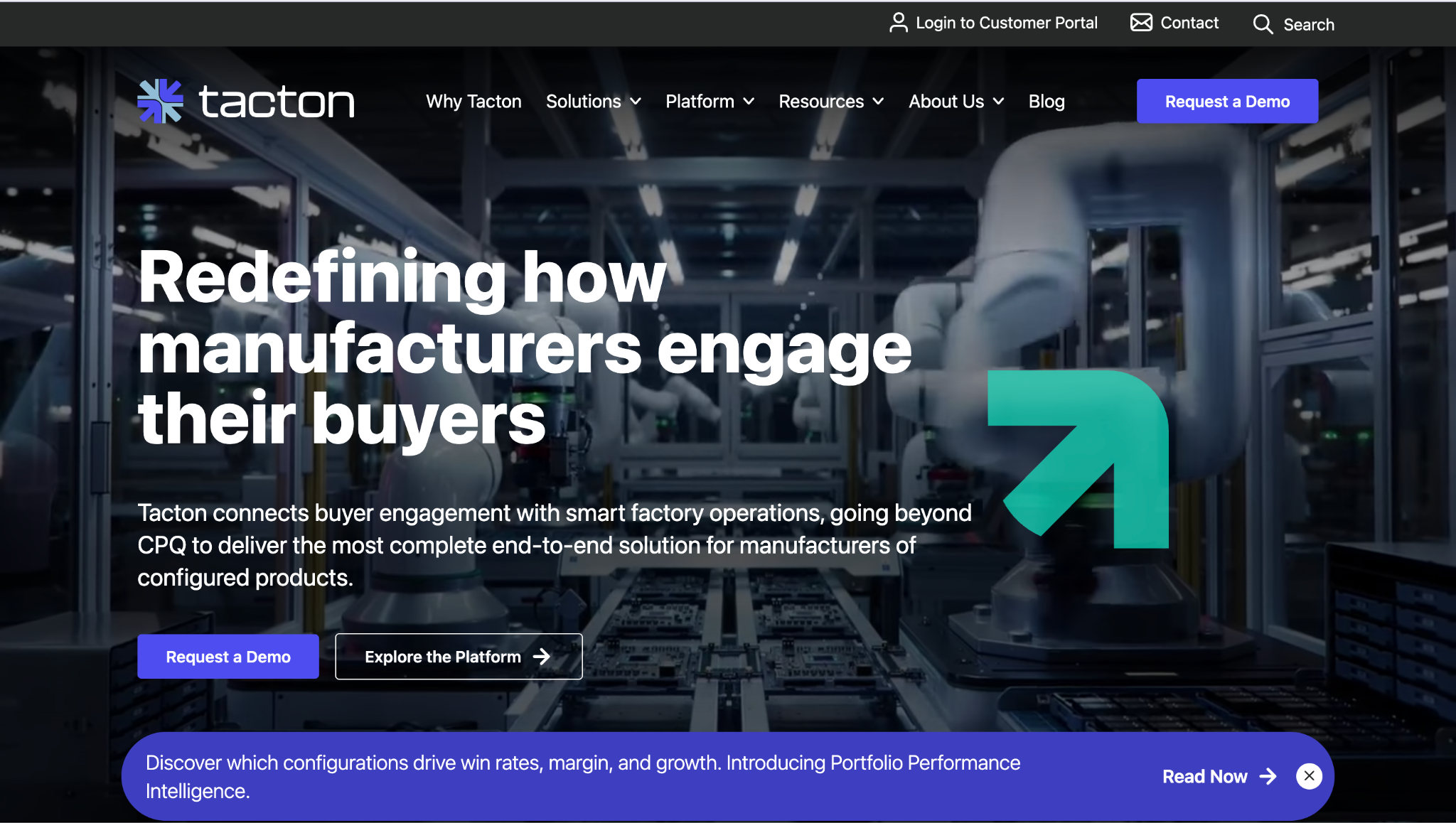
Tacton is one of the longer-standing names in manufacturing CPQ, recognized as a Leader in Gartner's Magic Quadrant for CPQ Application Suites. In fact, it is specifically built around industrial and engineer-to-order manufacturers rather than general B2B and B2C sales.
Key strengths:
- AI-guided configuration that manages millions of product variants
- Dynamic pricing engine accounting for material costs and market shifts
- CAD automation and multi-level BOM generation
- Visual layout planning for spatial products
- Deep CRM and ERP integrations, including SAP and Salesforce
Customers: ABB, Daimler, MAN, Scania, Siemens, Xylem, Yaskawa
4. DealHub
- Best for: Businesses with broader revenue operations needs beyond configuration
- Ideal company size: SMB to enterprise
- Website: https://dealhub.io/
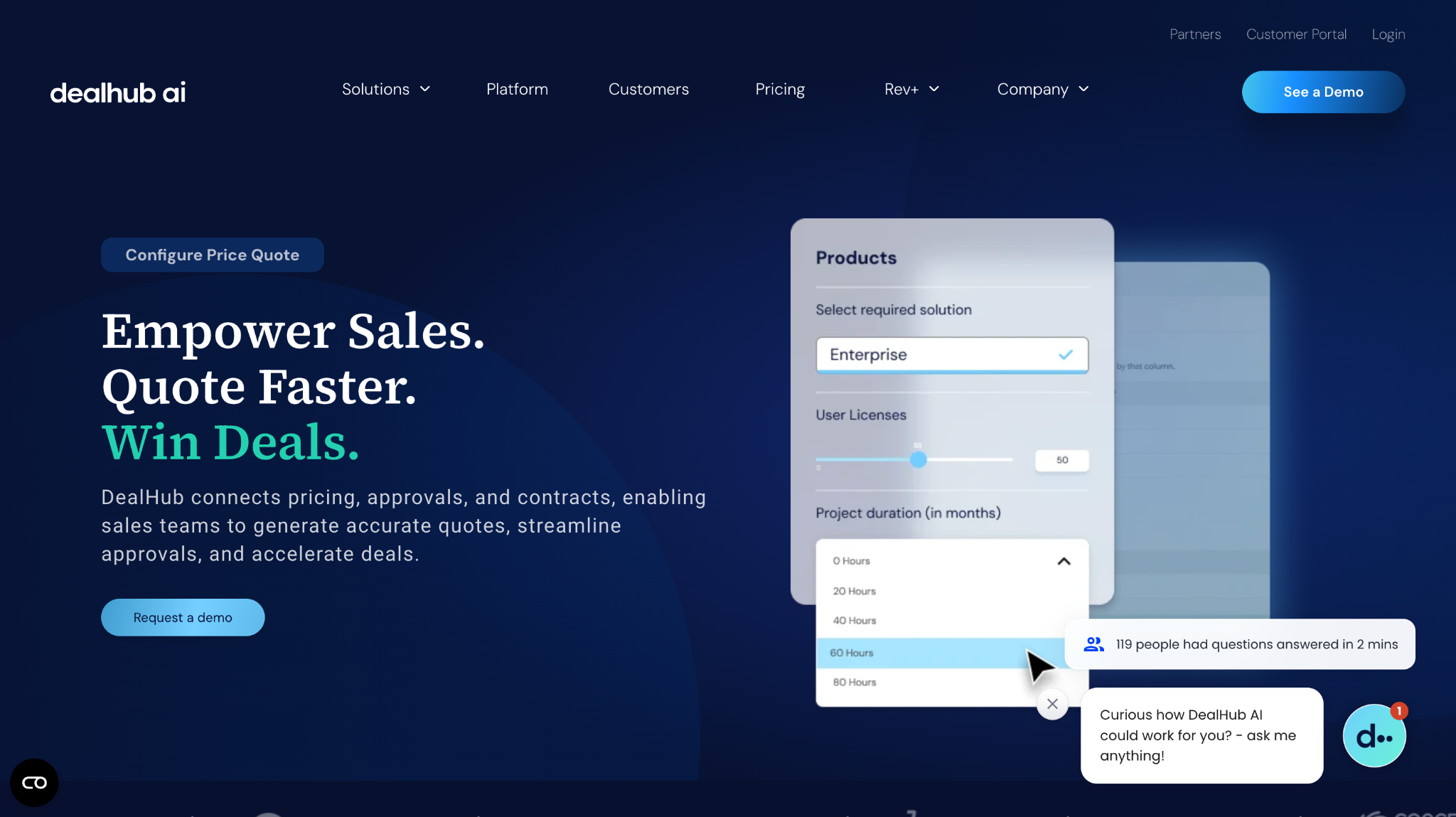
Although DealHub is one of the top choices on our list of Salesforce CPQ alternatives, it is less manufacturing-specific than other platforms that combine CPQ with contract lifecycle management, subscription billing, and deal collaboration. It works well with manufacturers with moderate configuration needs but a quote-to-cash process spanning multiple systems.
Key strengths:
- Guided selling with interactive questionnaires
- Contract lifecycle management and e-signature built in
- Real-time analytics on quote and deal performance
- Native integrations with Salesforce, Microsoft Dynamics, and HubSpot
Customers:
5. Experlogix CPQ
- Best for: Microsoft-centric businesses in industrial equipment, medical services, etc.
- Ideal company size: Mid-market companies and large enterprises
- Website: https://experlogix.com/
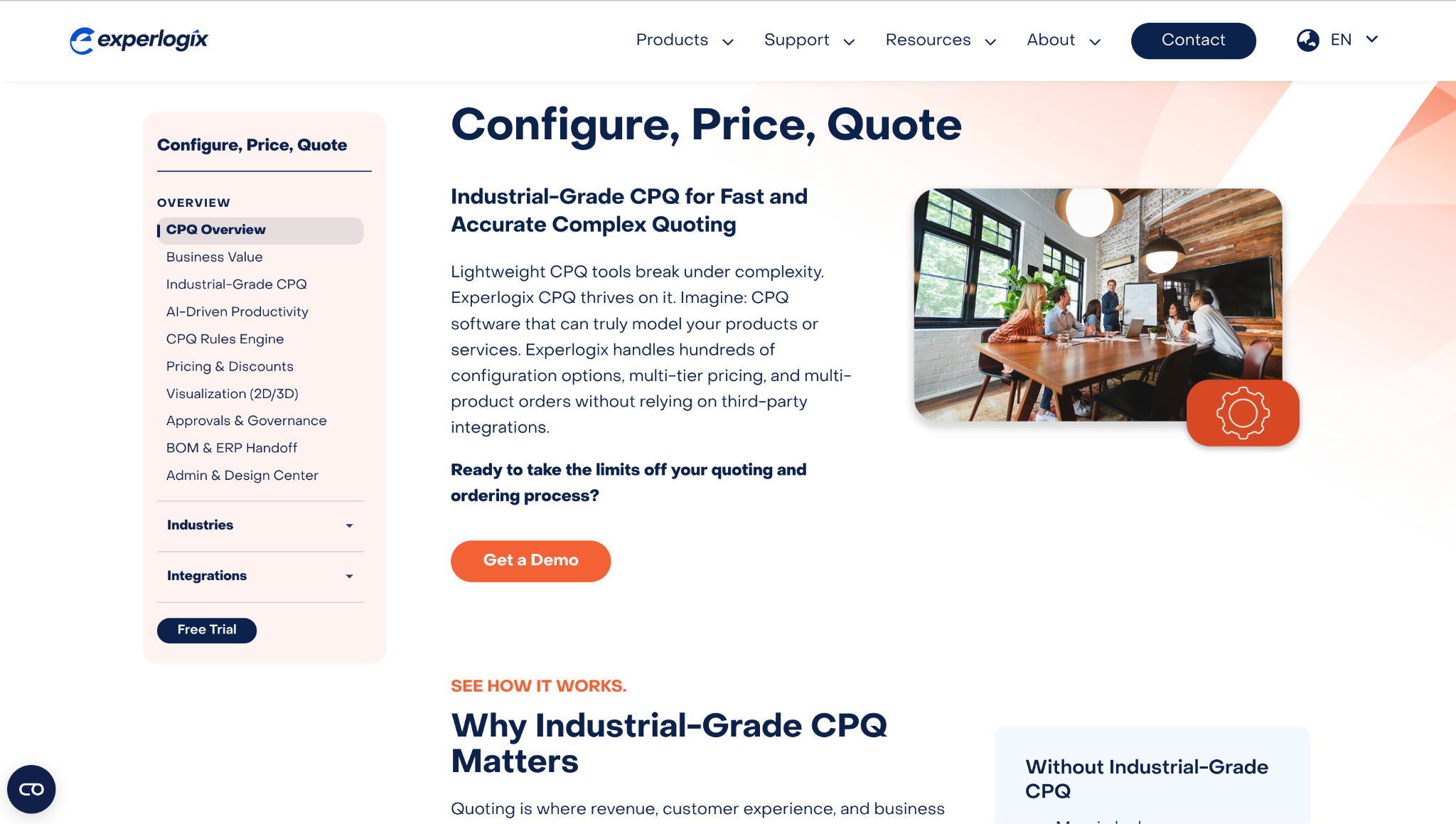
Experlogix CPQ focuses on helping manufacturers automate product configuration while leveraging Microsoft Dynamics and ERP systems. It can support configurable manufacturing effectively with strong workflow automation and document generation capabilities.
Key strengths:
- Low-code, logic-based rules engine for product and pricing control
- Automated multi-level BOM generation for production handoff
- Native integration with Microsoft Dynamics 365 and NetSuite
- Real-time 2D/3D visual configuration
Customers: Allegion, Ascom, Hitachi, Nikon, and Pump Systems
Build vs. Buy: Custom CPQ vs Salesforce CPQ Alternatives
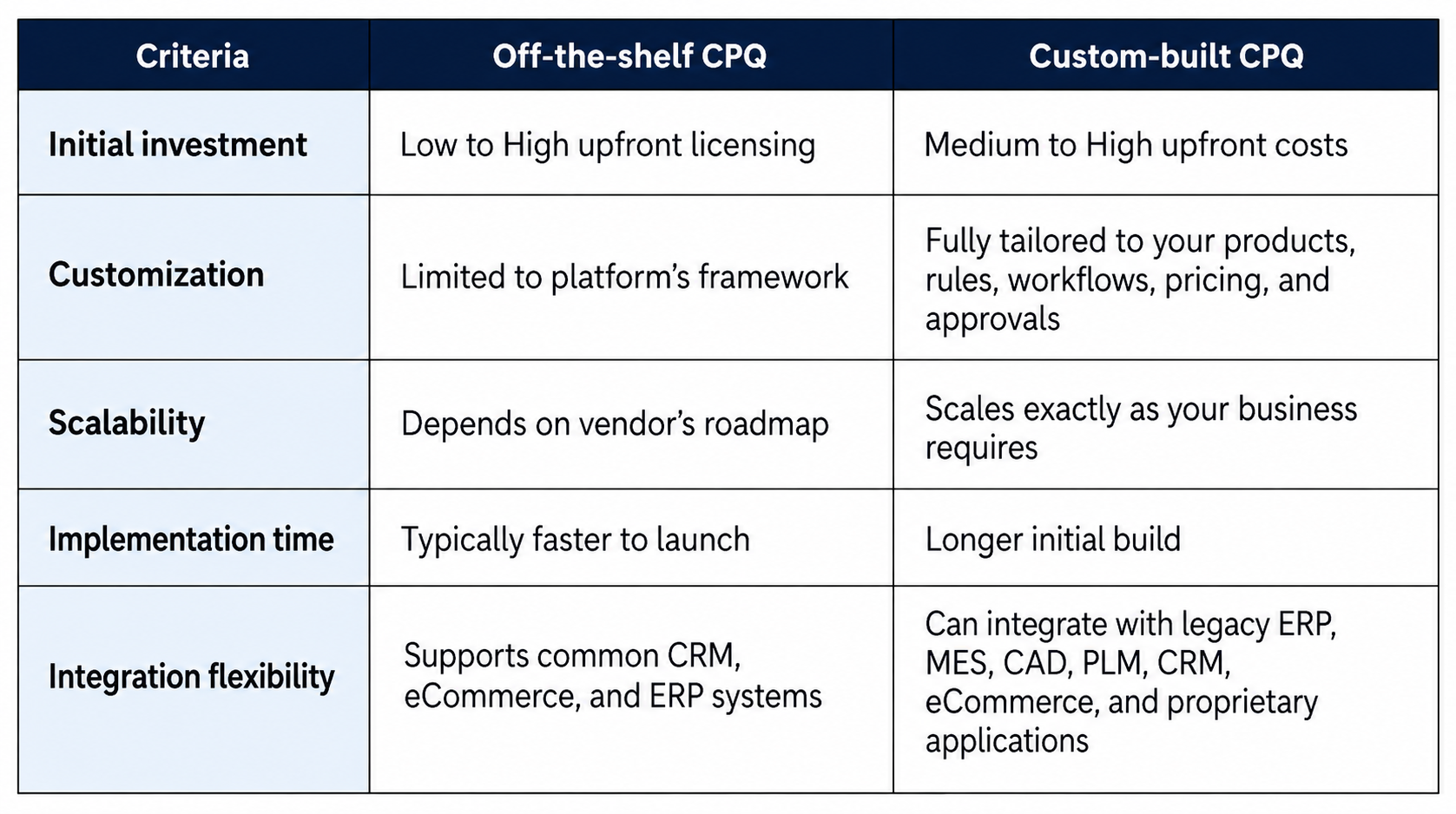
Let’s take a quick look at our comparison table to clarify core differences in implementation:
Conclusion
There's no single best Salesforce CPQ alternative for every manufacturer; it depends on your product complexity, sales process, and long-term goals. Salesforce CPQ remains workable for organizations anchored in its ecosystem, but manufacturers with visually complex or highly configurable products, such as those using CPQ for furniture sales, often get more value from a specialized or custom-built platform. That’s why you need to weigh scalability, integration flexibility, and total cost for the best decision for your sales efficiency.
Table of Content
-3.avif)
Streamline your process today!