


The sales journey of high-value furniture often involves lengthy decision cycles, multiple stakeholders, frequent revisions to meet customer satisfaction, and a high risk of returns. All of these make sales pipeline management more critical. When your sales teams rely on disconnected tools and inconsistent data, blind spots emerge. Consequently, your operation might suffer from missed follow-ups, inaccurate forecasts, and stalled deals.
That’s why learning how to manage your sales pipeline gives teams visibility into deal health and improves conversion rates by stage. This blog will clarify the significance of pipeline management in sales and outline the best tips to ensure optimal performance.
Right now, keep scrolling to discover more!
What Is A Sales Pipeline?
A sales pipeline is a visual representation of the stages through which your prospects, customers, and channel sales representatives progress during the buying process. It helps you organize and monitor progress as potential customers move from “just visiting” to “sold”.
Here are 5 pipeline stages that you should consider before entering sales pipeline management:
- Lead inquiry
This is the stage at which interest begins to develop. Furniture leads may come from contact forms, showroom visitors, innovative marketing campaigns, and partner referrals. The goal is to capture accurate contact details and understand why they feel interested.
- Discovery & style consultation
At this stage, sales teams must focus on understanding the customer’s needs through in-store and virtual consultations, as well as initial discussions that lay the foundation for personalized furniture and fitting it into their real spaces, such as homes and offices.
- Product configuration & pricing
If you already have a furniture configurator on your site, your visitors can directly discover and design your products without sales consultations. This tool allows them to select materials, modules, dimensions, colors, layouts, and finishes to match their specific preferences. Additionally, they can view dynamic pricing for the options they have chosen, eliminating the need for manual calculations from salespeople, which can slow the sales process.
Otherwise, your sales team needs to perform furniture configuration themselves to showcase exactly what your customers want and follow up with them later via email.
- Quote & revision
Buyers want to adjust layouts, swap materials, and compare options, which is common in high-value furniture sales, as they are investing a significant amount of money in it. Thus, this stage requires efficient control of changes, including updating quotes, maintaining version management, and ensuring that pricing remains accurate across all iterations.
- Decision & negotiation
At this point, customers are close to committing but require final approvals, budget confirmation, or commercial adjustments (often for B2B). Thus, clear communication, transparency, and fast responses are essential to help you prevent deals from stalling.
- Closing & project delivery
The final stage includes order confirmation, production scheduling, delivery coordination, and post-sale follow-up. A dedicated sales pipeline management ensures a smooth transition from sales to fulfillment, improving buyer experiences, revenues, and profits.
What is Pipeline Management in Sales?
Pipeline management in sales is the process of tracking, managing, and optimizing the progression of opportunities through each sales pipeline stage. Effective control often involves managers optimizing several tasks for members and building a productive team.
Now, let’s take a look at what typical sales teams need to perform this systematic approach:
- Set up quotes and monitor rep attainment and participation
- Forecast revenue and identify bottlenecks from the early
- Prioritize high-intent leads for your business
- Standardize follow-ups and accountability
- Report on team pipeline movement to sales and executive leadership.
The final results also rely on strong CRM systems and sales pipeline management tools for automation and visualizations. Thus, you need to take your time to search for proper software for your existing workflows for the best deal tracking and sales forecasting.
Why Pipeline Management Matters in High-Value Furniture
#1. Complex Sales Cycles Require More Visibility, Accuracy, and Tracking
High-value furniture sales involve multiple touchpoints that sales teams need to handle:
- Website inquires
- In-store and virtual consultations for specific needs
- Design clarity and visualizations
- Pricing and quoting revisions
- Manufacturing feasibility checks
Without a unified system, information becomes scattered across emails, spreadsheets, and meetings, resulting in inconsistent follow-ups and delayed quotes. The adoption of online sales tools can help consolidate all interactions into a single system. Sales teams gain real-time visibility and ensure handovers between sales, design, and product teams.
#2. Customers Expect Visualization Before Buying
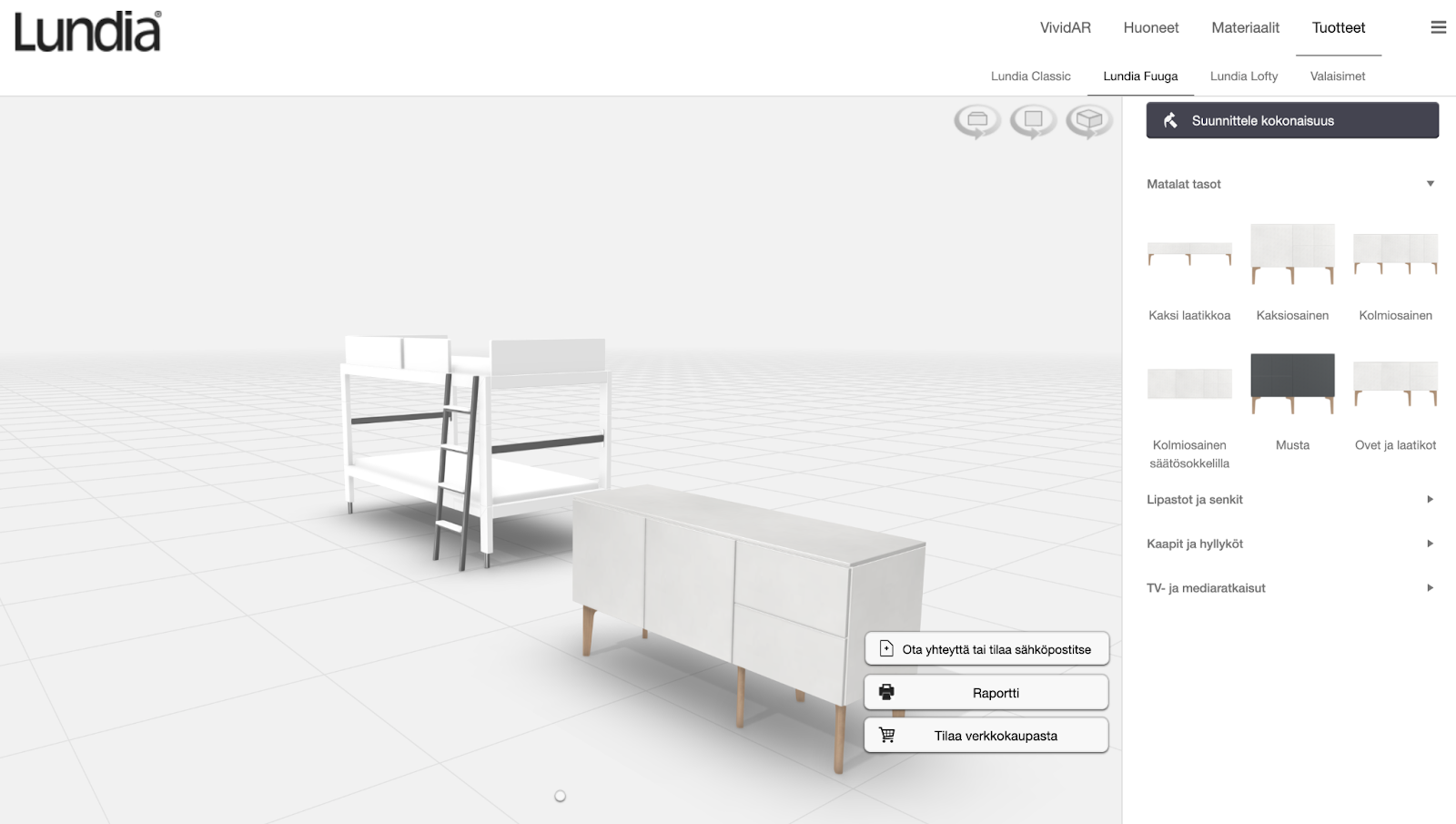
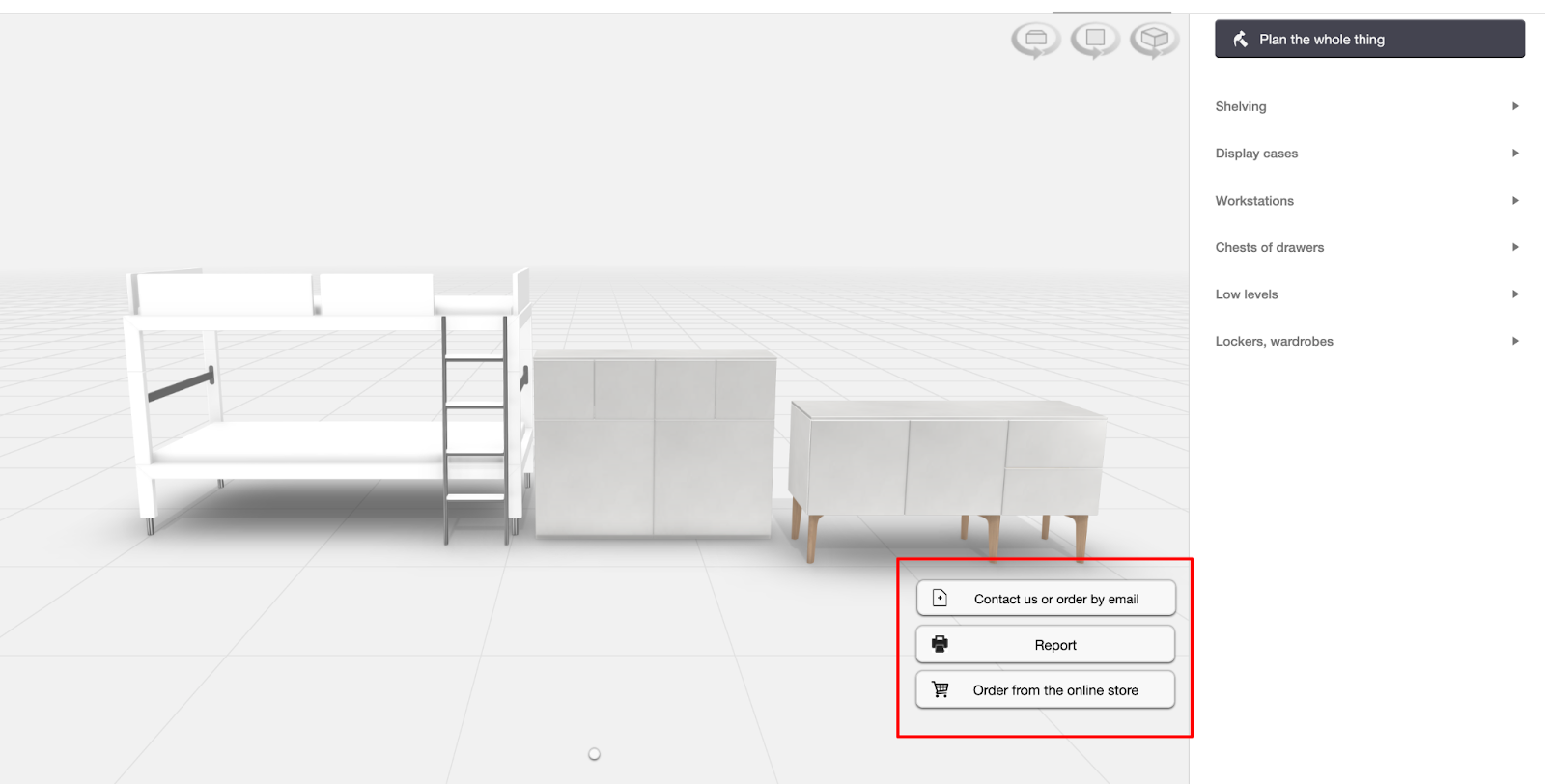
As buyers pay more to own a high-end furniture piece, they expect to see exactly what they are purchasing before committing. Using a 3D product viewer allows them to explore chosen materials, finishes, colors, and dimensions in real-time from all angles. This provides a more transparent understanding of how the final product will appear, which further builds confidence and speeds up your shopper’s decision-making process.
#3. Custom Products Need Accurate Pricing and Configuration
These orders involve custom dimensions, materials, add-ons, finishes, and components, making pricing and configuration more complex. It is apparent that relying on manual quoting slows the sales pipeline management, increases the risk of errors, and potentially leads to back-and-forth conversions between salespeople and customers.
Effective implementation of sales pipeline management software can reduce mistakes, support more accurate workflows, and minimize operational costs for your business.
5 Sales Pipeline Management Best Practices To Consider
1. Use Proper Sales Pipeline Management Tools to Drive An Efficient Sales Process
There is no single tool that can excel in your current sales pipeline management, ideally. Thus, best-in-class operations for your workflow should combine the essential names:
- CRM systems to manage customer relationships and stages
- 3D product configurator to enable custom configuration and 3D visualization
- Visual CPQ to offer display, pricing, and quoting validation
- Meeting booking platforms to reduce scheduling friction
- ERP software to ensure production and inventory alignment.
VividWorks is one of the leading providers of 3D configuration and visual CPQ platforms that integrate seamlessly with CRM systems, ERP, and eCommerce platforms, enabling an efficient workflow across every pipeline stage. Also, its solutions include pre-built product logics to ensure high compatibility with choices and manufacturable items.
2. Automate Wherever You Can - Especially Pricing and Quoting
If you want to speed your sales cycle without mistakes, it’s better to consider automation:
- Pricing calculations based on materials, modules, finishes, and dimensions
- Configuration rules to prevent incompatible selections.
- Quote generation so customers receive proposals instantly
- Revision handling when buyers update furniture configurations.
You can have your in-house team or third-party experts assist in establishing this flow. Automation has the most significant impact when it is properly integrated at each stage. Despite this, automation should be under the control of sales teams, allowing your sales cycle to be flexible enough to meet the emerging requirements of future customers.
3. Establish criteria for stages of your high-end furniture sales cycle
Each sales pipeline stage should have defined entry and exit requirements, such as confirmed design needs, completed furniture configurations, or approved budget ranges. A lead should transition from consultation to configuration once key requirements are clearly identified, and from quoting to negotiation only when pricing has been validated.
Although this is not applicable to all high-end furniture, it serves as an example to inspire. As a result, you can minimize sales ambiguity, improve forecast accuracy, and ensure every opportunity progresses through your current pipeline consistently and accurately.
4. Qualify Leads with Real-Time Insights
Not all leads are equal. Some browse casually, while others actively customize products to lead to high-intent conversions. Currently, you can score the value of leads based on:
- Time spent configuring
- Number of variations created
- Saved or shared furniture designs
- Quote requests
- Product categories viewed.
From that, you can develop more effective actions for your sales pipeline management, including: real-time alerts for sales follow-ups, predicting budgets and preferences based on configuration behavior, and personalized consultations tailored to buyers’ actual intent. In other words, you don’t guess to handle the problems but make data-driven decisions.
5. Track Performance Metrics to Improve Sales Forecasting
Accurate forecasting is one of the most valuable outcomes of effective sales pipeline management. For high-value furniture brands, forecasts significantly impact inventory planning, manufacturing capacity, procurement, and staffing decisions. Without a reliable database, teams are forced to operate reactively, increasing costs and operational risk.
- Pipeline velocity measures how quickly chances move from inquiry to close
- Quote-to-close rate indicates how often pricing proposals convert into orders
- Stage-by-stage conversion rate reveals where deals stall or drop off
- Lead qualification time shows how quickly serious customers are identified
- Average quoting time indicates your operational efficiency.
Additionally, visual selling tools offer deeper insights into customer intent, such as:
- The average number of configurations created per deal
- Most frequently selected modules, materials, or components
- Configuration behaviors that correlate with higher close rates
From that, your forecasting for furniture sales becomes more accurate and actionable. Sales leaders can gain a clearer view, while production teams can plan effectively.
Conclusion
To ensure effective sales pipeline management, it is not about understanding the stages, but also about utilizing sales pipeline management best practices to lead furniture sales. Because furniture often features complex, modular designs, implementing visualization and configuration software is especially essential. Even when operating a high-value furniture brand, satisfying these aspects of your sales process can effectively boost your buyer experiences. Book a demo with VividWorks today to see how our 3D tools support your sales control!
FAQs
What is the ideal pipeline coverage ratio?
The ideal pipeline coverage ratio should range from 3x to 5x your revenue target. With high-value furniture sales, a higher ratio is essential to account for deal delays, drop-offs, and revisions. You need to maintain adequate coverage to ensure that sales teams have enough qualified opportunities to meet targets without overly optimistic forecasts.
How does a 3D configurator help manage a sales pipeline?
3D configurators ensure the selected choices from customers are displayed accurately from all angles, with real-time price calculations and quote generation. All data can be automatically sent to CRM and production systems, with all specs for manufacturing.
How can I shorten my sales cycle using automation?
Automation shortens sales cycles by eliminating manual tasks, like pricing calculations, quote creation, and revision handling. When automation is integrated into your sales pipeline, your sales teams can respond instantly and maintain accuracy across changes.
Table of Content
-3.avif)
Streamline your process today!




.png)
