If you have browsed an eCommerce store, customized a sofa online, or explored a virtual showroom, you might have already experienced 3D rendering, even if you didn’t realize it.
In today’s visual-first economy, brands and manufacturers need to communicate product details with precision and speed. This is where 3D rendering becomes a competitive edge. Instead of using 2D images, you can ultilize this technology to offer a clearer representation of products to customers, accelerating product launches and enabling immersive journeys.
In this guide, we will break down what is 3D rendering, how it works, and why it’s becoming essential for modern businesses. Right now, keep scrolling to discover more with our expert!
What is 3D rendering?
3D rendering is the process of converting a 3D digital model into a 2D or interactive image. It can be either a stylish graphic or a photorealistic image that resembles real-life visuals. In industrial contexts, 3D rendering is a stage for turning raw 3D data (e.g., CAD files) into 3D visualizations used in marketing, sales, or design.
Given the complex nature of furniture, implementing a 3D rendering workflow for furniture brands is well-suited. It helps businesses visualize product variations efficiently, streamline approvals of made-to-order items, and scale the production process with greater clarity.
How Does the 3D Rendering Process Work
While the 3D rendering workflow varies slightly, in general, most follow the 3 core stages:
- 3D modelling (Lighting & Texturing)
Designers begin by building a digital representation of a product, defining its geometry, dimensions, and structural details. Once the 3D model is created, materials and textures are applied to simulate real-world surfaces. Lighting is then introduced to replicate natural or studio conditions, which are essential for achieving depth, realism, and visual appeal.
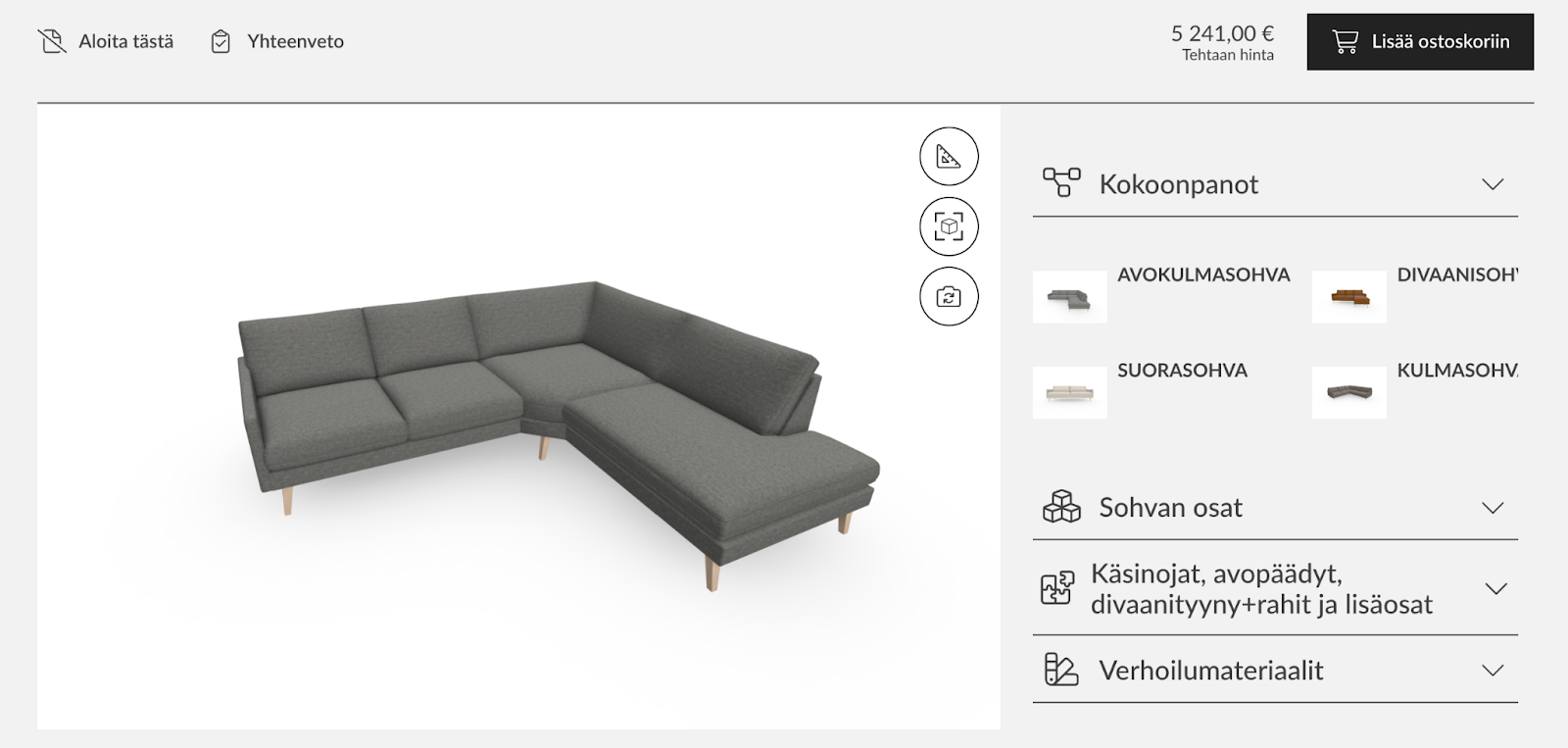
With these features, 3D modeling in product design and sales has become a go-to for accurate product alignment and immersive visualization. 3D models for furniture also work in this way, ensuring that every variation can be visualized consistently across channels.
- Rendering
This is the stage where 3D rendering actually takes place. Rendering engines process all the data from the model, materials, and lighting to generate a final image or interactive output.
The system uses advanced algorithms to calculate how light interacts with surfaces, including capturing shadows, reflections, and refractions, to produce visuals ranging from simple representations to photorealistic imagery. Depending on the use case, the output could be a static image, an animation, or a real-time interactive preview for 3D configurators.
- Refining
After rendering, the output should be refined to enhance quality and consistency. This post-processing stage involves adjusting contrast, color balance, sharpness, and lighting. From that, you can ensure the final 3D assets meet your brand and marketing standards.
If you are a furniture manufacturer, this step is especially important when scaling visuals across large product catalogs, as it ensures a cohesive look across all digital touchpoints.
Why Brands Need 3D Rendering?
There are a range of reasons for the rising demand for 3D rendering across many industries. Below are the key points to consider for this technology implementation going forward.
- Enable physically accurate visualization
It’s about the ability to create interactive visuals that replicate real-world materials, lighting, and proportions. This high level of visual precision is one of the most important benefits of 3d rendering for furniture manufacturers. Tactile details, scale, and spatial fits always matter. Even small inconsistencies in variations or combinations can impact customer perception.
- Support real-time 3D configuration systems
Modern eCommerce and manufacturing are shifting toward interactivity and personalization. Customers expect to explore, customize, and visualize products on their own in real time.
This is where 3D rendering becomes more crucial. As a core part of 3D visual configuration, it allows customers to configure products, such as materials, colors, dimensions, or components, and instantly see the updated visuals in 360-degree views. These capabilities are more valuable when dealing with complex, highly modular products, such as furniture.
- Streamline product design and asset workflows
3D rendering plays a central role in modern product workflows by connecting design, engineering, and marketing teams through a shared digital asset pipeline. As a result, these assets can be reused across product development, marketing visuals, eCommerce platforms, and even AR/VR solutions without recreating content for each sales channel.
- Improve cost efficiency and production speed
3D rendering can help generate unlimited variations without additional production costs, like studio setups, repeated photoshoots for each variation, and physical sample production. Also, it significantly accelerates time-to-market. Businesses can launch products, create marketing campaigns, and update catalogs faster, even before the product is manufactured.
Key Uses of 3D Rendering By Brands and Manufacturers
1. Architectural Visualization
Architects and real estate developers use 3D rendering to create photorealistic images, walkthroughs, and virtual tours of buildings before construction begins. These visuals help stakeholders clarify spatial layouts, materials, and lighting conditions, making it easier to secure high-investment approvals from customers and communicate space design intent.
2. Product Design & eCommerce
Retailers and manufacturers ultilize 3D rendering to visualize products in different materials, colors, and configurations, making it especially powerful for custom-made and modular products. These products inherently involve many variations and are challenging to clarify solely with static visuals. Also, producing physical photos for every possible combination takes a lot of time and effort, and even causes waste—it’s not truly a sustainable approach.
In other words, by offering 3D visualization in the online product experience, businesses can not only explore products more immersively but also design their own using a configurator. When combined with 3D eCommerce trends like augmented reality (AR), you can empower users to place products directly into their own environment. Apparently, clients don’t need to imagine how the final design fits with the rest; it's all previewed with true-to-life feelings.
3. Entertainment (Film, TV, Gaming)
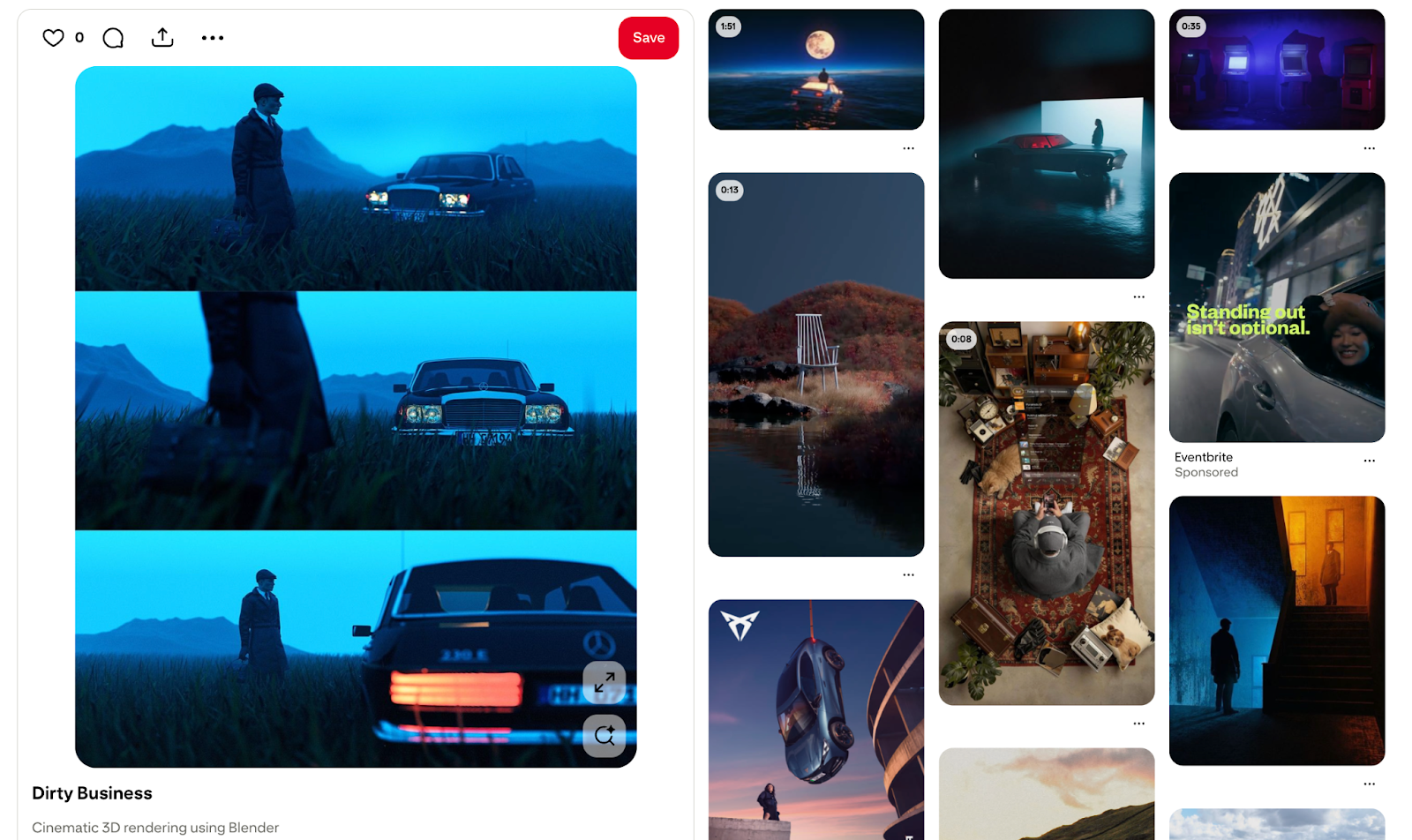
In this industry, 3D rendering is used to create CGI characters, environments, and visual effects for films, television, and video games. Real-time engines help developers to build immersive, interactive scenes, delivering highly engaging visual experiences for audiences.
4. Interior Design
Interior designers rely on this technology to produce accurate and detailed visuals of furniture, lighting, and spatial layouts. As a result, clients can visualize how a space will look after renovation, making it easier to evaluate different design options and finalize decisions.
3D room planner is another standout platform to transform your customized interior design. Users can create detailed floor plans and interior designs with accurate dimensions and various combinations and then preview them from all angles. Users can also build products within the space and clarify the cost of the space and the products they design in real time.
5. Manufacturing & Prototyping
Engineers have increasingly used 3D rendering to support prototyping by testing and validating product concepts digitally before creating physical versions. This reduces costs, minimizes material waste, and accelerates development compared to traditional methods.
This approach is particularly valuable in 3D rendering for small furniture businesses, where resources may be limited, but the need for high-quality visualization remains essential.
Talk to us to see more on how to transform customer experiences with 3D solutions!
Table of Content
-3.avif)
Streamline your process today!