


B2B ecommerce is changing from a transactional sales channel into a core part of how manufacturers sell, serve, and grow. Buyers increasingly want to research products, compare options, configure complex solutions, and place orders online without relying on a sales representative for every step. In this article, we explore the most important B2B ecommerce trends shaping manufacturing, and more importantly, with proven stats and what they mean in practice. From digital maturity and self-service buying to 3D configuration, omnichannel commerce, ERP integration, and AI, these trends show where manufacturers can invest to create better buying experiences and more efficient operations.
Trend #1: Digital Maturity Drives Growth
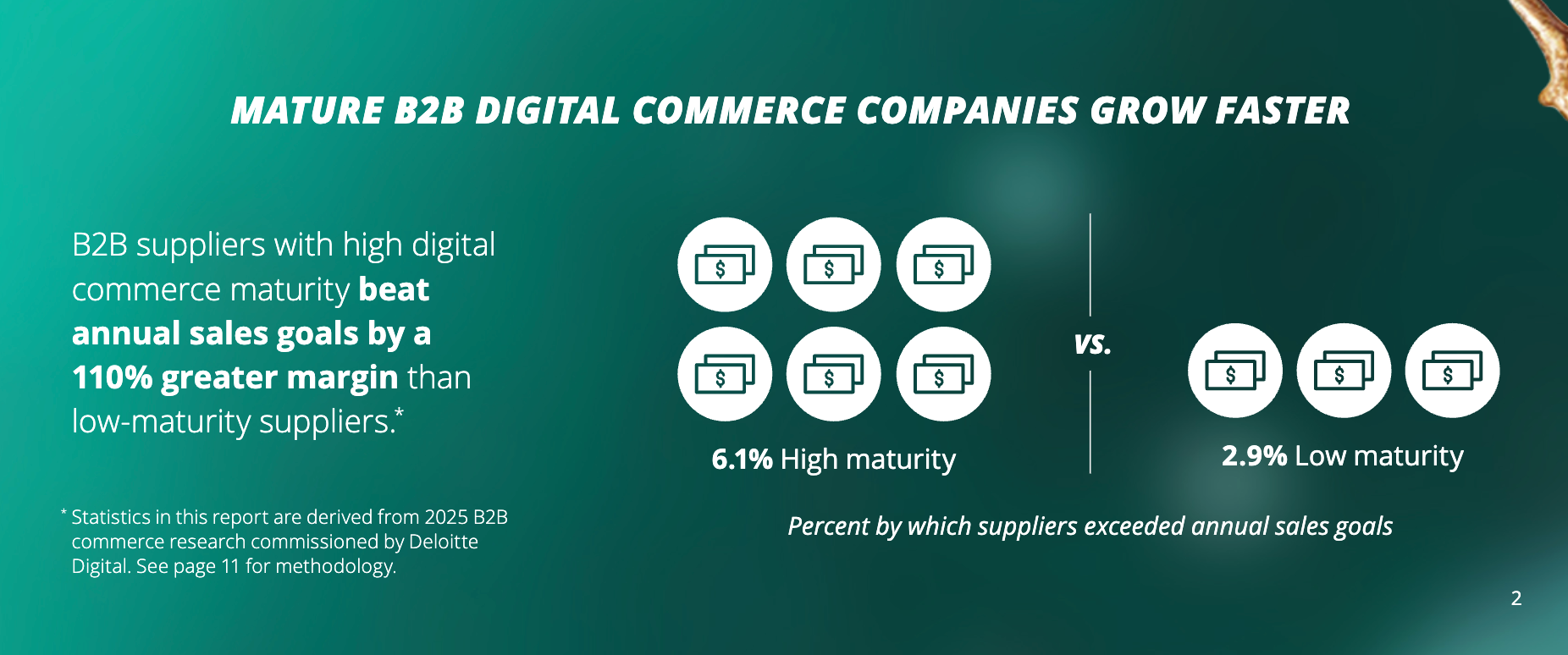
Digital transformation is becoming a measurable commercial advantage, not simply an IT initiative. High-maturity B2B suppliers beat annual sales goals by a 110% greater margin than low-maturity suppliers. Yet there is still a significant perception gap. According to Deloitte WSJ, 72% of suppliers said their sales processes were mostly or highly automated, compared with only 47% of customers who agreed that buying processes were similarly automated.
For manufacturers, these manufacturing ecommerce statistics highlight an important point: Digitizing individual processes is not enough. A manufacturer may have an ecommerce website, CRM, ERP, and sales automation while still forcing customers to email a salesperson for configuration, pricing, availability, or a quote. The opportunity is to connect these capabilities into one coherent purchasing journey, from discovery to fulfilment.
Trend #2: Configurable Products Need Smarter Buying Tools
This market niche requires advanced platforms to help B2B buyers understand, customize, and evaluate complex products online. As one of the key B2B ecommerce market trends 2026, technologies such as 3D product configurators, Visual Configure, Price, Quote (CPQ), 3D room planning, and augmented reality (AR) are becoming increasingly valuable.
Studies cited by DataIntelo indicate that eCommerce conversion rates can increase by 40% to 60% when adopting 3D product configuration instead of only focusing on static imagery. Meanwhile, North America and Europe remain the 2 leading markets for 3D visual product configurator software, driven by digital adoption and demand for customized products.
- Augmented reality (AR) / Virtual Reality (VR)
For highly modular products, integrating AR and VR solutions can provide more immersive, true-to-life previews in real-world contexts such as homes, offices, and commercial spaces. This is particularly valuable for furniture and interior products, where scale, layout, materials, and configuration can be difficult to assess from static images alone. Research published on NIH indicates that 40% of customers are willing to pay more for products offered through AR.
However, visualization alone is not enough for complex B2B sales. Visual CPQ sales target configuration logic, real-time 3D visualization, dynamic pricing, and automated quoting in a single workflow. Unlike traditional CPQ interfaces that often rely on forms and guided steps, Visual CPQ lets buyers see how each selection changes the product and price in real time. It can also generate accurate BOMs, helping reduce manual work and configuration errors. That’s why 3D CPQ is considered one of the best software to manage B2B sales pipeline.
Finally, 3D room planning extends configuration from individual items to complete spaces. B2B furniture buyers, architects, and interior designers can place configured products into scaled office, hospitality, or commercial environments to evaluate fit, layout, and product combinations. This creates a more complete path: configuration, space planning, pricing, quotation, order, turning complex selection into a more self-service B2B buying experience.
Therefore, by combining these smarter tools properly, your business not only leads the B2B eCommerce trend, but also achieves long-term growth with a strong competitive edge.
Trend #3: Buyers Expect Better Digital Experiences
B2B buyers increasingly expect the seamless, convenient digital experiences they receive as consumers. According to the Deloitte Digital Report, a positive buying experience can drive a 36% revenue uplift, while buyers report spending 29% more with suppliers that deliver a positive experience. This B2B eCommerce trend is driven by two key expectations:
- Rep-free buying
Gartner found 61% of B2B buyers now prefer a rep-free buying experience, fundamentally changing how businesses must approach digital commerce strategies. It’s why over 90% of B2B companies have shifted to utilizing the role of a virtual sales model in the new decade.
- Personalized experiences
Self-service does not mean one-size-fits-all. B2B buyers increasingly expect digital experiences that adapt to their specific needs, whether through personalized product recommendations, customer-specific pricing, relevant content, or product customization.
In fact, 80% of the leading global businesses found that personalization can uplift customer spending on their products and services. According to Market Us, the large enterprise segment held more than 58% of the eCommerce personalization software market, indicating strong investment in technologies that can deliver more individualized digital experiences.
Trend #4: Omnichannel Commerce Is Essential
Modern B2B commerce can involve direct ecommerce, sales-assisted ordering, dealer portals, B2B marketplaces, e-procurement, EDI, and increasingly AI-driven or agentic channels.
Deloitte found that the average number of commerce channels enabled by B2B suppliers increased 38% in two years, from 3.4 in 2023 to 4.7 in 2025. Meanwhile, 65% of buyers said they select purchasing channels based on ease of use, and 92% of buyers currently using EDI plan to move to other channels such as eCommerce or procurement commerce.
In fact, omnichannel commerce is increasingly shaping customer behaviour and digital transformation. For manufacturers, the goal is not simply to add more sales channels, but to make those channels work together. A B2B customer might discover a product through eCommerce platform, configure it online, consult a sales representative for a complex requirement, and ultimately place the order through a dealer portal or procurement system.
Trend #5: Connected Systems Improve Efficiency
A polished ecommerce storefront cannot compensate for disconnected business systems.
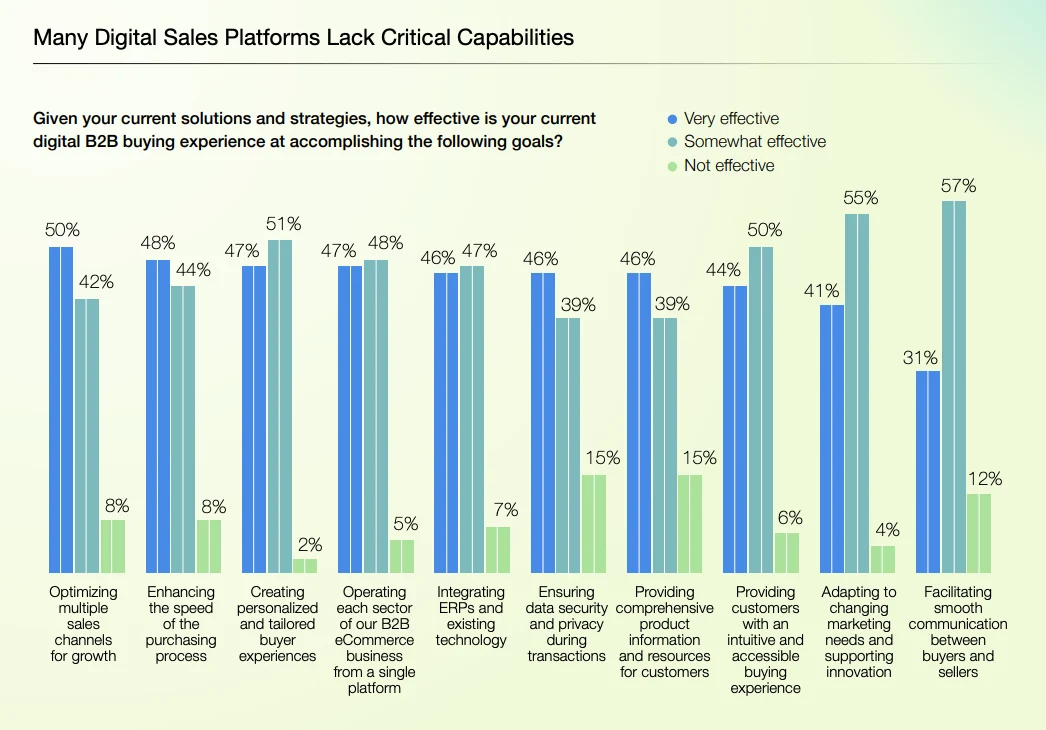
Therefore, the next B2B ecommerce trend for manufacturers here is the integration of the front office with the back office. In the same report from Deloitte, nearly 9 in 10 surveyed B2B suppliers were upgrading their ERP systems either currently or soon. Organizations that had fully integrated front- and back-office data, processes, and functions were more than four times as likely to say it was very easy for customers to do business with them. They also beat annual sales goals by a 6.3% margin, nearly twice the margin of other companies.
The result is more than automation. It creates a reliable flow: the price shown to a buyer should reflect the applicable rules; the configured product should be manufacturable; and order information should move into the appropriate systems without manual re-entry. For example, if you sell configurable items, having an ERP product configurator is truly powerful.
Trend #6: AI Is Enhancing B2B Commerce
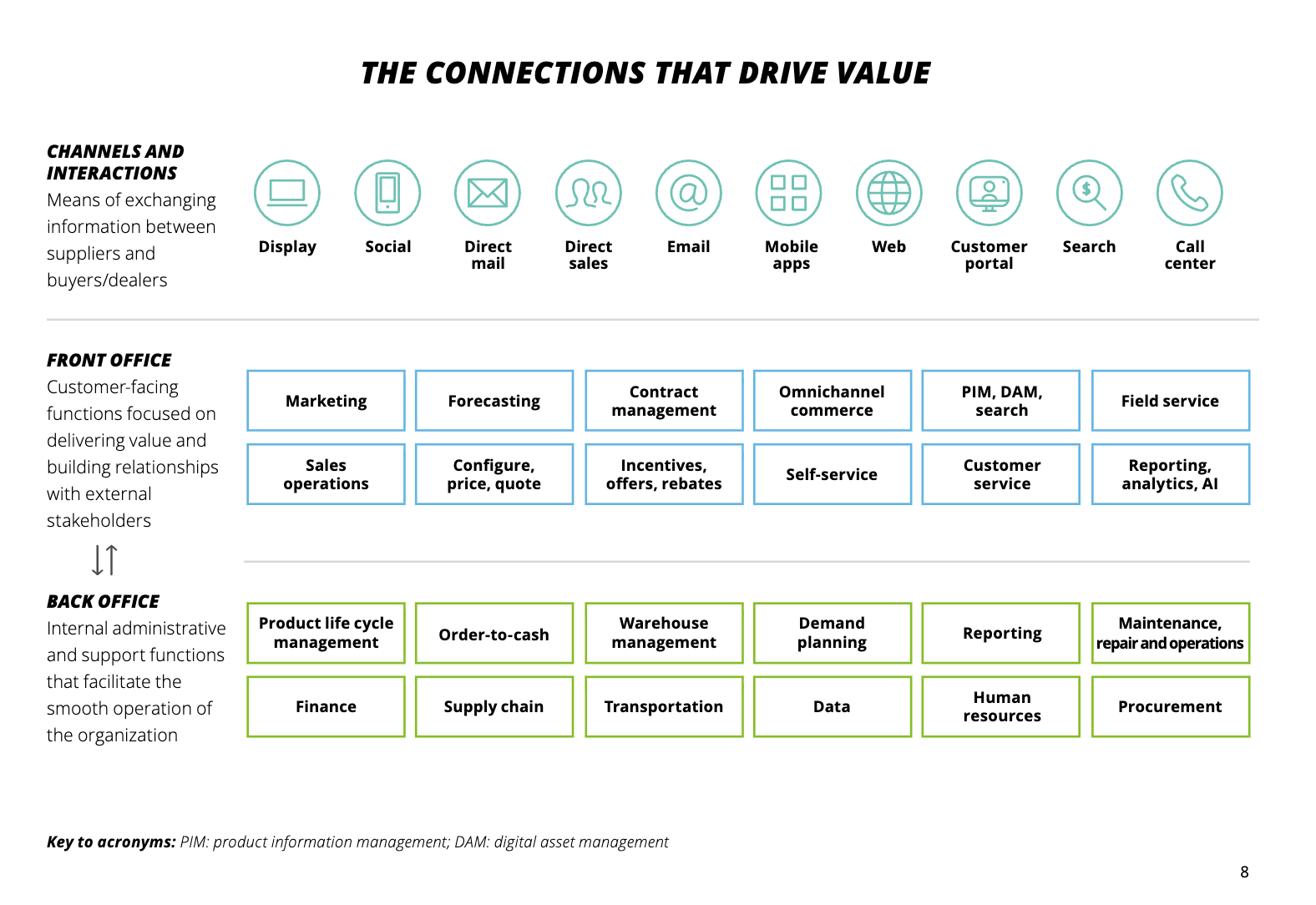
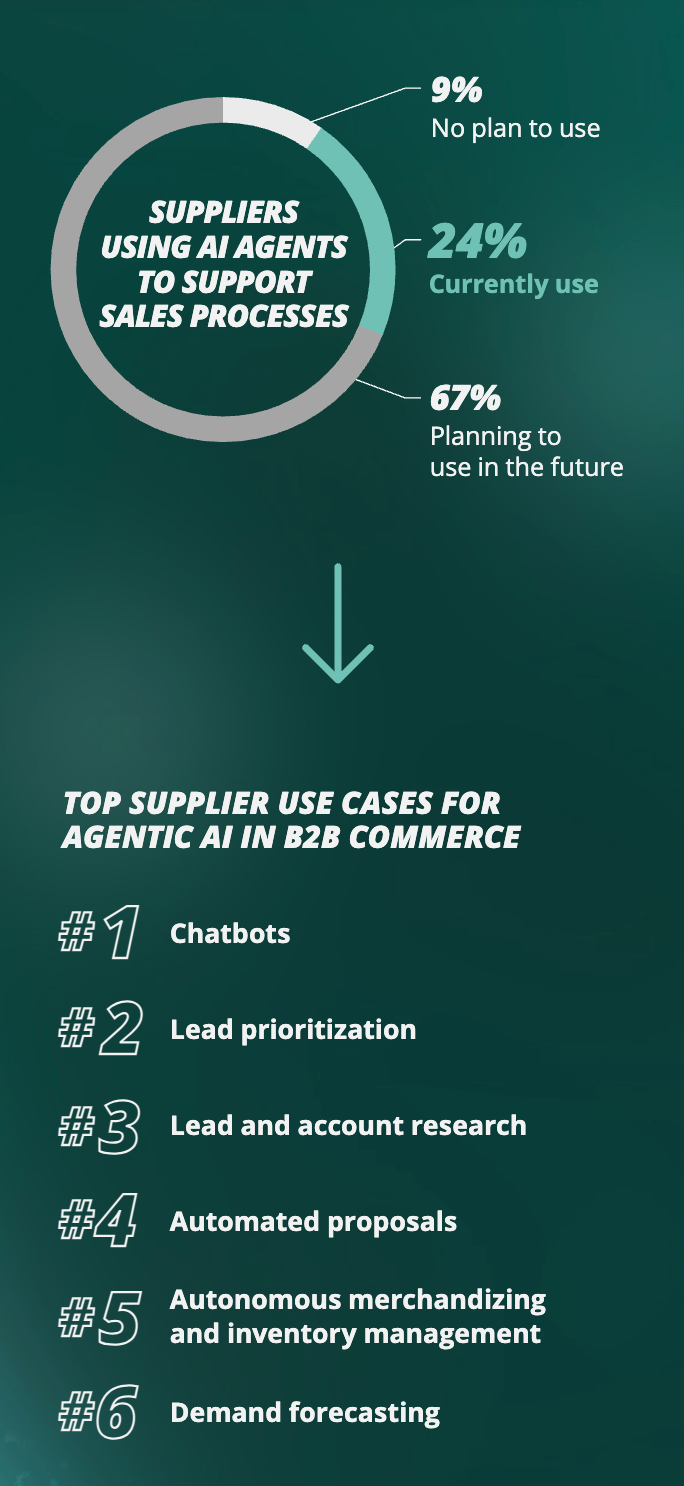
AI is moving from experimentation toward practical applications across the B2B buying journey. Nowadays, customers tend to use AI in searching, evaluating, and selecting products, configuring products, asking for services, checking order status, and purchasing. This further makes AI one of the most consequential B2B ecommerce trends to consider.
Conclusion
These B2B ecommerce trends show that manufacturers need to move beyond simply selling products online. Success increasingly depends on creating connected, self-service experiences that make complex products easier to configure, evaluate, and purchase. More importantly, the latest manufacturing ecommerce statistics reinforce the value of investing in digital maturity, 3D tools, omnichannel commerce, integrated systems, and AI. For manufacturers, the priority is not adopting every new technology, but choosing digital solutions that improve customer experience while supporting scalable, efficient growth.
Table of Content
-3.avif)
Streamline your process today!



.png)
