


The furniture market today is highly visual, competitive, and increasingly driven by digital discovery and online purchasing. To stand out in search results and convert browsers into real buyers, brands need to smartly adopt eCommerce SEO best practices for their stores.
Now, let’s explore actionable strategies tailored to varied niches within the furniture industry. Depending on your business model, your SEO approach should align with how your customers search, evaluate, and purchase products online to drive higher conversion rates.
Core eCommerce SEO Strategy to Consider
This eCommerce SEO strategy is built for furniture retailers, manufacturing companies, and construction or custom furniture providers. While each of these sectors has distinct customer journeys and search behaviours, these approaches can address them effectively.
1. Keyword Research & Intent Mapping
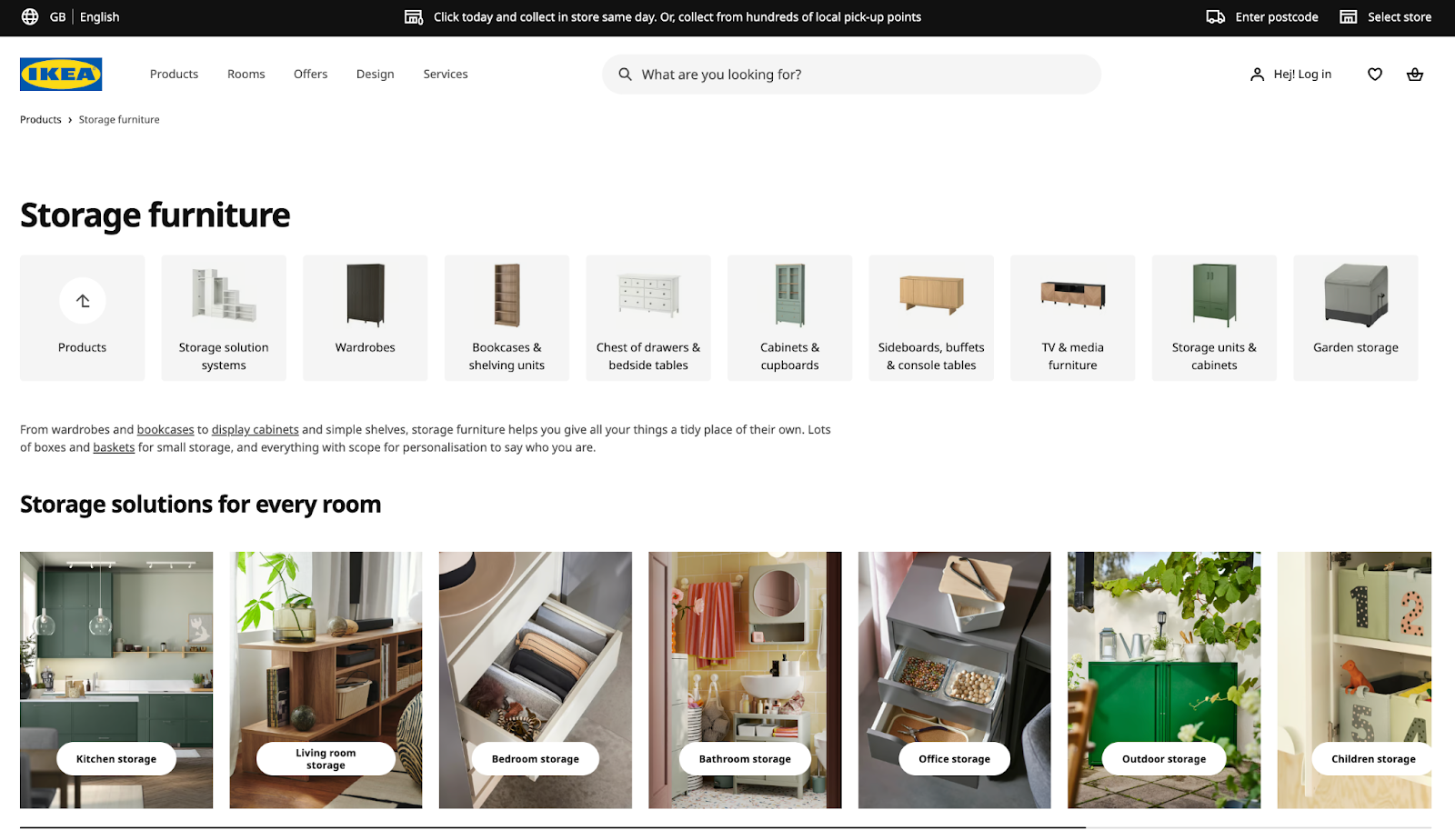
The first SEO practice for furniture eCommerce begins with understanding search intent. Customers often move through long consideration cycles, so a potential keyword list should ensure informational and transactional intent. Don’t forget to focus on long-tail queries, such as “modular storage solutions for garages,” for high purchase intent and lower competition.
It’s also recommended to map keywords for your furniture eCommerce store strategically:
- Category pages for broad terms
- Product pages for specific models
- Blog content for educational queries
2. Site Structure & Navigation
The second eCommerce SEO best practice is to enable a clean, logical structure for both users and search engines, further supporting crawling efficiency and improving rankings.
- Have a flat architecture to ensure users can reach any furniture piece within 3 clicks
- Keep URLs short and keyword-rich (e.g., /sofas/public-space-sofa)
- Enable breadcrumb scheme to help search engines clarify hierarchy and boost UX
- Use canonical tags and block low-value filter combinations from indexing.
3. On-Page Optimization (Category & Product Pages)
Effective eCommerce product SEO is important for search visibility and conversion results. Below are elements that furniture businesses should consider when adopting this practice:
- Avoid manufacturer duplicates for product names
- Publish high-quality images and optimize file names and alt-text
- Use structured, keyword-rich H1 and H2s naturally
- Capture long-tail queries and voice search for FAQs
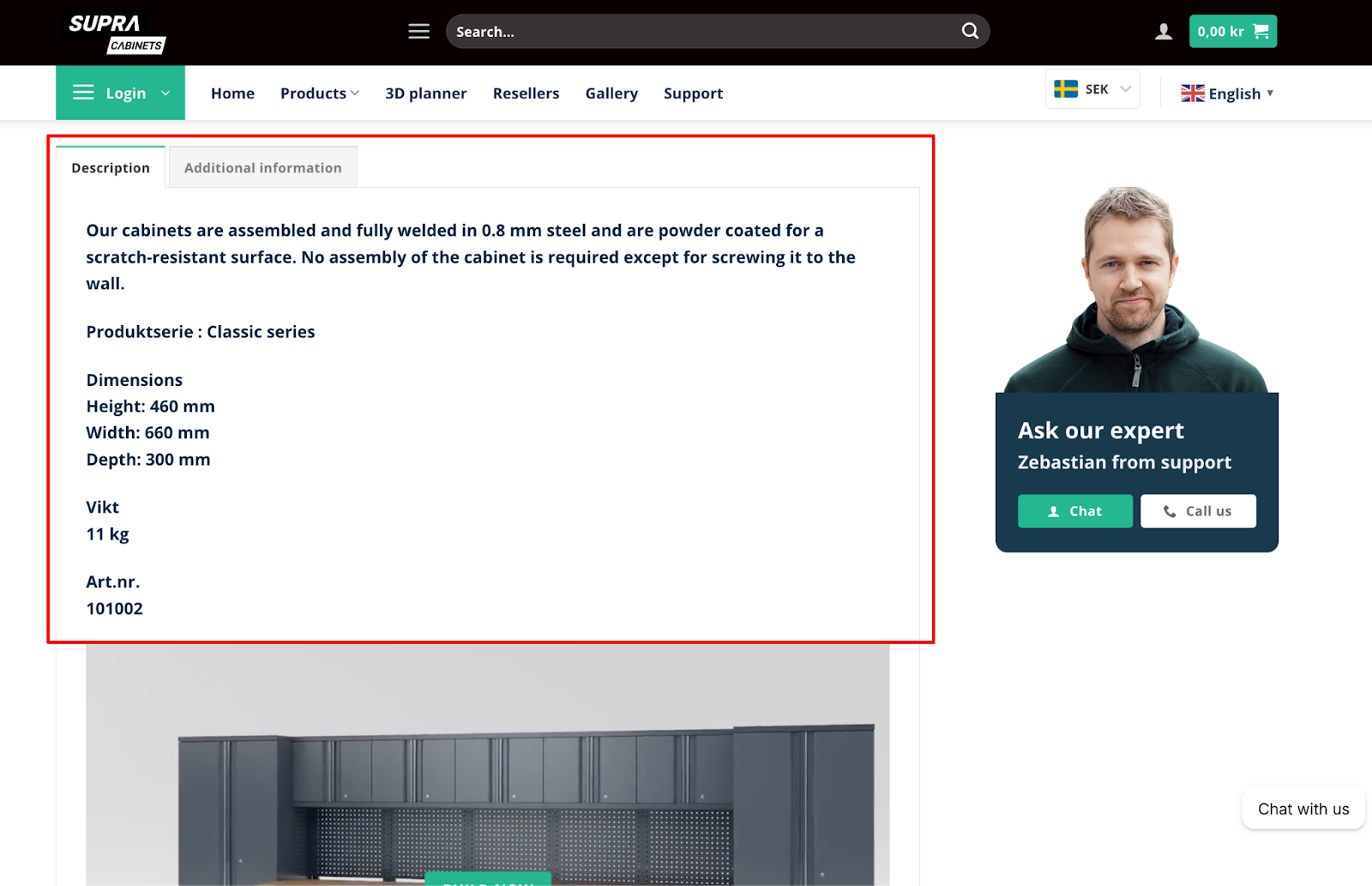
- Provide detailed profiles with specifications, descriptions, and additional information.
4. Blog, Guides & Informational Content
Strong content marketing is essential for building topical authority and supporting SEO for the furniture industry. Informational content attracts visitors early in the buying journey and guides them toward purchase decisions. That’s why many businesses invest heavily in scalable furniture digital marketing ideas that strongly combine education with inspiration.
There are three widely used formats: comparison posts, buying guides, and style inspiration. However, success depends on how well you optimize and connect this content within your SEO ecosystem. Here, we have collected the best eCommerce SEO tips from professionals:
- Link blog content to relevant product pages
- Use visual storytelling
- Target seasonal trends or holiday furniture marketing strategies
5. Internal, External, and Backlink Strategy
The final eCommerce SEO best practice for furniture stores today is about authority building.
- Internal linking:
- Connect blogs → categories → products
- Use descriptive anchor text
- External tactics:
- Digital PR campaigns (e.g., design trends reports)
- Influencer collaborations (e.g., home decor creators)
- Manufacturer partnerships for co-marketing
What are the Key Technical SEO Considerations for eCommerce Websites?
Whether you work in any industry, technical SEO is non-negotiable to ensure your store is crawlable, fast, and indexable, further helping build a high-converting eCommerce website.
1. Schema Markup & Rich Snippets
Utilizing structured data can enhance listings, click-through rates, and visibility in SERPs:
- Product schema (price, availability, reviews)
- FAQ schema
- Breadcrumb schema
2. Mobile-First & Speed Optimization
Many furniture shoppers browse on mobile before purchasing on a desktop. So, let’s ensure:
- Responsive design
- Fast-loading images (compressed without losing quality)
- Core Web Vitals optimization
3. Crawl Efficiency & Duplicate Content Management
In fact, large catalogs can create indexing issues. That’s why you need to reduce them by:
- Use canonical tags for similar products
- Optimize XML sitemaps
- Block irrelevant pages (filters, duplicates)
Once you ensure these strong technical foundations, you are already on your way to successfully implementing eCommerce SEO best practices for your furniture online store.
Best eCommerce SEO Practices for Conversion Boosting
1. Interactive & Immersive Product Experiences
In the furniture industry, where products are often complex, highly modular, static images and basic descriptions are no longer sufficient to meet user expectations. That’s when many brands turn into innovative technologies that are leading 3D eCommerce trends in furniture, significantly enhancing the online shopping journey with all-around, real-time evaluations.
- 3D visualization allows users to rotate, zoom, and explore furniture from every angle
- 3D product configuration enables configuring products from scratch, including selecting dimensions, materials, colors, etc., and even adding modules or add-ons.
- Furniture augmented reality (AR) lets users visualize items in their real-world spaces (e.g., homes and offices), improving purchase confidence when buying online.
- 3D CPQ enables configuring furniture and getting prices and quotes simultaneously.
- 3D Room planners are particularly valuable for home projects, helping users project entire spaces with accurate dimensions and visualize layouts and interior designs.
2. Right Tools for Optimization, Measuring, and Monitoring
Implementing eCommerce SEO best practices requires the right combination of tools to research, track, and continuously improve performance across your furniture online store.
SEO Research Tools
SEMrush and Ahrefs can identify keyword opportunities, analyze competitors, and monitor backlinks. They help furniture brands uncover high-intent search queries, evaluate ranking difficulty, and refine content strategies, ensuring consistent growth in organic visibility.
Analytics & Performance
Google Analytics and Google Search Console provide critical insights into user behavior, traffic sources, and search performance. They allow businesses to track conversions, identify high-performing pages, and detect technical issues. From that, you can make smart, data-driven decisions that improve both the user experience and overall SEO effectiveness.
Visual Commerce & Engagement Optimization
VividWorks is one of the leading providers of 3D solutions in the furniture industry, including furniture configurators, 3D customizers, 3D CPQ, 3D Room Planner, and augmented reality. These solutions are designed to enable highly interactive product experiences, helping buyers visualize and personalize furniture in real time and further boost their engagement.
Supra Cabinet, a Sweden-based company, partnered with VividWorks to launch a 3D WooCommerce configurator to address challenges in customizing and visualizing custom storage solutions. Built-in product logic ensures that all choices are compatible, allowing users to mix and match without worrying about errors or needing support from sales teams.
WooCommerce Storage Configurator for Supra Cabinets (Garageinredning.se)
Book a demo today to clarify how VividWorks 3D software can support your conversions.
3. User-Generated Content
For furniture eCommerce, authentic customer images and detailed feedback help bridge the gap between online and in-store experiences. They build trust, reduce purchase hesitation, and improve conversion rates. Additionally, structured review data can enhance search results with rich snippets, helping increase click-through rates and overall visibility.
Table of Content
-3.avif)
Streamline your process today!




.png)
