
Although 2026 is only just getting started, leading furniture manufacturers and retailers have been preparing for this lift well in advance. Product roadmaps were finalized months ago, technology investments are already live, and early launches from late 2025 have revealed a clear market direction. Furniture trends 2026 are not defined by a single aspect, but a broader transformation in how furniture pieces are designed, produced, visualized, and sold.
Across B2B and B2C segments, the focus is moving toward modularity, customization, sustainability, and immersive digital buying experiences. In 2026, competitive advantage will belong to businesses that combine advanced technologies and 3D models for eCommerce.
Right now, keep scrolling to discover more!
Highlights of Furniture Stats
The furniture market is booming, ranking among the largest consumer goods markets in the world, with a 2025 value of US$759.08 billion. Notably, furniture retail is forecast to be a promising segment, generating more than 430 billion U.S. dollars in revenue by 2029.
One of the most decisive dynamics behind furniture trends 2026 is the rapid growth of online commerce, with a 12% CAGR. This indicates that while physical presence remains crucial, the potential growth lies in the digital channel. The US, China, and Germany are the biggest players for eCommerce revenue, leading the American, Asian, and European markets, respectively. However, Germany, the UK, and Spain are among the most promising markets for both brick-and-mortar and online revenues, driven by strong sales growth, competitive pricing structures, supportive supplier ecosystems, and even stable economic outlooks.
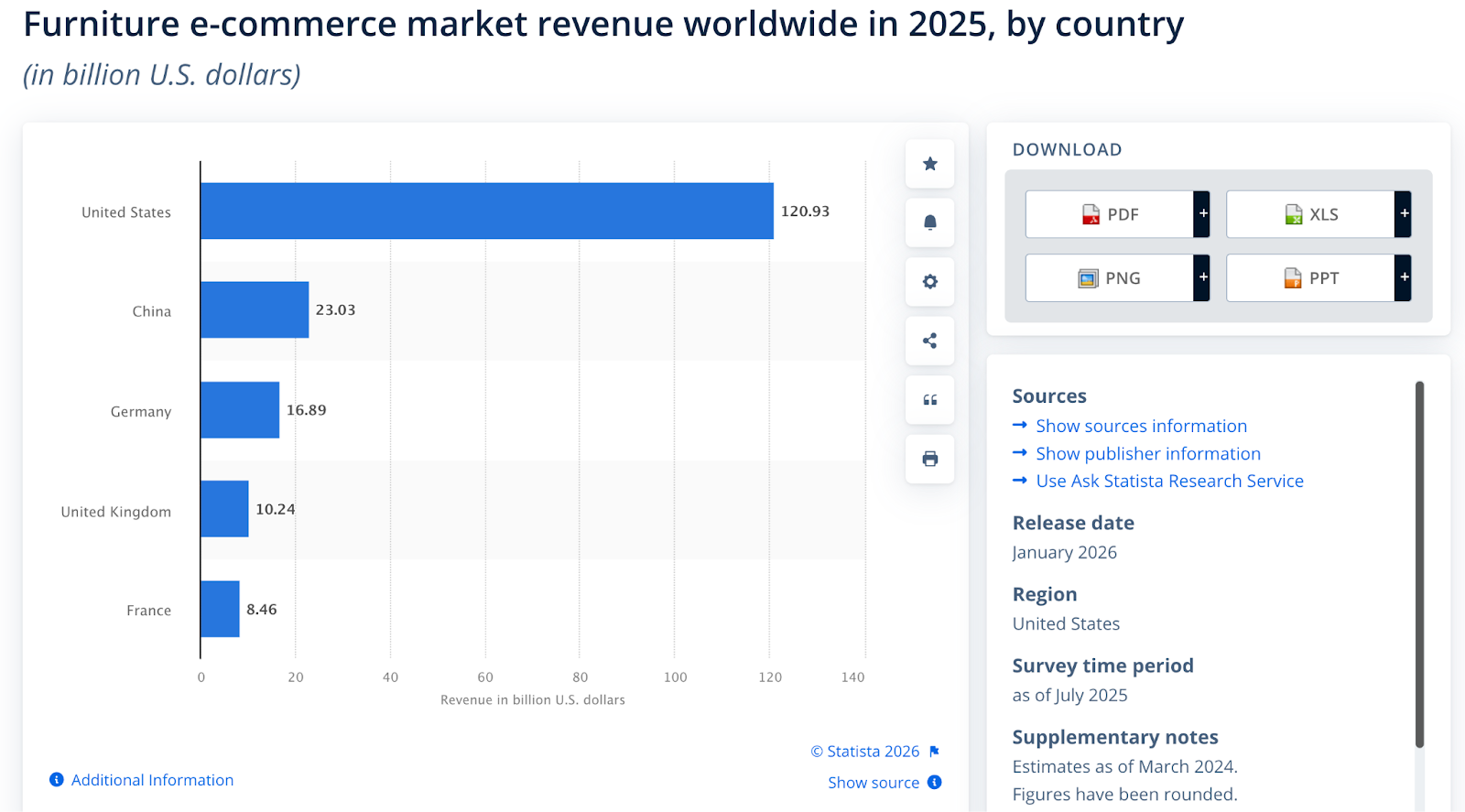
Key drivers fueling the worldwide furniture industry's expansion include rising demand for home furnishings, continued urbanization, and aggressive market expansion across Asia. Together, these forces are shaping the commercial foundation behind trends in furniture, where digital infrastructure and scalability strategies have been competitive differentiators.
Trends In Furniture Commerce
1. 3D Configuration as a Core Part of the Buying Journey
This furniture trend 2026 is fundamentally reshaping how furniture pieces are built, discovered, and purchased, especially amid rising demand for personalization. Customers can freely configure designs themselves and visualize them in 360 degrees to evaluate custom dimensions, materials, colors, layouts, and compatibility with greater accuracy. That’s why many furniture brands admit the role of 3D product configurators in removing friction and uncertainty when shopping online for high-value, complex items like furniture.
For modular sofas, wardrobes, office systems, and storage solutions, adopting a well-built modular product configurator is essential. This furniture configurator is built with robust rule-based configuration logic to ensure every selection is valid for manufacturing and minimize costly reworks. Notably, modularity is emerging as a defining theme in furniture design trends in 2026, underscoring the significance of these advanced configuration tools.
However, this trend often goes hand in hand with other 3D eCommerce trends for optimal performance. AR or Visual CPQ are examples that businesses should consider integrating.
2. AR “Try-Before-You-Buy” Becomes Standard
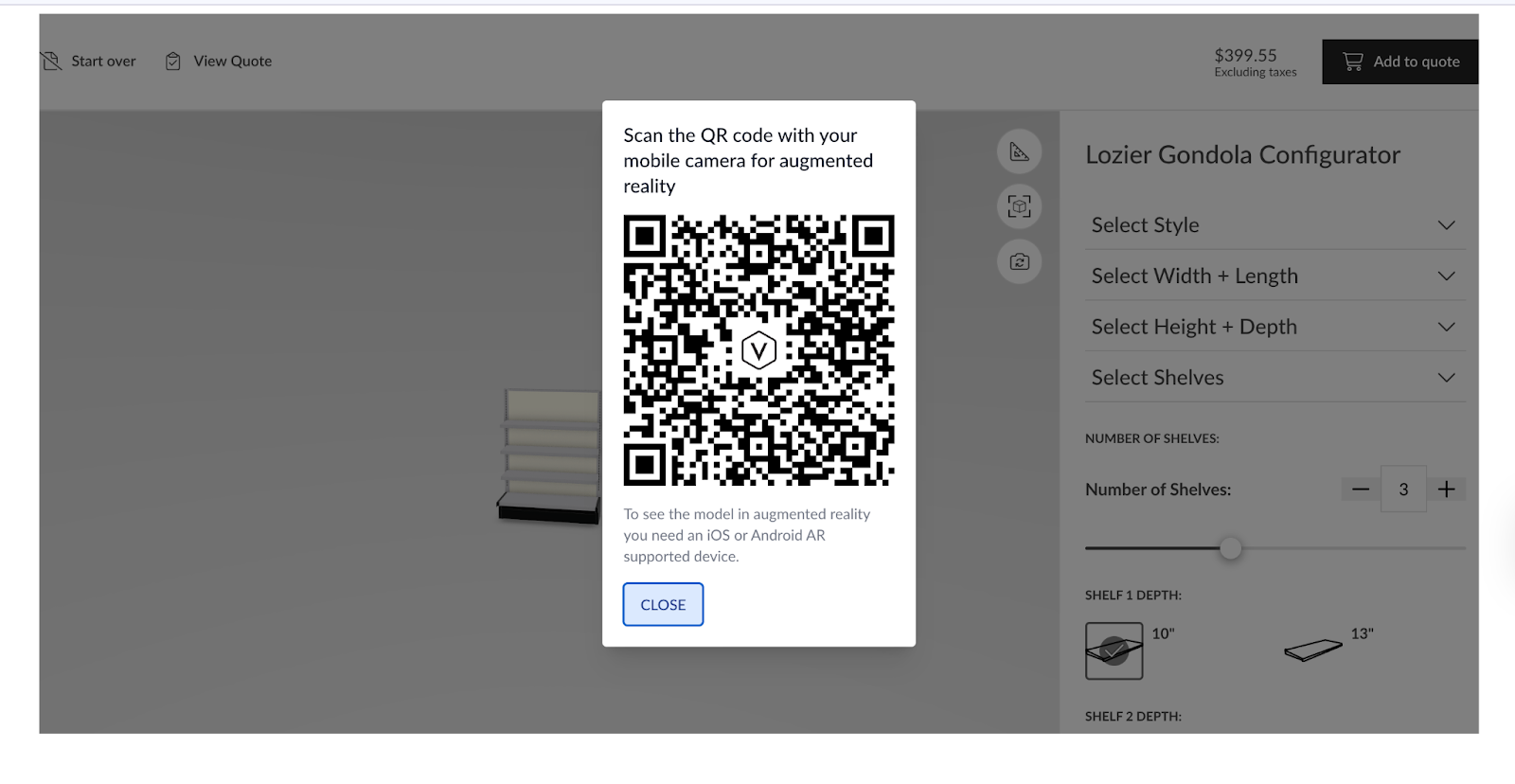
Augmented Reality (AR) for furniture is another 2026 furniture trend that brands can’t ignore. Customers can visualize custom product designs or life-size 3D models in their own spaces, such as homes or offices. This effectively bridges the gap between imagination and reality. As a result, AR visualization can improve conversions by 40% and reduce returns by 60%.
Grand + Benedicts, a US-based business, has partnered with VividWorks to launch 3D configuration software embedded with AR, enhancing 3D visualizations of custom shelves for a more immersive, more accurate experience. With only a QR code and a smartphone, customers can effortlessly assess whether the final products are suitable for their stores.
3. 3D space planning before purchasing
As part of furniture trends in 2026, customers increasingly expect to visualize entire spaces, not only individual products, before making a purchase. High-value items like sectionals, dining sets, or shelves should fit both dimensionally and aesthetically within a specific room.
In fact, 3D room planners are particularly relevant for living room furniture trends 2026 and bedroom furniture trends 2026, as these rooms demand careful spatial coordination and personalization. Living rooms often feature modular seating and multifunctional layouts, while bedrooms require optimized storage without compromising comfort for relaxing time.
Specifically, these 3D digital tools enable users to project accurate floor plans, test furniture within, and validate scale in real time. By eliminating guesswork and spatial uncertainty, you can significantly increase purchase confidence and reduce post-purchase dissatisfaction.
4. 3D CPQ Minimizes The Error-Free Design Process
Both 3D CPQ and Visual CPQ are advanced CPQ solutions designed to help manage product complexity, enable immersive visualizations, and maintain operational accuracy. Customers can configure the design themselves and view prices and quotes simultaneously. These dynamic updates are essential for reducing back-and-forth between sales teams and buyers, eliminating unexpected errors, enhancing experiences, and shortening sales cycles.
For these reasons, many brands consider these platforms the best CPQ software for selling complex, customizable furniture. Additionally, with rule-based configuration, scalability, and seamless integration with CRM, ERP, and eCommerce systems, 3D CPQ ensures operational accuracy while supporting personalization, making it essential for furniture trends for 2026.
5. AI in guided selling and Marketing
The next furniture trends 2026 shift is the strategic use of AI in guided selling and marketing. AI-powered engines analyze browsing behavior, preferences, and past purchases to recommend relevant products, configurations, and complementary items in real time.
In furniture eCommerce, where choices are complex and highly visual, AI reduces decision fatigue and personalizes the buying journey. From predictive product suggestions to automated content personalization and targeted campaigns, AI enables brands to increase conversion rates effectively while delivering more intuitive, customer-centric experiences.
6. Sustainability & Storytelling in Furniture eCommerce
“Nearly half (46%) of consumers across 23 study countries purchased at least one sustainable good or service”, found Deloitte in April 2023. Selling sustainable furniture is therefore considered an early success. This growing environmental awareness is influencing broader furniture home trends, where durability and responsible sourcing truly outweigh fast design.
Storytelling has become a powerful tool to leverage these values. Shoppers do not simply buy an item; they invest in its origin and materials. A table crafted from responsibly sourced wood can create a deeper emotional connection rather than a generic mass-market piece. Undoubtedly, brands that combine clear sustainability data with authentic storytelling can differentiate effectively, justify premium pricing up to 9%, and build lasting customer trust.
7. Omnichannel for a Seamless Shopping Experience
The final eCommerce furniture trend lies in delivering a seamless omnichannel experience, though online shopping journeys remain a focus. Brands need to unify their online stores, physical showrooms, mobile platforms, and sales teams into a single, connected ecosystem. Customers expect to start configuring a product online, continue the process in-store, and finalize the purchase without having to repeat steps. Integrated systems that synchronize product data, pricing, and buyer profiles ensure consistency and reduce purchasing friction.
Key Shifts In Design Trends
Beyond commerce and technology, furniture trends 2026 are also shaped by evolving design priorities. Buyers seek pieces that balance aesthetics, functionality, and long-term value, aligning closely with broader interior design trends focused on comfort and flexibility.
- Biophilic elements
Nature-inspired design continues to influence interiors across residential and commercial spaces. Organic shapes, natural wood grains, stone textures, and earthy palettes create calming environments that promote well-being. Biophilic principles are not limited to décor; they are embedded into furniture silhouettes and material choices, reinforcing sustainability.
- Modular functionality
Modular functionality remains central to furniture trends for 2026, particularly in urban areas where adaptability is essential. This interior furniture trend overlaps with the growing multifunctional furniture segment, which is projected to reach US$11.21 billion by 2030.
Buyers increasingly prefer pieces that serve multiple purposes, such as storage-integrated seating or reconfigurable shelving systems. Modular furniture allows layouts to evolve with changing needs, supporting both compact apartments and dynamic workspaces.
- Heritage craftsmanship
At the same time, there is renewed appreciation for heritage craftsmanship. Visible joinery, artisanal detailing, and high-quality materials signal durability and authenticity. In a market saturated with mass production, craftsmanship offers differentiation and boosts credibility.
- Bespoke, customizable design for long-term use
The bespoke furniture market was valued at U.S. $16.11 billion in 2024, driven by rising demand for unique, personalized furniture. These offerings enable tailoring each piece to specific tastes and requirements through manual or automated processes with tools.
Together, these shifts show that interior design trends 2026 prioritize flexibility, emotional resonance, and longevity, where design is not only visually compelling but also adaptable.
Furniture Color Trends 2026
Warm, Nature-Inspired Neutrals
Warm neutrals dominate the furniture color trends 2026, replacing cooler greys with tones that feel grounding and organic. Shades like sand, clay, terracotta, olive, and warm taupe are taking center stage. These hues pair seamlessly with natural materials such as oak, walnut, linen, and stone, reinforcing biophilic and sustainable design movements. Warm neutrals also provide flexibility, allowing customers to update accents without replacing core pieces.
Bold Accent Colors for Personal Expression
Alongside subtle bases, bold accents are gaining traction. Deep emerald, cobalt blue, burgundy, and muted mustard introduce personality without overwhelming a space. Accent chairs, headboards, and modular sofa sections serve as statement elements, enabling modern consumers to freely personalize interiors while maintaining timeless foundations.
Vividworks Serves The Top Leading Furniture Brands In B2B and B2C
As furniture trends 2026 continue to emphasize personalization, modularity, and immersive buying experiences, technology partners play a critical role in enabling transformation at scale. VividWorks supports both B2B and B2C furniture businesses with advanced software.
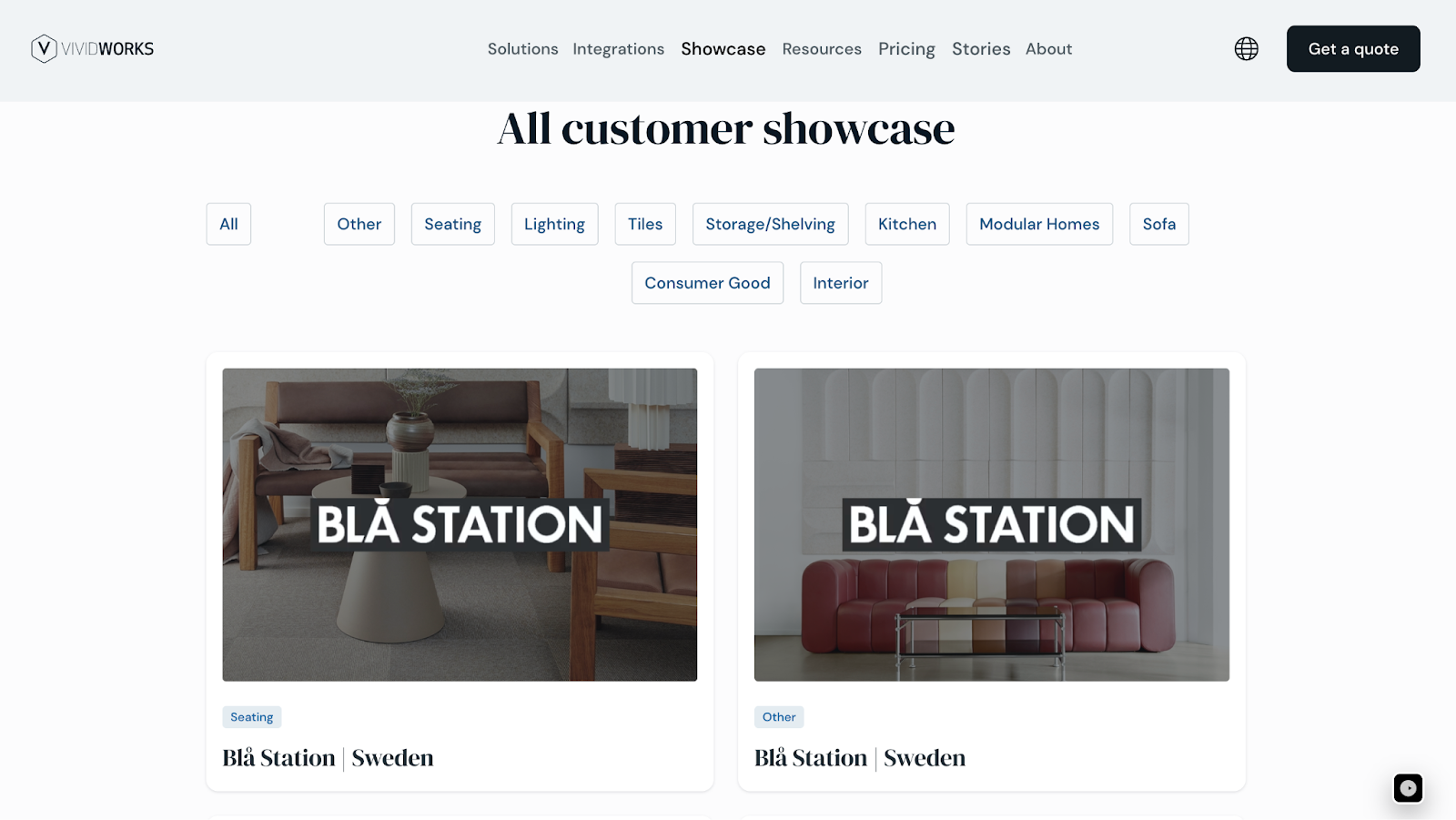
Approximately 70% of VividWorks’ partners are medium to large-sized furniture brands located in the EU, US, UK, Australia, and Japan. These companies leverage 3D configuration, Visual CPQ, and AR tools to boost sales, eliminate bottlenecks, and streamline complex ordering.
- Blåstation (B2B): After launching a 3D sofa configurator on its product page, the company effectively transforms its sales with custom designs for public spaces. Customers freely configure and visualize the final designs before closing deals.
- Grand + Benedicts (B2B): The sales process for custom Lozier Gondola shelves was complex due to lengthy consultations with sales teams on design and visualizations. Therefore, the brand decided to put control directly in its buyers' hands by enabling a 3D configurator with built-in AR that lets them configure and visualize products in their own spaces. The result is huge time savings for both salespeople and buyers, which improves sales, streamlines operations, and strengthens competitive edges.
- New Works (B2C): The challenge: the shelving systems were difficult to visualize and time-consuming to design. Adopting the VividWorks product configurator reduces manual work by 80% and reduces session drop from 30 minutes to just 5 minutes.
- BEDD (B2C & B2B): This Norway-based brand leads outdoor furniture trends by partnering with VividWorks to develop a 3D configurator to sell planter solutions. Customers, architects, and retailers can design plant boxes themselves and preview components from all angles. Visual CPQ also enables dynamic pricing and instant quotation, ensuring transparency, reducing manual intervention, and accelerating decisions.
Book a demo with us today to see how our 3D solutions help you boost furniture leads.
Table of Content
-3.avif)
Streamline your process today!