The furniture market is more demanding than ever this year. Rising costs, shifting consumer demand, and increasing competition are putting real pressure on furniture businesses of all sizes. On top of that, customers have more expectations for digital-first buying experiences.
Custom furniture brands are uniquely positioned not just to weather these pressures but to grow through them. They are offering differentiation, technology, and amazing experiences, targeting to better engage customers and lead the market. This guide covers what’s driving change and exactly how to take advantage of it. Right now, keep scrolling to discover more!
What's Shaping the Furniture Market in 2026?
The furniture market is projected to reach US$757.33 billion in 2026, with a 2026-2030 CAGR of 3%, signaling a more mature, more competitive context where standing out matters more than simply showing up. Impressively, the living room furniture has continuously dominated.
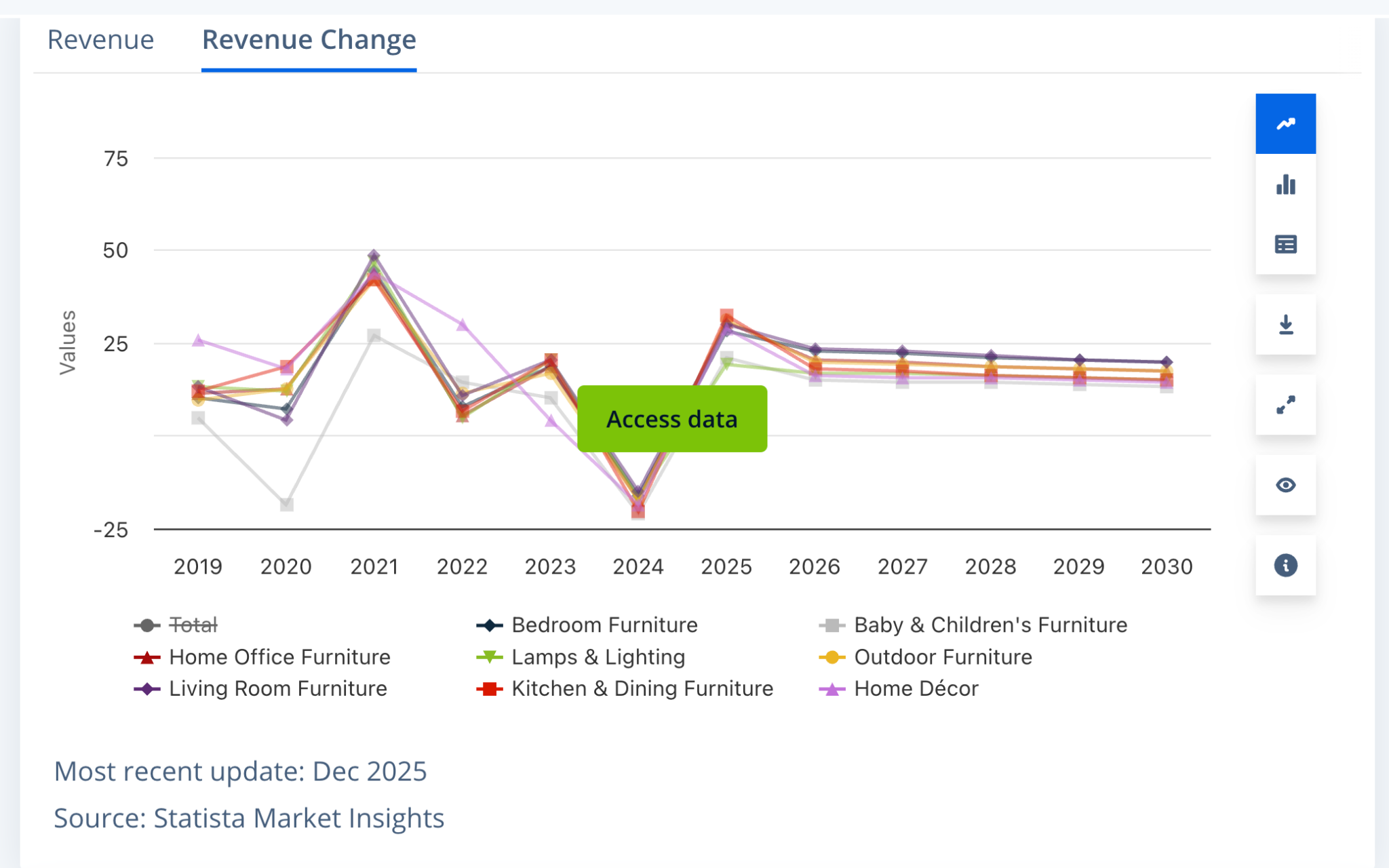
Let’s take a quick look at several forces behind this growth:
- Economic uncertainty and pricing pressure
Inflation has made customers more cautious. In fact, furniture sales are increasingly driven by value-conscious shoppers who compare prices across channels before committing.
- Supply chain challenges
Although global logistics have largely stabilized, furniture manufacturers continue to face fluctuating raw material costs, sourcing disruptions, and rising transportation expenses. They are under pressure to diversify suppliers, shorten lead times, and balance inventory levels.
- Digital-first buying behavior
Compared to the overall furniture market, furniture eCommerce has recorded a much higher CAGR of 7.72% over 2026-2031, indicating that online channels are now a primary touchpoint across both B2B and B2C. Buyers increasingly start their search online, and many complete their purchases there as well, but the risk of returns is also high due to true-to-life discovery.
- Increased competition
Furniture retail is crowded. Mass-market players compete on price and brand value, while new entrants in the digital transformation of furniture compete on experience. Apparently, if custom furniture brands fail to differentiate, they might lose or only get caught in the middle.
- Evolving consumer demand
Customers want products tailored to their preferences and private space, not what’s in stock. This shift toward personalization to boost customer experience is one of the most powerful furniture industry trends, with the viral terms such as “bespoke or made-to-order furniture”.
Why Custom Furniture Brands Have an Advantage
First, custom furniture brands might avoid direct price competition because their products are unique. Customers aren’t shopping for the cheapest sofa; they’re designing the right one. Below is exactly why product customization helps translate into a real business advantage:
- Higher perceived value
A custom furniture piece often commands a premium price because customers are actively involved in the design process. They select dimensions, finishes, sizes, and more, which leads to a stronger emotional connection and typically makes them more willing to pay. As a result, furniture brands can transform their sales and improve average order value (AOV).
- Reduced returns
Personalized products tend to generate fewer returns because customers receive exactly what they ordered. By aligning products more closely with customer expectations, custom furniture businesses can reduce costly returns and exchanges while protecting profitability.
- Stronger customer experience
Offering product customization can turn furniture shopping from a transactional purchase into an interactive experience. Customers feel more engaged, which increases purchase confidence and helps build stronger brand affinity long before the product even ships.
- Better competitive positioning
Custom furniture brands are not competing for visibility on the same crowded shelf. Instead, they differentiate themselves through unique products and tailored experiences that competitors find difficult to replicate. By meeting specific needs, they can carve out a distinct market position and build a loyal customer base less sensitive to price competition.
5 Practical Ways to Thrive in 2026
1. Invest in Better Buying Experiences
Interactive product visualization has been considered a standard expectation in furniture eCommerce. Customers want to configure product elements and preview them in real-time. So, next-level visualization for online sales has moved from differentiator to table stakes.
For example, 3D product configurator software lets customers build and explore their ideal product from every angle before making a purchase. With augmented reality (AR) layered in, they can even place the product in their own space to clarify whether it fits with the interior.
Speed matters in B2B just as much. Lengthy back-and-forth on pricing and spec clarification costs time and deals. Tools like Visual Configure, Price, Quote (Visual CPQ) enable faster sales by generating accurate pricing as customers configure with immersive visualizations. Don’t forget to take a look at the best CPQ software to choose the best fit for your demands.
2. Double Down on Product Customization
The most successful custom furniture brands are building flexibility into core lines: modular structures, mix-and-match finishes, size variations, and made-to-order manufacturing. For instance, modular fixtures for retailers, a recent trend, demonstrate how configurable systems can support diverse B2B customers without requiring bespoke builds each time.
For D2C brands, the ability to sell unique custom products online is a true competitive edge. Customers can design products that match their exact preferences and receive furniture tailored to their needs, which is exactly a reason to choose your brand over alternatives. Also, investing in 3D product customization for furniture has become powerful to enhance customer experiences. As mentioned, users will have a deeper understanding of products.
3. Improve Operational Efficiency
Manual quoting, order entry, and spreadsheet-based workflows slow down custom sales and lead to errors. The right essential online sales tools integrate configuration, pricing, and order management into a single workflow, reducing manual work and boosting turnaround time. When a salesperson generates an accurate quote in minutes rather than hours or days, consumer demand is met while interest remains high, and your profit margins remain intact.
4. Strengthen Your Digital Presence
The best products don't sell if customers can't find them. Digital transformation in the furniture business means being discoverable and credible across every channel buyers use.
SEO is foundational in this practice. Digital marketing ideas built around real customer intent, including local search, product guides, and category content, help drive consistent organic traffic without ongoing ad spends. Additionally, pairing that with solid eCommerce SEO best practices can ensure products, category pages, and your website rank and convert better.
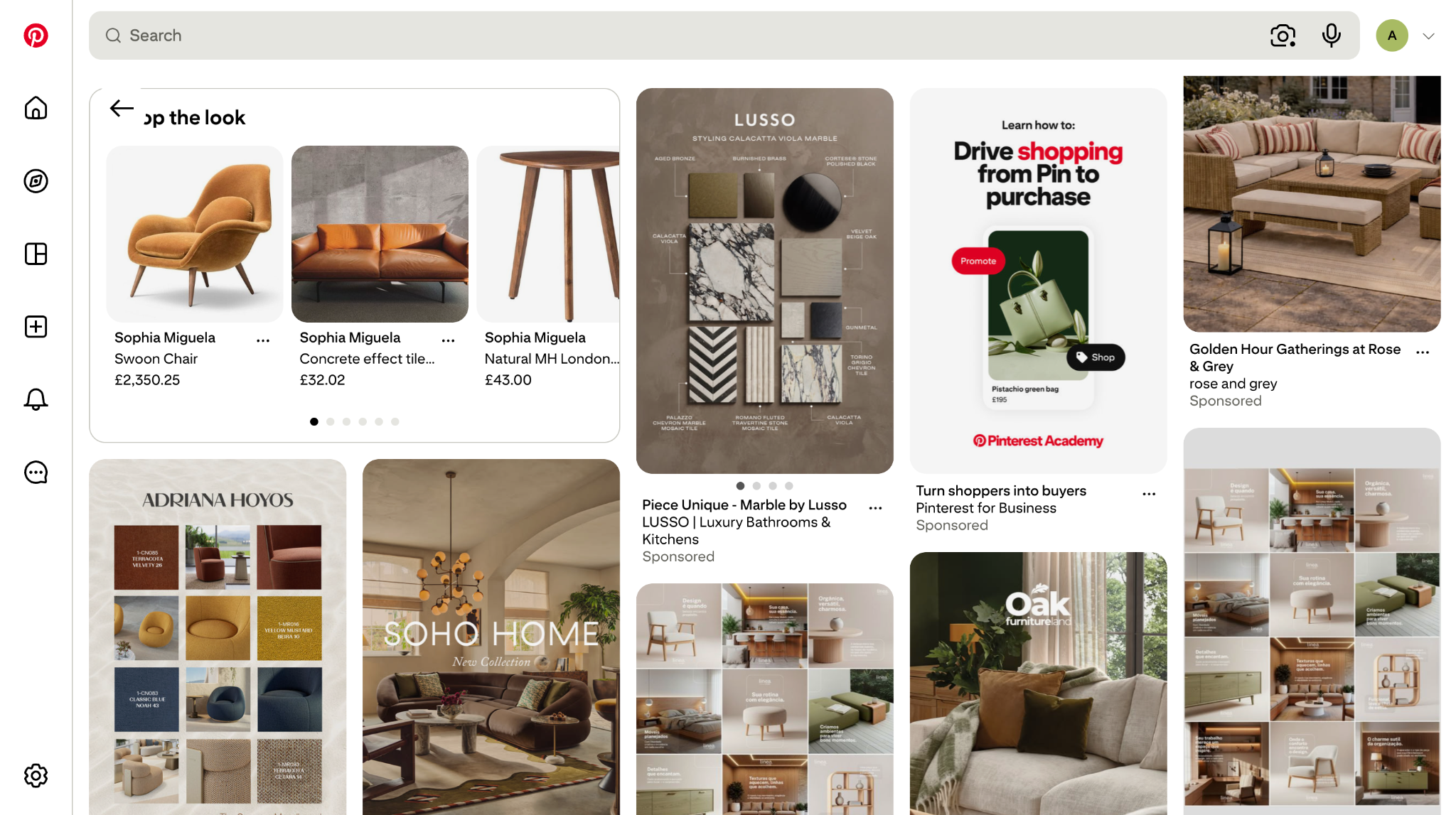
Social platforms like Facebook, Instagram, and Pinterest are now product discovery engines. Brands investing in visual-first images, real-world stories, shoppable videos, and immersive experiences might capture custom furniture customers at the earliest stage of their search.
5. Focus on High-Margin Product Categories
Not all furniture is equally profitable and has the potential to kickstart. It’s recommended that businesses focus on the categories where customization commands the highest premium.
Premium and bespoke pieces are the clearest example. However, what should you do with them? Using 3D configuration for bespoke sales makes high-ticket, fully custom orders more accessible, reducing the friction that once demanded back-and-forth consultations. Actually, this is only notable advice; you can consider other approaches to transform sales.
Commercial furniture and multifamily projects offer another high-value lane. These buyers, such as designers, developers, and office managers, purchase at volume and value both reliability and flexibility. Don’t forget to take cues from the best furniture website examples on how they build their websites and design their shopping workflows to improve credibility.
Conclusion
The furniture market has rewarded brands that are clear about who they serve and how they serve them. Custom furniture brands that invest in better buying experiences, embrace product customization, streamline their operations with automated CPQ, and focus on high-margin categories are the ones built for what comes next. Actually, the fundamentals, including great products, efficient processes, and a strong digital presence, have never been more important. Getting yourself right this year is the potential brand that leads next year.
FAQs
- What challenges are furniture brands facing in 2026?
Furniture brands are navigating economic uncertainty, shifting consumer spending habits, rising material and labor costs, supply chain disruptions, and increasing competition from both established retailers and direct-to-consumer brands. Customers are also demanding faster delivery, greater sustainability, and more personalized products.
- Why is customization important in the furniture market?
In fact, customization is nearly a standard. It allows brands to meet customer preferences, creating products that fit specific spaces, styles, and functional needs. It enhances customer satisfaction, strengthens brand differentiation, and justifies premium pricing to drive profits.
- What technologies are transforming the furniture industry?
Key technologies include 3D product configurators, augmented reality (AR), artificial intelligence (AI), CPQ automation, digital manufacturing tools, and advanced eCommerce platforms that enhance both customer experiences and operational efficiency.
- How can custom furniture brands stay competitive in the future?
Custom furniture manufacturers can stay competitive by embracing digital innovation, offering flexible customization options, prioritizing sustainability, improving customer experiences, and continuously adapting to changing demands and consumer expectations.
Table of Content
-3.avif)
Streamline your process today!