


If you have been looking for a business with strong demand and real growth potential, learning how to start and grow your cabinet business is one of the most rewarding paths you can take. As homeowners and commercial property developers continue to seek storage solutions and high-quality cabinetry, the industry offers golden opportunities for everyone.
This blog walks through everything, from choosing your business model and setting up your cabinet shop to pricing for profitability and using robust technologies to close more sales.
Right now, keep scrolling to discover more with our experts!
Why Start a Cabinet Business?
Growing Demand for Cabinetry
According to the Mordor Intelligence Report (2026 - 2031), the global cabinets market was valued at $138.43 billion in 2025 and is expected to climb to $201.27 billion by 2033. The market includes kitchen cabinets, bathroom vanities, and other storage systems, with kitchen cabinets accounting for up to 69.39%. Notably, demand for semi-custom and custom cabinets is a major driver, thanks to offering a balance of personalization and cost efficiency.
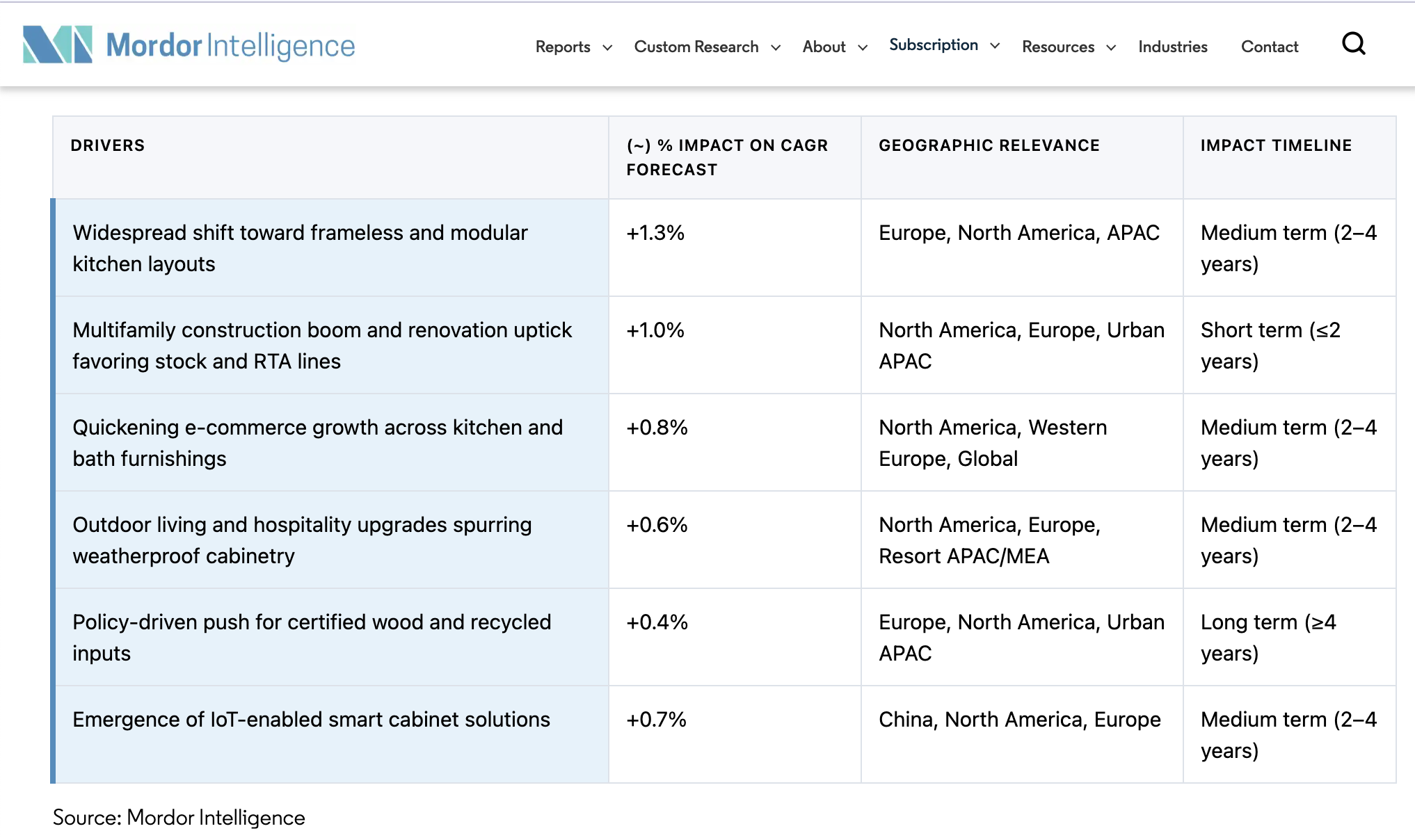
These figures aren’t only recorded statistics; they exactly reflect steady opportunities for cabinet businesses. Also, residential renovations, new home construction, and commercial projects continue to grow, so demand for quality cabinetry remains strong across segments.
Profit Potential
When you start your own cabinet shop, you can potentially achieve profit margins from 25% to 50%, while kitchen designers can add up to 30% to 40%. This level seems much higher compared to other eCommerce, manufacturing, or retailing niches. But achieving complete success in the early days is not easy. The key is managing startup costs, pricing strategically, building a strong sales pipeline, and developing reliable customer-acquisition channels.
Opportunities for specialization
In fact, the cabinetry market is not one-size-fits-all. Cabinet makers who carve out a niche, such as high-end kitchen renovations, commercial fit-outs, garage storage, or built-in office furniture, often outperform generalists in both margins and referral rates. This specialization also makes marketing more effective, especially when supported by informative social media posts, and positions your business as an expert in the market.
Choose Your Cabinet Business Model
Before you draft any business plan or invest in workshop equipment (e.g., CNC machines) for cabinet manufacturing, identify which model best fits your capital, target market, and skills. This can help minimize risk, allocate resources effectively, and build a sustainable operation.
Let’s take a look at the 3 most common cabinet business models recommended by experts:
1. Fully-custom cabinet manufacturing
This model involves designing and building cabinets entirely based on customer selections. It often commands the highest margins and the greatest differentiation, but has the most difficult entry point due to the significant, dedicated investment required from the first days. Sometimes, manufacturers have pre-made designs purely for customer inspiration, and customers can completely choose to keep, remove, or add components to suit their needs.
You will need skilled labor, high-quality cabinet materials, and robust technologies (e.g., configurable BOM software, furniture configurators) to deliver personalized experiences. In this way, you not only increase competition to win sales but also build strong client loyalty.
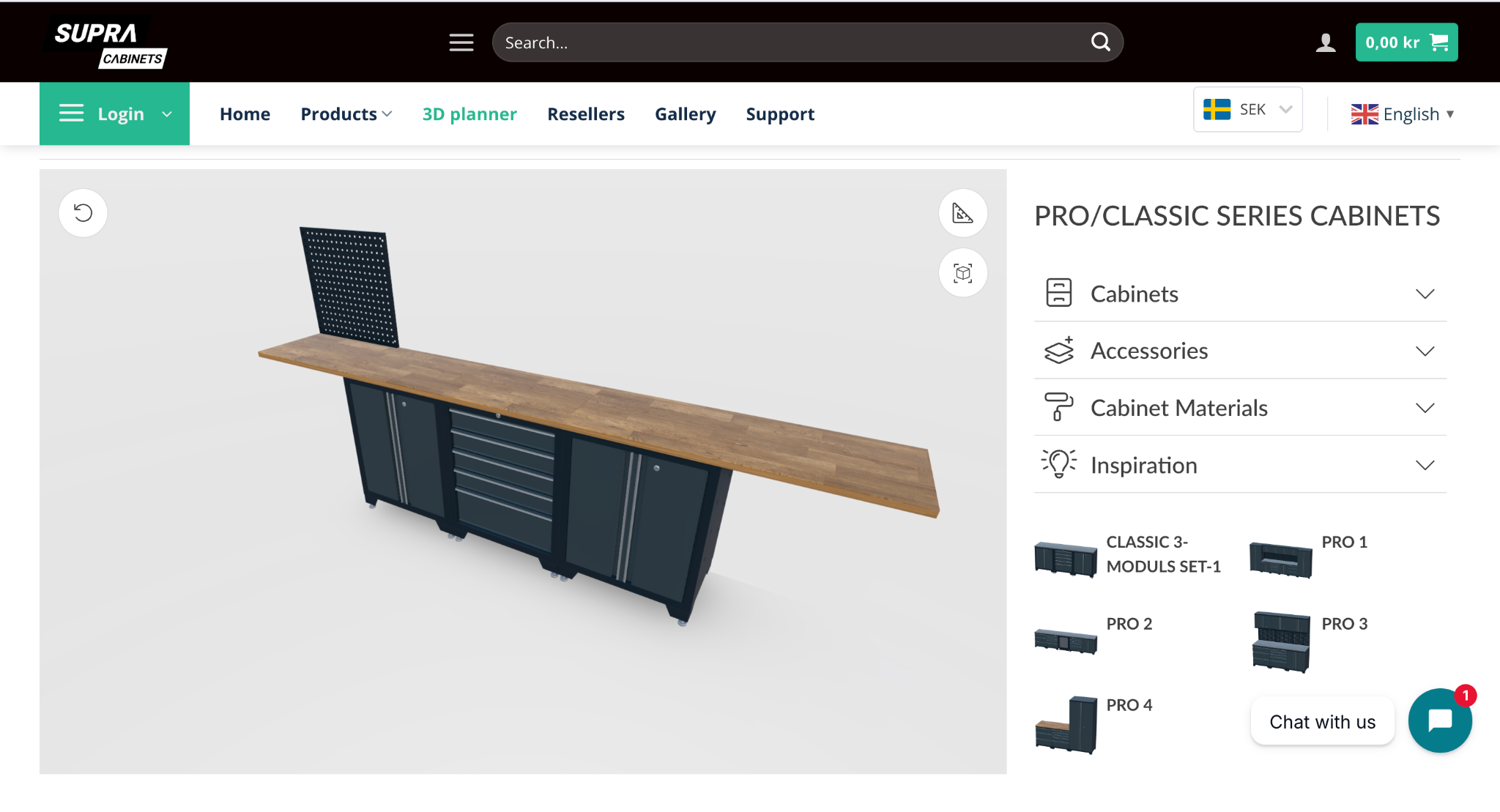
Startup costs typically range from $10,000 to $100,000+, depending on the size of your shop, the machinery you purchase, the cabinet design software you invest in, and your local labor.
2. Semi-custom cabinets
This approach starts with a fixed layout and allows customization of finishes, door styles, modules, accessories, dimensions, colors, and more. It is a popular middle ground: lower cabinet production complexity than fully bespoke work, yet far more personalization than stock cabinetry. Many startups, SMBs, and growing businesses choose to start a cabinet business here to experiment with or refine their processes before moving into fully custom work.
3. Cabinet refacing
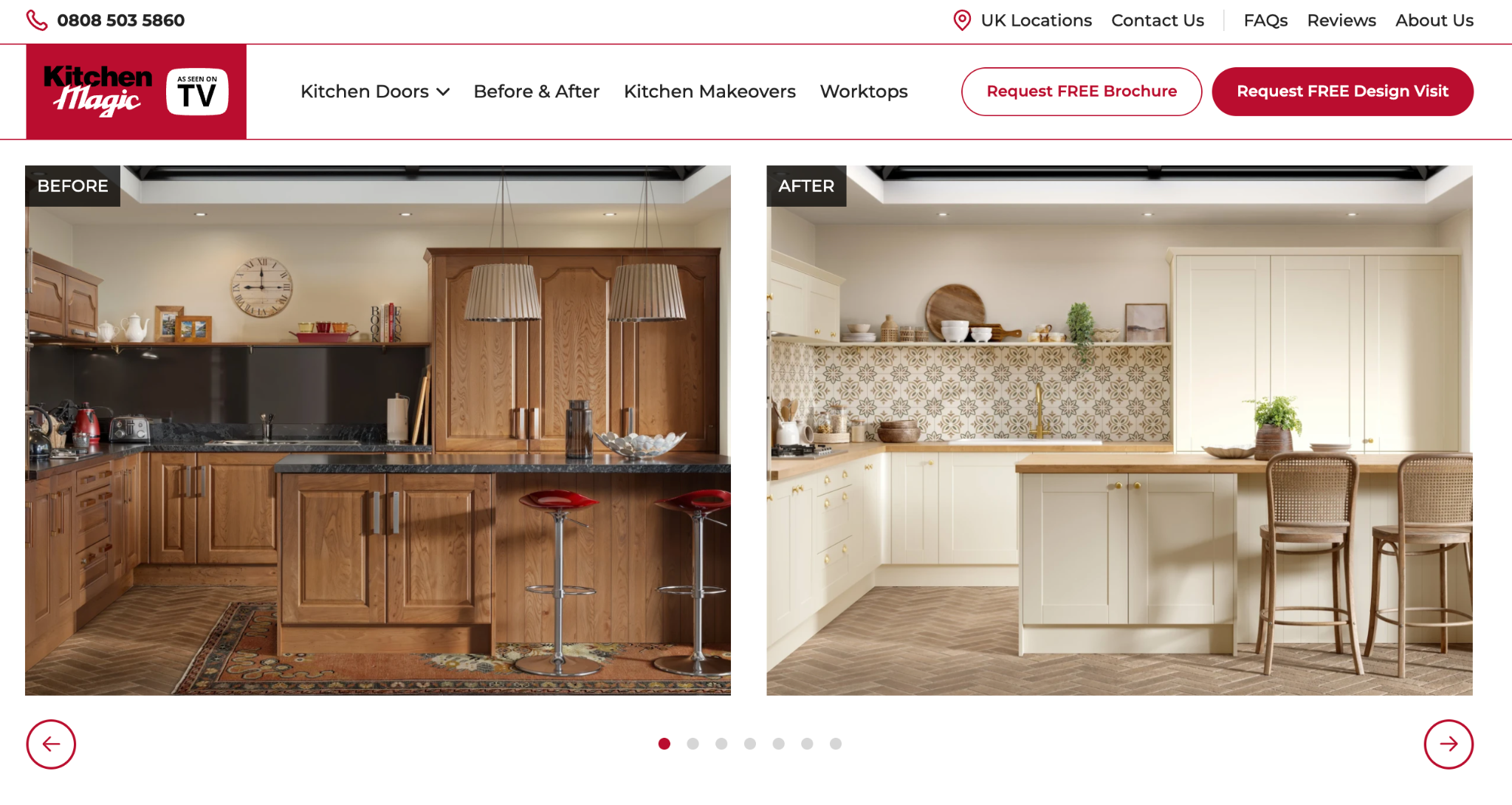
This cabinet shop model involves replacing doors, drawer fronts, and hardware while keeping the existing box structure. It is a lower-cost, faster-turnaround service because it requires less capital outlay and no large-scale facility, while effectively appealing to renovation-focused clients. Cabinet refacing can therefore be an ideal starting point for a woodworking business, offering a great balance of affordability, efficiency, innovation, and strong market demand.
How 3D Product Configuration Can Accelerate Cabinet Business Growth
What Is A 3D Product Configurator?
A 3D product configurator is an interactive platform that lets users customize a product and visualize it from all angles in real time. In particular, buyers can freely select sizes, finishes, colors, dimensions, and more and see precisely how everything looks together online. Another striking feature is that you can get instant pricing updates based on your selections.
This kind of eCommerce product customizer provides a deeper understanding of the final product design, reducing the friction that has traditionally slowed the sales processes: back-and-forth consultations between customers and salespeople and repeated revisions.
Benefits of Using 3D Configuration Software for Cabinet Design
Let’s dive into the outstanding advantages of this implementation for your cabinet business:
- Fewer design revisions
Adjusting, clarifying, and evaluating the product configuration in real time can reduce customer misunderstandings and minimize costly cabinet design revisions after quoting. This especially helps make-to-order projects move smoothly from approval to production.
- Shorter sales cycles
As mentioned above, traditional cabinet sales often involve multiple consultations, design mockups, and email exchanges before a final decision. By enabling 360-degree exploration of options, instant visualization, and price updates, 3D configurators streamline this process. And you can improve buyer experiences and encourage them to place orders more quickly.
- Higher AOV
These configurators make it easier to display premium materials, combined accessories, complex storage solutions, and even upgrade options during customer shopping journeys. In this way, customers can instantly clarify the value of these customizations, making them more likely to purchase higher-end features and increase their order value.
- Reduced workload for internal teams
In addition to automated 3D product visualization, configuration, and pricing, this smart cabinet design software can integrate with eCommerce platforms (e.g., Shopify), ERPs, and CRMs for a unified workflow. That’s exactly what's needed for a successful cabinet business.
As a result, businesses can eliminate repetitive manual tasks, reduce data-entry errors, and centralize information across departments, ensuring internal teams operate more efficiently.
Pricing Your Cabinets for Profitability
Getting pricing right is where many new cabinet manufacturing businesses stumble. Therefore, it’s recommended to start by calculating your total cost per project: cabinet materials, cabinet hardware, labor, finishing components, and delivery or cabinet installation. Then, add your overhead costs, such as rent, utilities, insurance, and equipment depreciation,
Let’s take a look at a common framework for custom woodworking pricing with us below:
Materials + Labor + Overhead (based monthly output) + A Target Margin of 25% - 40%
For kitchen cabinets, pricing is often calculated per linear foot (ranging from $150 to $1,200+, depending on grade and specification), giving your customers a benchmark for comparison.
Last but not least, competitive pricing doesn’t mean being the cheapest; it means knowing your value and communicating it clearly. Custom work, faster lead times, superior services, and interactive design tools all justify premium positioning for your cabinet business growth.
Conclusion
The path to a successful cabinet business is from smart planning, the right model and equipment, and a strong commitment to continuously improving customer experiences. Importantly, in today's technology-led world, investing in a robust design platform, such as cabinet configurators, is a direct lever for sustainable growth and competitive advantage. And you need to work with a trustworthy service provider to ensure the best performance.
Book a demo today to explore how VividWorks can power your cabinet configurator and see why our client, Supra Cabinets, built their digital sales strategy around it and its success.
FAQs
- How much does it cost to start a cabinet business?
Startup costs can range from $10,000 to $ 100,000+, depending on your business model, equipment, workspace, and whether you focus on custom, semi-custom, or refacing.
- Is a cabinet business profitable?
Yes. A cabinet business can be highly profitable due to the strong demand for kitchen and home renovations. Profit margins vary based on material costs, labor, and project complexity.
- What equipment do I need to start making cabinets?
Essential equipment includes a table saw, miter saw, router, drill, sander, clamps, measuring tools, and a dust collection system. As your cabinet business grows or you want to scale into new sectors, you may invest in CNC machines and advanced woodworking equipment.
- How do cabinet makers find customers?
They can start with referrals from contractors, interior designers, and architects. Building relationships with local builders is one of the fastest paths to steady work. An online presence, such as a Google Business profile and social media showcasing finished projects, significantly expands reach and inbound leads.
- How can I market my cabinet business locally?
You can build a strong local presence for your cabinet shop by creating a website, optimizing your business for local search, collecting customer reviews, networking with contractors and real estate professionals, and showcasing great projects on social media.
Table of Content
-3.avif)
Streamline your process today!



.png)
